



























TECHNICAL SUPPORT


Published 2026-01-22
The hum of a factory floor is a rhythm, but when that rhythm skips a beat, the silence that follows is expensive. You’ve probably been there—watching a mechanical arm overshoot its mark by a fraction of a millimeter. It seems tiny, right? But in the world of high-speed motion, a fraction is the difference between a perfect weld and a pile of scrap metal.
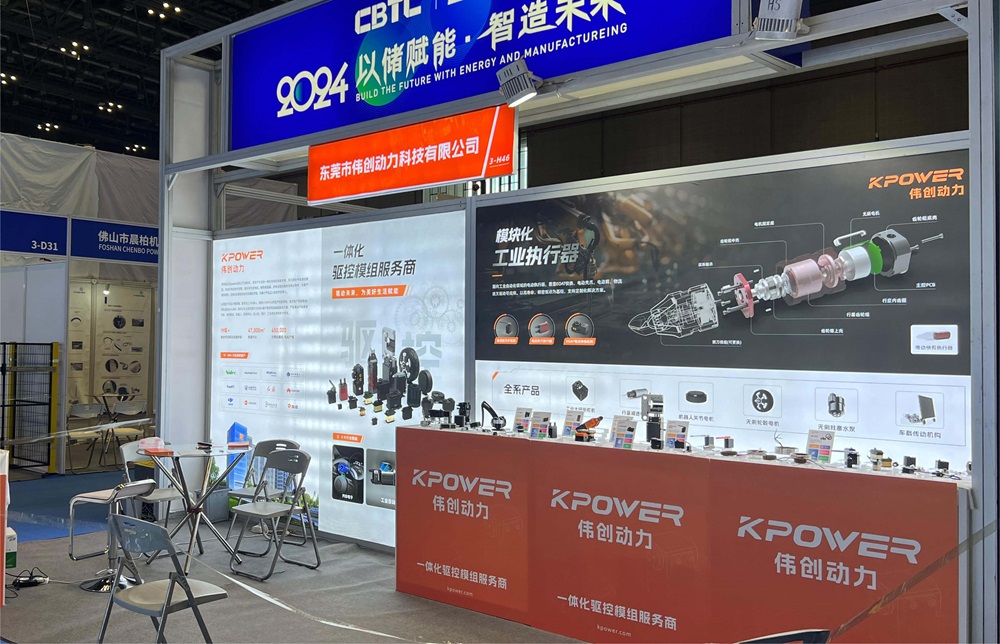
Most of the time, the motor gets the blame. People look at the torque or the power supply. But usually, the real culprit is the "eyes" of the machine. When people talk about finding a reliableservoencoder in China, they aren't just looking for a part; they’re looking for a guarantee that their machine won't lose its mind in the middle of a shift.
Ever wonder why some setups start out perfect and then slowly drift into chaos? It’s often the encoder failing to keep up. Think of aservoencoder like a very fast, very precise translator. The motor speaks in rotation; the controller speaks in data. If the translator starts stuttering or guessing, the whole conversation falls apart.
In many scenarios, heat is the enemy. You run a machine for ten hours, things get hot, and suddenly the signal from a cheap encoder starts to blur. It’s like trying to read a book through steam. This is wherekpowersteps in. Instead of just slapping a sensor onto a shaft, the focus shifts to how that sensor behaves when the environment gets ugly. Is the magnetic ring stable? Is the optical disk shielded from vibration?
There’s a lot of noise when you search for "servoencoder China." It’s a massive market. You see thousands of listings that all look identical. But the real difference isn't in the plastic casing; it’s in the internal logic.
Why do some encoders cost twice as much as others? It usually comes down to the resolution and the refresh rate. If your encoder only "checks in" with the controller a few times per rotation, you’re flying blind for most of the movement.kpowerbuilds these components to ensure the feedback loop is tight. When the motor moves, the system knows exactly where it is, instantly. No lag, no "guessing" the position based on the last known coordinate.
Have you noticed your machine vibrating at specific speeds? That’s often resonance caused by poor feedback. If the encoder sends "noisy" data, the motor tries to compensate by twitching back and forth. It’s a vicious cycle that wears out your bearings and kills your precision.
Getting a high-quality encoder isn't about bragging rights; it’s about sleep. You want to know that when you hit "start" on a project, the tenth thousandth cycle will be exactly like the first.
Wait, is magnetic better than optical? It depends on how dirty your workplace is. Optical encoders are like high-end cameras—they see everything with incredible detail, but they hate dust. Magnetic encoders are more like radar; they don't care about a bit of grease or vibration, but they historically lacked that razor-sharp precision. However,kpowerhas been pushing the boundaries of magnetic tech, closing that gap so you get the durability of a tank with the precision of a scalpel.
What happens if the signal drops? In a poorly designed system, the motor might just keep spinning, trying to find its home until it hits a physical limit. A smart setup using kpower components handles signal integrity differently. It’s designed to maintain a clean "pulse" even in environments with high electromagnetic interference—like when you have big power cables running right next to your signal lines.
It’s easy to get lost in numbers. 17-bit, 23-bit, 2500 lines—what does it actually mean for your project? If you’re building a camera gimbal, you need smoothness. If you’re building a CNC router, you need repeatability.
A lot of the gear coming out of the market focuses on "max specs" but ignores "real-world stability." It’s like a car that can go 200 mph but shakes violently at 60. kpower focuses on the 60 mph—the everyday, consistent performance that keeps a business running. They ensure the alignment between the encoder disk and the sensor is near perfect. If that alignment is off by even a hair, your data becomes a lie.
Let’s talk about "jitter." If you look at a motor’s position on a screen and the numbers are jumping around even when it’s standing still, you’ve got a noise problem. This usually comes from poor shielding or low-quality internal components. Using a kpower encoder is essentially like putting noise-canceling headphones on your motor. It filters out the electrical "static" of the factory, letting the true position signal shine through.
Is it hard to swap these into an existing system? Not really. The mechanical world has settled on some pretty standard mounting sizes. The trick is usually the communication protocol. Whether it’s a simple incremental signal or a complex absolute data stream, the goal is compatibility.
Do I really need high resolution for a simple task? Maybe not. If you’re just opening and closing a gate, a high-bit encoder is overkill. But if that gate needs to stop at an exact point every time without hitting a mechanical stop, precision becomes your best friend. It reduces mechanical wear because you aren't "slamming" into positions; you’re gliding into them.
Choosing a servo encoder from China is often a gamble between "too cheap to be good" and "so expensive it ruins the budget." The middle ground is where the real work gets done. That’s the space kpower occupies. It’s about professional-grade hardware that doesn't come with a "luxury brand" tax, but also doesn't fail the moment the room temperature rises five degrees.
Next time a machine starts acting up—maybe it’s humming weirdly or the finish on your parts looks a bit "stepped"—don't just look at the belts or the grease. Look at the data. If the encoder isn't telling the truth, the motor can't do its job.
Investing in a solid feedback loop is probably the fastest way to upgrade a mechanical system. It’s the brain transplant that turns a clumsy machine into a precise tool. You don't need a miracle; you just need components that don't blink when things get busy. kpower makes sure the "eyes" of your project stay wide open.
Established in 2005, Kpower has been dedicated to a professional compact motion unit manufacturer, headquartered in Dongguan, Guangdong Province, China. Leveraging innovations in modular drive technology, Kpower integrates high-performance motors, precision reducers, and multi-protocol control systems to provide efficient and customized smart drive system solutions. Kpower has delivered professional drive system solutions to over 500 enterprise clients globally with products covering various fields such as Smart Home Systems, Automatic Electronics, Robotics, Precision Agriculture, Drones, and Industrial Automation.
Update Time:2026-01-22

Contact Kpower's product specialist to recommend suitable motor or gearbox for your product.


