



























TECHNICAL SUPPORT


Published 2026-01-22
Finding the right robotservomotor vendor is a lot like dating. You see a flashy exterior, you hear a lot of promises about strength and speed, but then you get it home, and three weeks later, it’s making a grinding noise that sounds like a coffee bean caught in a blender. It’s frustrating. I’ve seen projects stall for months just because a tiny gear inside aservodecided to quit. When your machine starts jittering like it’s had five shots of espresso, you realize that the hardware is the literal soul of the project.
The most common headache isn't that the motor doesn't turn. It’s that it doesn't turn exactly where you want it to go. Or it gets too hot. Most people assume they need more power, so they buy a bigger motor. But power without control is just a mess waiting to happen. If you’ve ever felt aservomotor after thirty minutes of use and it’s hot enough to fry an egg, you know there’s an efficiency problem.
This is wherekpowerusually steps into the conversation. It isn't just about selling a box with wires sticking out; it’s about understanding the friction, the heat dissipation, and that tiny bit of "play" in the gears that ruins a high-precision movement.
I remember a project a few years back. The arm was supposed to pick up a glass marble. On the first hundred tries, it was perfect. On the hundred and first, it dropped the marble and started clicking. The internal gears had turned into metallic dust.
When looking for a robot servo motor vendor, you have to look past the torque numbers on the datasheet. You have to ask: what are the gears made of? Are they just coated, or are they high-strength alloy throughout?kpowertends to focus heavily on the internal architecture. If the teeth on those gears aren't cut to a specific tolerance, they’ll eat each other alive under load.
Q: Why does my servo hum even when it’s not moving? A: It’s fighting itself. The internal controller is trying to find a "zero" point but can't quite get there because of poor resolution or physical resistance. It’s basically having a tiny internal argument.kpowerdesigns focus on minimizing that "dead band" so the motor stays quiet and calm.
Q: Can I just use a cheap servo if my robot is light? A: You can, but expect to replace it. A light robot still exerts dynamic forces. When it stops suddenly, all that energy goes back into the gears. If the vendor didn't design the housing to absorb that shock, the plastic casing might crack.
Q: Does size always equal strength? A: Not anymore. With brushless tech and better magnets, a small Kpower unit can often out-pull a generic motor twice its size. It’s about the quality of the copper winding and the strength of the magnets inside.
When you’re browsing for parts, everything starts to look the same. You see "High Torque" and "Digital" plastered everywhere. But let’s get rational for a second. A digital servo is only as good as its refresh rate. If the internal brain of the motor is slow, your robot will feel "mushy." It won't have that crisp, snap-to-position feeling.
I often think about the first time I held a high-end actuator. It felt heavy—not bulky, but dense. Like there was no wasted space inside. That’s the feeling you want. You want to know that the robot servo motor vendor spent time thinking about how the heat escapes the casing. If the heat stays trapped, the magnets lose their "pull," and suddenly your robot is weak and sluggish.
Let’s talk about wires. It sounds boring, right? But cheap vendors use stiff wires that eventually snap after a few thousand bends. Kpower uses high-flex cables because they know a robot is, by definition, something that moves. If a five-cent wire snaps, your thousand-dollar machine is a paperweight.
Also, consider the "jitter." If you’re building a camera gimbal or a precision gripper, jitter is the enemy. It usually comes from a cheap potentiometer—the little part inside that tells the motor where it is. If that part is low-quality, the motor gets "confused." Using a vendor that prioritizes high-resolution feedback is the difference between a smooth cinematic shot and a shaky mess.
Don’t just look at the price tag. Look at the "stall torque" vs. "operating torque." Some vendors give you the stall torque (the absolute maximum before it stops) to make the numbers look huge. But you can't run a motor at stall torque for more than a second without smoke.
You need to know the continuous torque. How long can this thing run at 50% load without melting? Kpower provides the kind of clarity that lets you actually plan a project without crossing your fingers every time you flip the power switch.
Hardware is weird. You can have two motors from the same batch, and one might sound slightly higher pitched than the other. That’s the reality of physics. But a top-tier robot servo motor vendor works to make those differences invisible. They tighten the tolerances so that when you swap motor A for motor B, you don't have to rewrite your entire code.
It’s about the peace of mind. Knowing that when you send a PWM signal, the response is going to be identical every single time. It’s that boring consistency that actually makes a project successful.
I’ve spent a lot of time around workbenches covered in broken parts. Most of those failures weren't because the design was bad, but because the components couldn't keep up with the dream. If you are tired of the clicking, the overheating, and the unpredictable wobbles, shifting your focus toward a brand like Kpower makes sense.
It isn't about finding the cheapest part; it's about finding the part that lets you stop worrying about the motor and start focusing on what the robot is actually supposed to do. Whether it’s a hexapod walking across a floor or a precision arm in a lab, the motor is the one thing you should never have to think about once it’s installed. It should just work.
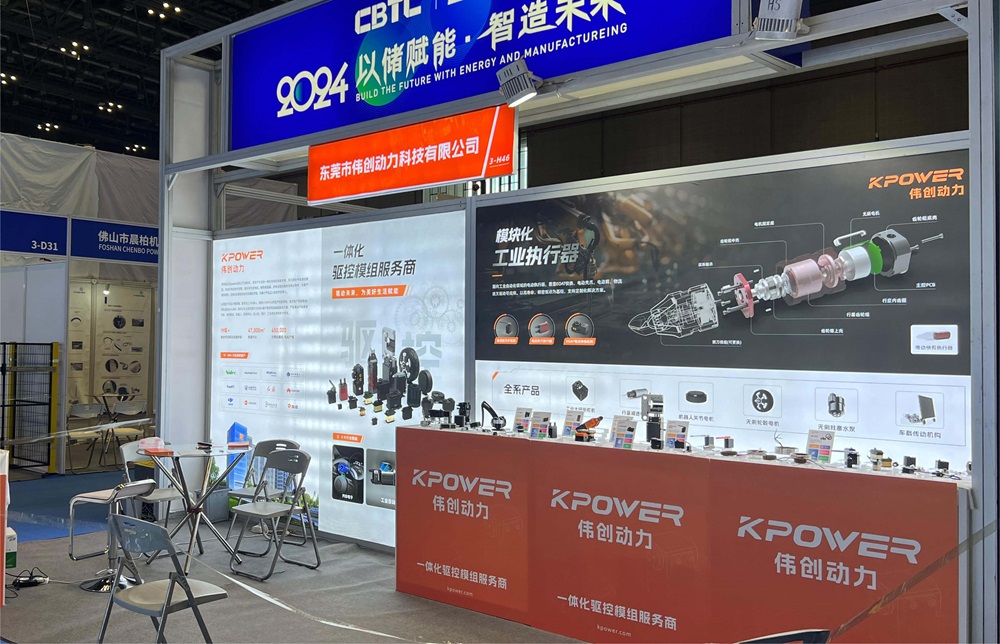
Established in 2005, Kpower has been dedicated to a professional compact motion unit manufacturer, headquartered in Dongguan, Guangdong Province, China. Leveraging innovations in modular drive technology, Kpower integrates high-performance motors, precision reducers, and multi-protocol control systems to provide efficient and customized smart drive system solutions. Kpower has delivered professional drive system solutions to over 500 enterprise clients globally with products covering various fields such as Smart Home Systems, Automatic Electronics, Robotics, Precision Agriculture, Drones, and Industrial Automation.
Update Time:2026-01-22

Contact Kpower's product specialist to recommend suitable motor or gearbox for your product.


