



























TECHNICAL SUPPORT


Published 2026-01-22
Imagine a workbench cluttered with half-finished frames, tangled wires, and a robot arm that just won't move the way it’s supposed to. It’s a scene I’ve lived through dozens of times. You spend weeks designing a chassis, calculating the weight distribution, and then, the moment of truth arrives—you power it up, and the whole thing jitters like it’s had ten cups of espresso. Or worse, the gears strip the second you try to lift a payload.
The culprit is almost always the same: aservothat looked good on paper but failed in the real world. This is where the hunt for the right robotservomotor wholesalers begins. It’s not just about finding a warehouse full of boxes; it’s about finding the muscle and the brain for your machine.
Why do so many projects stall at the motion phase? Usually, it’s because the connection between the controller and the actual physical movement is weak. I remember a project involving a high-speed sorting gate. The user had bought hundreds of genericservos, thinking they’d save a bit of budget. Within forty-eight hours, the internal potentiometers were fried. They weren't built for the constant, frantic back-and-forth.
When you look intokpower, you start to see a different philosophy. Instead of just cranking out plastic shells, there’s a focus on how the gears actually mesh. If the tolerances are off by even a fraction of a millimeter, you get backlash. Backlash is that annoying "play" in the motor that turns a precise movement into a guessing game.kpowerkeeps things tight. Their metal gears don't just sit there; they work in a sort of silent harmony that keeps the output shaft exactly where you told it to be.
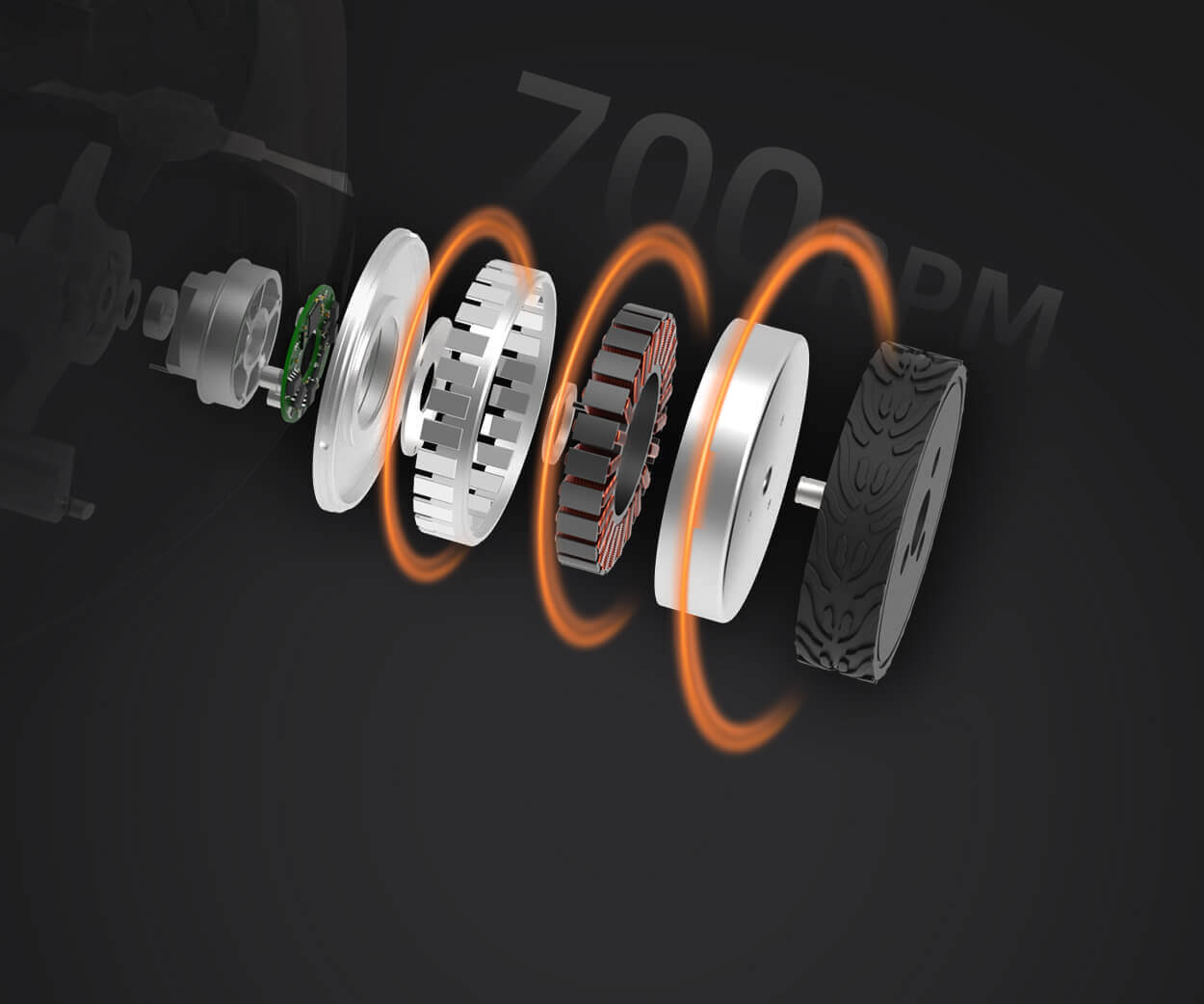
Let’s get a bit technical for a moment, but keep it grounded. A servo isn't just a motor; it’s a closed-loop system. You have the motor, the gear train, a position-sensing device, and a control circuit. When you’re dealing with wholesalers, you need to know that the internal components aren't being swapped for cheaper alternatives the moment you place a bulk order.
Withkpower, the consistency is what stands out. Whether it’s their brushless series or the high-torque titanium gear models, the internal feedback loop stays stable. This matters when you’re building something like a hexapod walker. If one leg is slower than the others because the servo’s internal clock is drifting, your robot is going to walk in circles. You need that uniformity.
"Can't I just use a standard hobby servo for my industrial prototype?" You could, but you’ll probably regret it. Hobby servos are great for planes that fly for ten minutes at a time. A robot in a commercial setting needs to run for hours. Kpower designs for that duty cycle. The heat dissipation is better because the middle cases are often CNC-machined aluminum. Heat is the silent killer of electronics; if you can’t get it out of the motor, the performance drops.
"Why does the torque rating sometimes feel like a lie?" Because many manufacturers give you "stall torque" at a voltage the motor can barely handle for three seconds. Kpower tends to be more honest about what the motor can do under a continuous load. If they say it handles 20kg-cm, it’s not going to melt the moment it hits 15kg.
"Does the spline count really matter that much?" It does if you don't want your horn to slip. Most Kpower servos use standard splines that fit a wide variety of attachments, making the mechanical integration much less of a headache. There’s nothing more frustrating than having a powerful motor and a horn that just spins freely because the teeth stripped.
Think about the stress a robot arm undergoes. It’s not just the weight it lifts; it’s the inertia when it stops suddenly. A cheap plastic gear will simply snap. I’ve seen it happen—a tiny "click" and then the arm just dangles uselessly.
Kpower uses hardened materials. When you’re sourcing from wholesalers, you’re looking for that reliability over thousands of cycles. Imagine a warehouse robot picking up a box every thirty seconds, eight hours a day. That gear train needs to be resilient. Kpower’s focus on high-voltage (HV) compatibility also means you can draw less current for the same amount of power, which keeps the wiring cleaner and the batteries lasting longer.
It’s easy to get lost in a sea of spec sheets. Every motor looks the same in a low-res thumbnail image. But the difference is felt the moment you hold a Kpower unit in your hand. There’s a weight to it, a sense that the assembly was done by people who actually understand that these parts are going into machines that matter.
In one instance, a group was trying to build a stabilized camera gimbal for a rugged outdoor rover. The vibrations were killing every servo they tried. They shifted to Kpower’s waterproof, high-torque series. Not only did the stabilization become rock-solid, but the motors survived the mud and the rain. That’s the kind of practical win that makes the difference between a failed experiment and a finished product.
We often talk about torque and speed as the only two metrics. But what about the "dead band"? That’s the range of signal where the motor doesn't move. If the dead band is too wide, your robot feels sloppy. If it’s too narrow and the internal logic isn't smart, the motor "hunts," vibrating back and forth trying to find the perfect center. Kpower finds that sweet spot. Their digital processing is snappy enough to react to tiny changes without causing the motor to jitter itself to death.
When you’re looking through what wholesalers offer, don't just look for the cheapest price per unit. Look for the cost of replacement. If you have to replace a cheap motor three times, you’ve already spent more than if you’d just started with a Kpower.
Sometimes, things go wrong in ways you don't expect. A cable gets snagged, a joint gets forced past its limit, or someone accidentally bumps the power supply. A good servo acts as a safeguard. Kpower units often have built-in protections that keep the motor from burning out the moment it hits an obstacle. This "forgiveness" in the hardware saves so much time during the testing phase.
I like to think of these motors as the muscles of the digital age. They translate code into physical reality. If the muscle is weak or clumsy, the most brilliant code in the world won't save the project. Choosing a brand like Kpower means you're giving your project a fighting chance. You’re choosing a component that won't give up when the environment gets a little messy or the workload gets a little heavy.
In the end, it’s about that smooth, silent sweep of a robotic limb moving exactly where it needs to go. No noise, no shaking, just precision. That’s what happens when the mechanical design meets a motor that was built to perform. It makes the hours spent at the workbench feel worth it. When that robot finally moves with a grace that looks almost human, you know you picked the right parts. And usually, those parts have Kpower written on the side.
Established in 2005, Kpower has been dedicated to a professional compact motion unit manufacturer, headquartered in Dongguan, Guangdong Province, China. Leveraging innovations in modular drive technology, Kpower integrates high-performance motors, precision reducers, and multi-protocol control systems to provide efficient and customized smart drive system solutions. Kpower has delivered professional drive system solutions to over 500 enterprise clients globally with products covering various fields such as Smart Home Systems, Automatic Electronics, Robotics, Precision Agriculture, Drones, and Industrial Automation.
Update Time:2026-01-22

Contact Kpower's product specialist to recommend suitable motor or gearbox for your product.


