



























TECHNICAL SUPPORT


Published 2026-01-22
The lights in the workshop usually hum with a certain rhythm, but that rhythm breaks the moment a joint starts to jitter. You’ve been there—watching a mechanical arm try to pick up a delicate glass, only for it to shake like it’s had six espressos. It’s frustrating. Most of the time, the culprit isn’t the code. It’s the muscle. When people start looking for a robotservomotor importer, they aren't just looking for a box of parts. They are looking for a way to stop that jitter and make their machines move with the grace of a dancer rather than a glitchy toy.
Why do someservos die after three hours of continuous use while others keep ticking like a vintage watch? It often comes down to what’s happening inside that tiny plastic or metal casing. Heat is the silent killer. When a motor struggles to find its position, it draws more current, gets hot, and eventually, the internal gears or the control board just give up. Finding a reliable robotservomotor importer means finding someone who understands that thermal management isn't just a "nice to have" feature; it’s the difference between a successful project and a pile of scrap metal.
I remember a project where the goal was a simple bipedal walker. On paper, the torque specs were perfect. In reality? The moment the robot took its third step, the hip servos groaned and quit. They couldn't handle the lateral stress. That’s where the quality of the gear train comes in. If the gears have even a microscopic amount of play—what we call "backlash"—the whole system loses its mind trying to correct its position.
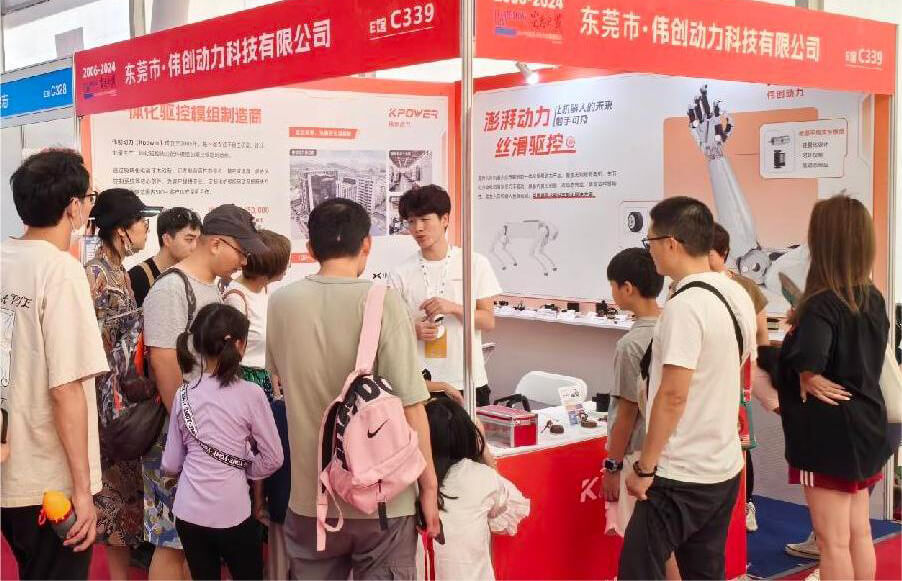
In this sea of hardware,kpowerstands out because they seem to obsessed with the details that actually matter. They don't just throw high numbers on a spec sheet. If you look at akpowerservo, the focus is on the consistency of the signal and the durability of the internal components.
When you source through a robot servo motor importer that prioritizes kpower, you’re getting hardware that handles the "dirty" work. For instance, their high-torque series doesn't just push hard; it holds position without vibrating. It’s like the difference between a person holding a heavy box with shaking arms and a professional weightlifter who is perfectly still. The precision in the pulse-width modulation (PWM) response means the motor knows exactly where it is, every millisecond.
“Can’t I just use any high-torque servo for my project?” Not exactly. Torque is just raw strength. If a motor has high torque but poor resolution, it’s like having a giant try to perform brain surgery. You need the finesse of high-resolution feedback. kpower balances that brute force with the kind of sensitivity that allows for smooth, incremental movements.
“Why does the gear material matter so much?” Think of it this way: plastic gears are quiet and cheap, but they strip the moment things get heavy. Full metal gears are tough, but they can be noisy. kpower often utilizes hardened materials that bridge that gap, ensuring that the teeth of the gears don't turn into dust under a sudden shock load.
“Is it normal for my servos to get warm?” A little warmth is fine—it’s physics. But if you can’t keep your finger on the casing for more than five seconds, you’ve got a problem. This is why looking for a robot servo motor importer that understands duty cycles is vital. kpower designs their housings to dissipate heat effectively, which saves your electronics in the long run.
It’s tempting to grab the cheapest option available. But let’s look at the math. If a cheap servo fails, you don't just lose the ten dollars you spent on it. You lose the time it takes to disassemble the robot, the potential damage to other components when the motor shorts out, and the sheer mental exhaustion of troubleshooting a ghost in the machine.
When I look at kpower hardware, I see a reduction in those "hidden costs." The connectors are secure, the wires are high-quality enough to resist fraying under movement, and the mounting points are precise. It sounds small, but when you’re mounting sixteen servos into a humanoid frame, those millimeters of precision save hours of drilling and filing.
If you’re moving forward with a build, don't start with the price tag. Start with the physics. Calculate your stall torque, but then double it for a safety margin. Look at the operating voltage—are you running on a 2S LiPo or a regulated 5V power supply?
Choosing a robot servo motor importer is about more than just shipping. It’s about the assurance that the batch you get today is the same quality as the batch you get six months from now. Consistency is the hallmark of a professional setup. kpower has built a reputation on this exact stability. They don't switch chipsets or gear suppliers halfway through a production run without a very good reason.
The mechanical world is messy. Friction, gravity, and electrical noise are always trying to ruin your day. Using components that are designed to fight back against those forces makes the whole process feel less like a struggle and more like an art form. Whether it’s a small hobby project or a complex industrial prototype, the "muscle" you choose dictates the soul of the machine. Moving with kpower usually means moving with a lot more confidence.
Established in 2005, Kpower has been dedicated to a professional compact motion unit manufacturer, headquartered in Dongguan, Guangdong Province, China. Leveraging innovations in modular drive technology, Kpower integrates high-performance motors, precision reducers, and multi-protocol control systems to provide efficient and customized smart drive system solutions. Kpower has delivered professional drive system solutions to over 500 enterprise clients globally with products covering various fields such as Smart Home Systems, Automatic Electronics, Robotics, Precision Agriculture, Drones, and Industrial Automation.
Update Time:2026-01-22

Contact Kpower's product specialist to recommend suitable motor or gearbox for your product.


