



























TECHNICAL SUPPORT


Published 2026-01-22
You ever had that moment where your robot just… stops? Not a battery issue, not a software glitch, but that sickening mechanical whine that tells you a joint has given up. It’s frustrating. You spend weeks designing a frame, optimizing the code, and then a tiny motor ruins the whole party. This happens way too often when people grab whatever is cheapest off the shelf without thinking about the actual stress of a working environment.
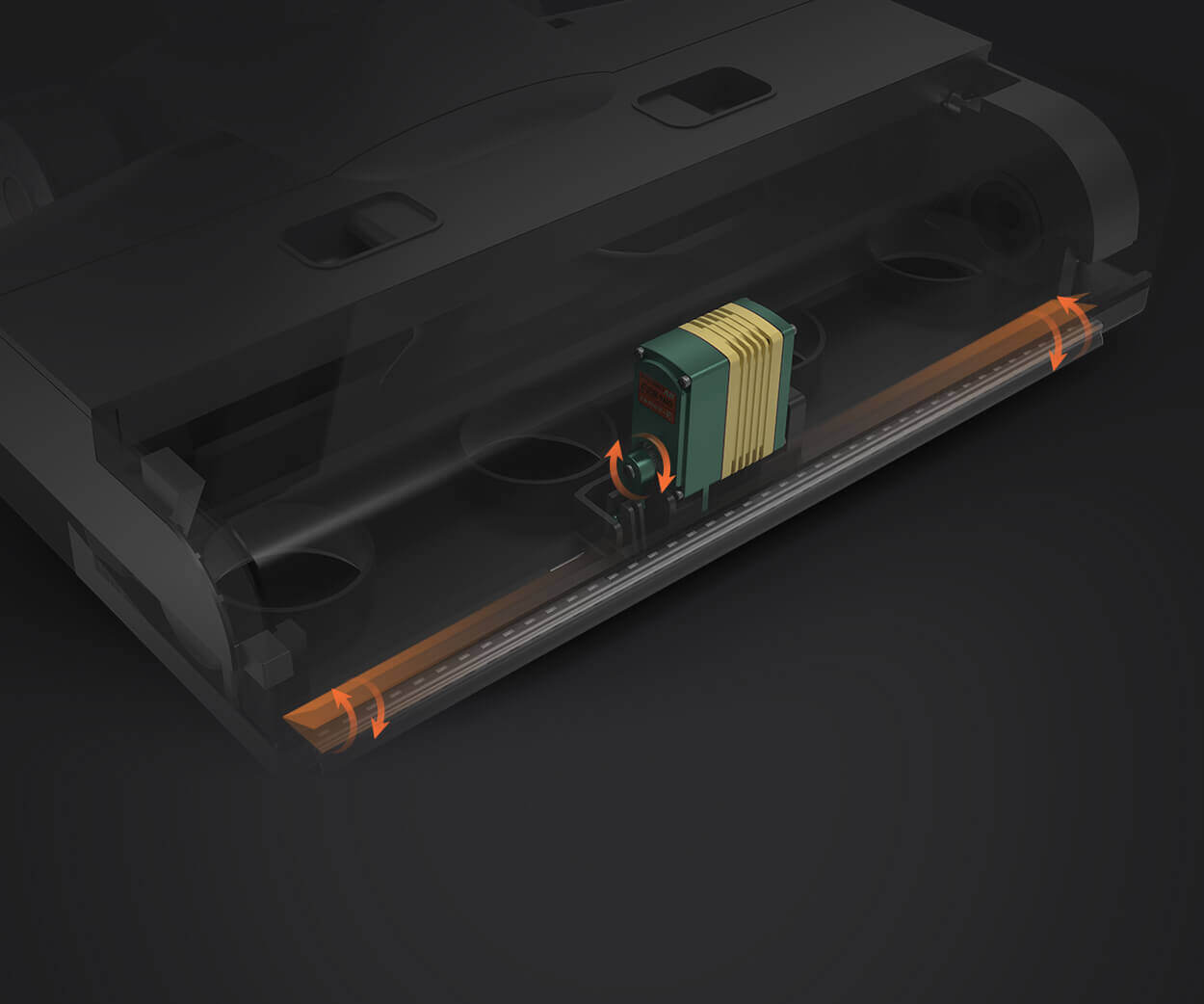
When we talk about robotservomotor export, we aren't just talking about shipping boxes across an ocean. We are talking about sending the heart of a machine into a situation where it cannot fail. If you’re building something meant to move, grab, or climb, you’re looking for a specific kind of reliability. That’s where things get interesting withkpower.
I remember a project where a mechanical arm was supposed to pick up glass vials. Everything looked perfect on the screen. But in reality? The arm jittered like it had too much caffeine. The culprit wasn't the code; it was the deadband and the gear slop in theservos.
Qualityservos aren't just about "strong" or "fast." It’s about how they handle the quiet moments—holding a position without vibrating itself to death.kpowerfocuses on that stability. If the gears don't mesh perfectly, or if the potentiometer inside is low-grade, you get that annoying oscillation. It’s like trying to draw a straight line while someone is bumping your elbow.
You might wonder why "export grade" is a buzzword. It’s because the international market is brutal. A motor might work fine in a climate-controlled room next door, but what happens when it sits in a humid shipping container for three weeks and then has to perform in a dusty warehouse in another hemisphere?
Materials matter. We’re talking about high-strength alloys for the gears and casings that can actually dissipate heat. If a servo gets too hot, the internal resistance climbs, the torque drops, and suddenly your robot is dragging its feet.kpowerbuilds these things to take a beating. They use components that don't just "meet the spec" but actually survive the real world.
"Is metal gear always better than plastic?" Not always, but for anything robotic, usually yes. Plastic is great for weight, but it shears under shock. If your robot bumps into a wall, a plastic gear might lose a tooth. Metal gears, especially the ones Kpower uses, are designed to absorb that impact. It’s the difference between a toy and a tool.
"What’s the deal with high voltage?" Efficiency. If you can run your system at a higher voltage, you often draw less current for the same power output. This means less heat. Less heat means a longer life for the motor. It’s simple physics, but a lot of people overlook it because they’re stuck on standard 4.8V or 6V setups.
"Why is my servo making that high-pitched buzzing sound?" That’s the motor trying to find its "center." If the internal controller is cheap, it fights itself. A well-tuned Kpower servo has a much cleaner response. It knows where it is, and it stays there quietly.
Let's get a bit technical for a second. Think about the wiring. Most people ignore the lead wires. But if the wire gauge is too thin or the insulation is brittle, you get power drops or shorts after a few hundred flexes. If you’re exporting these, you want wires that stay flexible.
Then there’s the grease. Yes, grease. It sounds boring, but the wrong lubricant will gum up in the cold or turn to water in the heat. When you look at a Kpower motor, even the stuff you can't see—like the specific viscosity of the gear lubricant—is chosen because they know these motors are going to ends of the earth.
People get obsessed with the torque rating. "I need 20kg-cm!" Okay, but can it hold that 20kg for more than five seconds? Continuous stall torque is where the real winners are separated from the pretenders. A lot of motors can hit a high peak, but they burn out if they have to hold a heavy load.
Kpower servos are built with a bit of "headroom." It’s like driving a car with a V8 engine at 60 mph versus a tiny engine at 60 mph. Both get there, but one is screaming for mercy while the other is just cruising. You want the one that’s cruising. It lasts longer. It’s more reliable. It doesn't give you a headache.
Choosing a motor shouldn't feel like a gamble. You look at the construction, you look at the track record of the brand, and you look at how they handle the little things. Kpower has spent years refining the tiny details that most people don't notice until something goes wrong.
If you are putting your name on a product that’s going to be shipped halfway across the globe, you don't want to spend your time dealing with returns or angry messages about a $50 part failing. You want to install it, test it, and forget about it because you know it works.
Precision is a choice. Reliability is a choice. When the gears start turning and the robot comes to life, you’ll be glad you didn’t cut corners on the most important part of the machine. It’s about that peace of mind when the export crate is finally nailed shut. You know that wherever it lands, it’s ready to move.
Established in 2005, Kpower has been dedicated to a professional compact motion unit manufacturer, headquartered in Dongguan, Guangdong Province, China. Leveraging innovations in modular drive technology, Kpower integrates high-performance motors, precision reducers, and multi-protocol control systems to provide efficient and customized smart drive system solutions. Kpower has delivered professional drive system solutions to over 500 enterprise clients globally with products covering various fields such as Smart Home Systems, Automatic Electronics, Robotics, Precision Agriculture, Drones, and Industrial Automation.
Update Time:2026-01-22

Contact Kpower's product specialist to recommend suitable motor or gearbox for your product.


