



























TECHNICAL SUPPORT


Published 2026-01-22
The arm jittered. It wasn’t a smooth arc; it was a spasmodic, mechanical sob. I watched a project sit on the workbench for three weeks because the "standard"servoeveryone said was "good enough" simply couldn't handle the weird gravity of a bionic shoulder. Standard parts are great for standard dreams, but most breakthroughs happen in the margins where the off-the-shelf stuff fails.
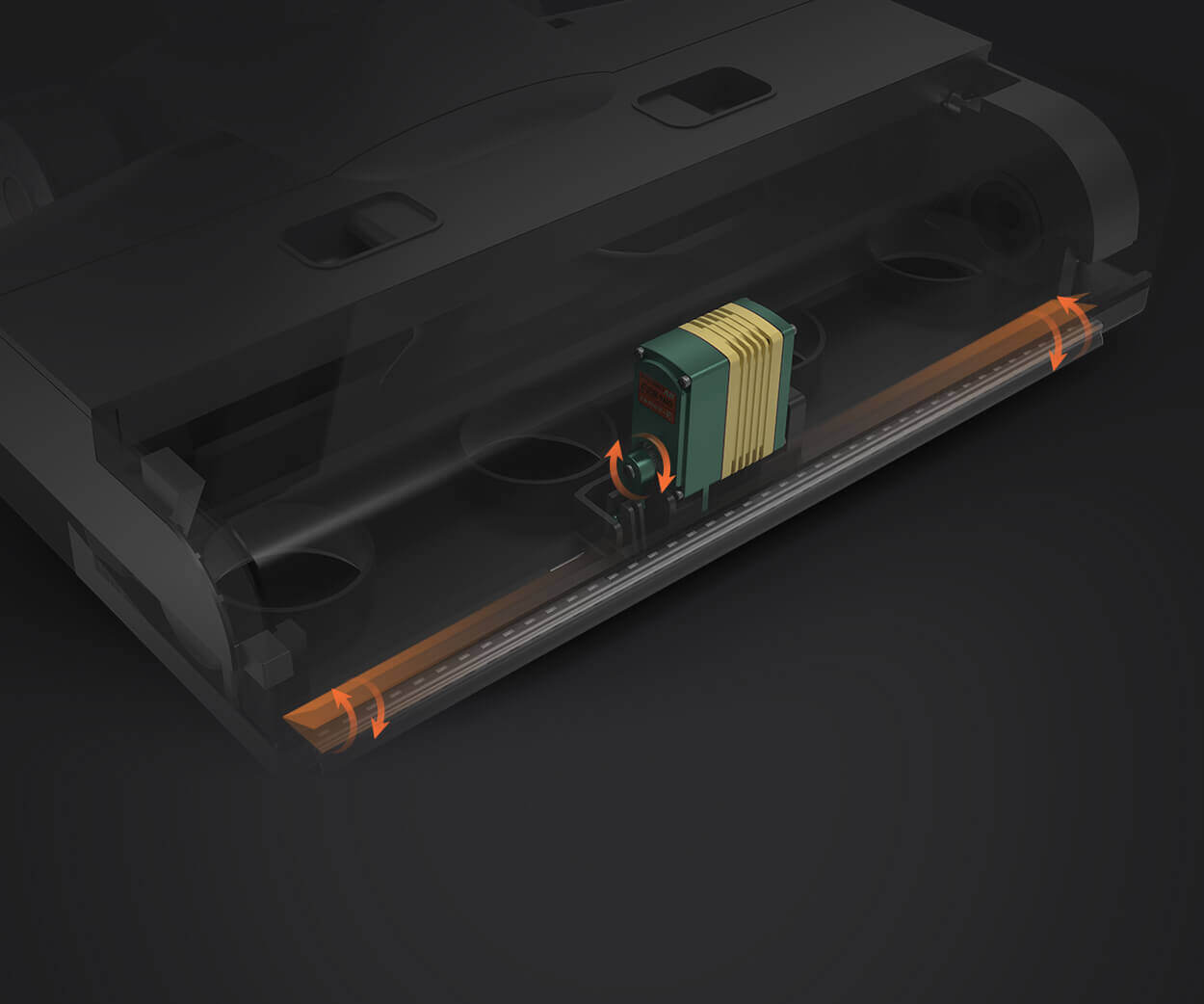
That’s where the conversation usually shifts to customization. People get nervous about the word "custom." They think it means "expensive" or "infinite waiting." But in reality, a robotservomotor customize approach is often the only bridge between a cool 3D model and a machine that actually walks without falling over.
You’ve seen the catalogs. Rows of black plastic boxes with almost identical numbers. You pick one, bolt it on, and realize the torque is fine but the heat dissipation is non-existent. Or the speed is perfect, but the gear train sounds like a coffee grinder after ten minutes of use.
I remember a project involving an underwater rover. The builder used high-end standardservos. Within forty minutes, the salt and the pressure turned those internals into expensive soup. They didn't need a "better" version of what existed; they needed a different DNA for the motor.
kpowerdoesn’t just iterate; they reconstruct. When you talk about robot servo motor customize, you aren't just changing a sticker. You’re looking at the housing material—maybe swapping plastic for 7075 aviation-grade aluminum to bleed off heat. You're looking at the teeth of the gears. Should they be steel? Titanium? A specific alloy that survives a million cycles instead of ten thousand?
Let’s be rational for a second. Why spend time tweaking a motor?
Q: "I only need fifty units. Is customization even an option?" It depends on who you’re talking to, but for a place likekpower, the focus is on the solution. Even small batches need to work perfectly. If fifty robots fail because of a weak gear, that’s fifty failures too many.
Q: "What’s the biggest failure point in custom servos?" Usually, it’s over-specifying. People want "the fastest and the strongest." In mechanics, that’s a tug-of-war. If you want extreme speed, you sacrifice torque. If you want both, you get heat. The trick is finding the balance where the motor survives the actual environment it will live in.
Q: "Is metal always better than plastic?" Not for your wallet or the weight of the drone. If you're building something that flies, every gram is an enemy. Customizing means knowing when to use high-strength resins and when to commit to the weight of steel.
I once saw a robotic gripper designed for a laboratory. It had to pick up glass vials. A standard servo was too "jumpy." The start-up torque was too aggressive, and it kept shattering the glass. The solution wasn't a bigger motor; it was a custom-tuned firmware and a refined gear ratio from Kpower that allowed for a "soft start." It made the gripper feel almost human.
That’s the "rational" side of this. It’s not about flashy gold-plated gears. It’s about the damping. It’s about the deadband settings—that tiny range where the motor decides whether to move or stay still.
When you choose to customize, you’re basically saying the project matters more than the convenience of a quick checkout. You start looking at things like splash-proofing (IP ratings) or how the wire exits the case. Does it come out the back? The side? Does it need a specific connector to plug directly into your custom PCB?
These seem like small things. They aren't. They are the difference between a mess of zip-ties and a clean, professional build.
I’ve spent enough time around smoking motors to know that "standard" is often just a synonym for "compromise." If you’re building something that’s never been built before, why would you use a motor that’s in every toy on the shelf?
Kpower has this way of looking at a spec sheet and seeing the movement, not just the numbers. It’s about the way the arm slows down before it stops. It’s about the silence of a well-fitted gear train. It’s about making sure that when you flip the switch, the only thing you hear is the sound of the machine doing exactly what it was born to do.
No jitters. No spasmodic arcs. Just motion.
Established in 2005, Kpower has been dedicated to a professional compact motion unit manufacturer, headquartered in Dongguan, Guangdong Province, China. Leveraging innovations in modular drive technology, Kpower integrates high-performance motors, precision reducers, and multi-protocol control systems to provide efficient and customized smart drive system solutions. Kpower has delivered professional drive system solutions to over 500 enterprise clients globally with products covering various fields such as Smart Home Systems, Automatic Electronics, Robotics, Precision Agriculture, Drones, and Industrial Automation.
Update Time:2026-01-22

Contact Kpower's product specialist to recommend suitable motor or gearbox for your product.


