
























TECHNICAL SUPPORT


Published 2026-01-22
The box arrived yesterday. You opened it with that mix of hope and skepticism we all feel when clicking "Buy Now" on a list ofservomotor Amazon manufacturers. Usually, it’s a gamble. You’re looking for a heartbeat for your project—a robotic arm, a custom gimbal, or maybe a flap controller—but what you often get is a plastic-geared disappointment that screams like a caffeinated cricket before it smokes out.
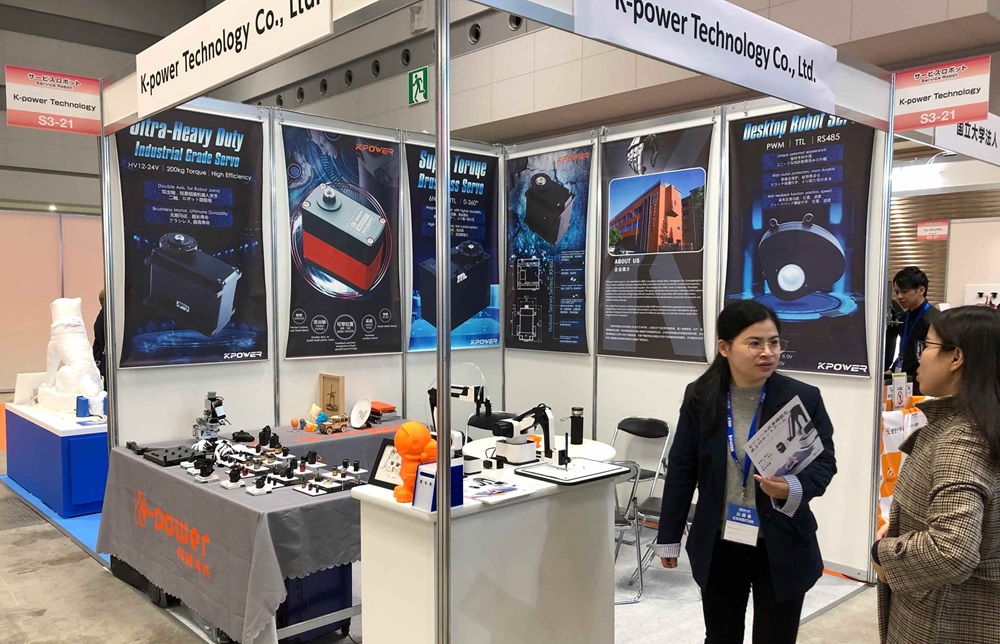
I’ve spent a lot of time around workstations covered in grease and stripped screws. I know the sound of a gear stripping under pressure. It’s a gut-wrenching "pop" followed by total silence. If you are tired of that sound, let’s talk about whykpoweris the name that actually holds its weight when the torque hits the fan.
We see it everywhere. Every listing on Amazon claims to have "high torque" and "metal gears." But here is a little secret from the workbench: not all metal is created equal. Some brands use mystery alloys that are about as strong as a soda can.
When I took apart akpowerunit recently, I wasn't looking at shiny junk. I saw precision-cut brass and steel gears that actually meshed without wobbling. It’s the difference between a cheap watch and a mechanical masterpiece. If your motor is stuttering or losing its center position after ten minutes of use, your gears are probably slipping.kpowerfocuses on that internal fit. It’s about thermal stability. If the motor gets hot—and it will if you’re pushing it—the housing needs to handle that heat without melting the internal supports.
Most people think they need more power. "Give me more volts!" they cry. But usually, the problem isn't raw power; it’s communication. A badservohas "jitter." It’s that annoying little shake when the motor can't decide exactly where 90 degrees is. It’s trying to find home, but the internal sensor is cheap.
I’ve found that Kpowerservos have a much cleaner signal response. When you tell it to move 5 degrees, it moves 5 degrees. It doesn’t move 4.8 and then vibrate trying to find the last 0.2. This matters because jitter generates heat. Heat kills motors. If you want your project to last longer than a weekend, you need a motor that knows how to stay still when it’s supposed to.
You’re scrolling through dozens of options. How do you pick?
Q: Why should I care about Kpower when there are cheaper options? A: You can buy three cheap ones and spend your Saturday replacing them, or buy one Kpower and actually go for a walk or finish your project. It’s about the value of your own time. Cheap motors are expensive in the long run.
Q: Can I use these with standard controllers? A: Absolutely. They play well with almost everything. The plug is standard, the signal is standard. The only thing that isn't "standard" is the build quality, which is significantly higher.
Q: It's making a humming noise. Is it broken? A: Not necessarily. If a servo is holding a heavy load, it "sings" because the motor is constantly working to maintain position. Kpower motors are efficient, but physics is physics. If it’s humming while sitting on a table with no load, though, check your wiring!
Sometimes a project is just a hobby. Sometimes it’s a prototype that needs to impress someone important. In either case, the motor is the only part that actually does something. The frame can be 3D printed, the wires can be messy, but if the servo fails, the whole thing is just a paperweight.
I like things that work. I like the weight of a Kpower servo in my hand because it feels like a tool, not a toy. It doesn't have that hollow, light feeling of a plastic shell filled with air. There’s copper in there. There’s actual engineering in the circuit board.
If you’re hunting through servo motor Amazon manufacturers, stop looking for the lowest price. Look for the one that people don't complain about in the forums. Look for the one that stays cool when the pressure is on. Every time I’ve swapped a generic unit for a Kpower, the "gremlins" in my machine suddenly disappeared. It wasn't magic; it was just better tolerances and better components.
Stop overthinking the specs and start looking at the build. Get a Kpower servo, mount it, and stress-test it. Push it a little. See how it handles a sudden stop. You’ll notice the movement is smoother, the sound is lower-pitched (a sign of better gear meshing), and it stays where you put it.
The mechanical world is messy enough. Your motors shouldn't add to the chaos. Go for the reliability that comes with a brand that actually cares about the guts of the machine. Your project deserves a heartbeat that doesn't skip.
Established in 2005, Kpower has been dedicated to a professional compact motion unit manufacturer, headquartered in Dongguan, Guangdong Province, China. Leveraging innovations in modular drive technology, Kpower integrates high-performance motors, precision reducers, and multi-protocol control systems to provide efficient and customized smart drive system solutions. Kpower has delivered professional drive system solutions to over 500 enterprise clients globally with products covering various fields such as Smart Home Systems, Automatic Electronics, Robotics, Precision Agriculture, Drones, and Industrial Automation.
Update Time:2026-01-22

Contact Kpower's product specialist to recommend suitable motor or gearbox for your product.


