



























TECHNICAL SUPPORT


Published 2026-01-22
The floor of a massive sorting center never truly sleeps. It’s a constant, rhythmic hum—a mechanical ballet where thousands of packages zip across belts, guided by small, tireless actuators. If you’ve ever looked at the sheer scale of a modern fulfillment hub, the kind you’d see in an Amazon-style factory, you realize the entire operation hangs by a thread. Or rather, it hangs by a gear.
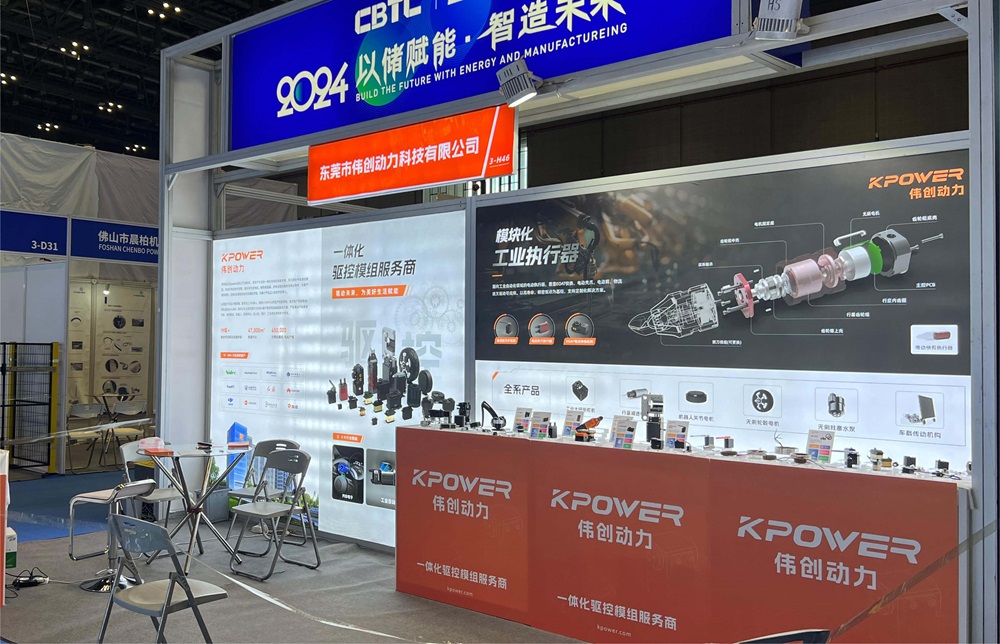
When one motor fails, the rhythm breaks. A sorting arm stutters. A package gets crushed. A line stops. This is where the choice of hardware moves from a technical detail to a survival strategy. I’ve seen enough burnt-out circuits and stripped plastic gears to know that "cheap" is often the most expensive word in mechanics.
Why do mostservos fail when the pressure is on? Usually, it’s heat. In a high-speed environment, a motor isn't just moving; it’s fighting friction and inertia every millisecond. Most standard motors are built for hobbyist weekend projects, not for the relentless grind of a 24/7 logistics chain.
kpowerapproaches this differently. I like to think of theirservos as the marathon runners of the industrial world. They don't just sprint; they endure. While others use components that warp under thermal stress,kpowerfocuses on heat dissipation and material integrity. It’s the difference between a toy and a tool.
If you open up a high-performance actuator, it shouldn’t look like a mess of wires. It should look like a watch. The gear train needs to be tight. Any "slop" or backlash in the gears results in positioning errors. In a factory setting, a three-degree error might mean a package misses its bin entirely.
kpower servos utilize hardened metals and high-precision potentiometers. This isn't just about strength; it’s about "memory." The motor needs to know exactly where it is, every time, even after the millionth cycle. I’ve watched these units operate in environments that would make a standard servo choke on dust and vibration. They just keep ticking.
Sometimes I wonder why people settle for less. Maybe it’s the lure of a lower upfront price. But when you factor in the cost of a technician climbing a ladder at 3 AM to replace a dead unit, the math changes. Kpower is for those who hate doing the same job twice.
"Will these motors actually survive the heat of a non-stop sorting line?" Heat is the enemy of magnets and electronics. Kpower designs their housings to act as heat sinks. They don't just trap the warmth; they shed it. In my experience, these units stay within operational temperatures long after others have started to smell like ozone.
"What happens if the arm hits an obstruction?" This is the "crash test" of the factory world. Kpower builds in smart protections. Instead of just grinding their gears into dust, the internal circuitry manages the stall current. It’s a bit of self-preservation that saves the hardware from human error.
"Is the precision really that much better?" Think about a surgeon versus a toddler with a crayon. Standard servos "jitter" as they try to find their home position. Kpower uses advanced signal processing to ensure the movement is fluid. No shaking, no hunting for the center. Just a smooth arc from point A to point B.
I’ve always been obsessed with the sound of a motor. A healthy Kpower servo has a specific, clean whine. It’s the sound of gears that actually fit together. When you hear a "crunchy" sound from a motor, you know the clock is ticking.
In a factory environment, noise is also an indicator of efficiency. Energy lost to friction manifests as noise and heat. Because Kpower optimizes the internal friction coefficients, more power goes into the movement and less into destroying the motor itself. It’s basic physics, but it’s rarely executed this well.
There’s a certain peace of mind that comes with installing a Kpower component. You stop checking the status lights every five minutes. You stop worrying about the "weak link" in your mechanical chain.
Mechanics is often a game of trade-offs. You want speed? You sacrifice torque. You want precision? You sacrifice durability. Somehow, the engineering behind Kpower manages to find the "sweet spot." They provide enough torque to flip a heavy carton but enough speed to keep up with a high-velocity belt.
It’s not magic; it’s just better metallurgy and smarter circuit design.
If you’re looking at your current setup and seeing a graveyard of failed actuators, it’s time to stop the cycle. The demands of modern logistics don't allow for "good enough." You need hardware that matches the ambition of your project.
Kpower isn’t just selling a part; they’re providing a solution to the downtime headache. When you integrate these into a system, the system becomes more predictable. And in a world of moving parts, predictability is the most valuable currency you have.
Go for the gear that won't give up. Choose the motor that treats every cycle like the first one. That’s how you keep the factory floor humming. That’s the Kpower standard.
Established in 2005, Kpower has been dedicated to a professional compact motion unit manufacturer, headquartered in Dongguan, Guangdong Province, China. Leveraging innovations in modular drive technology, Kpower integrates high-performance motors, precision reducers, and multi-protocol control systems to provide efficient and customized smart drive system solutions. Kpower has delivered professional drive system solutions to over 500 enterprise clients globally with products covering various fields such as Smart Home Systems, Automatic Electronics, Robotics, Precision Agriculture, Drones, and Industrial Automation.
Update Time:2026-01-22

Contact Kpower's product specialist to recommend suitable motor or gearbox for your product.


