



























TECHNICAL SUPPORT


Published 2026-01-22
The twitching robot arm sat on the workbench, looking more like a nervous insect than a precision instrument. I’ve seen this scene a hundred times. You spend weeks designing a chassis, calculating weight distributions, and perfecting the code, only to have the whole thing shudder because the "budget"servos you found online couldn't hold a steady position. It’s a classic trap. When you’re hunting for aservomotor on Amazon, the sheer volume of options feels like a digital jungle. But here’s the reality: your project is only as strong as its weakest joint.
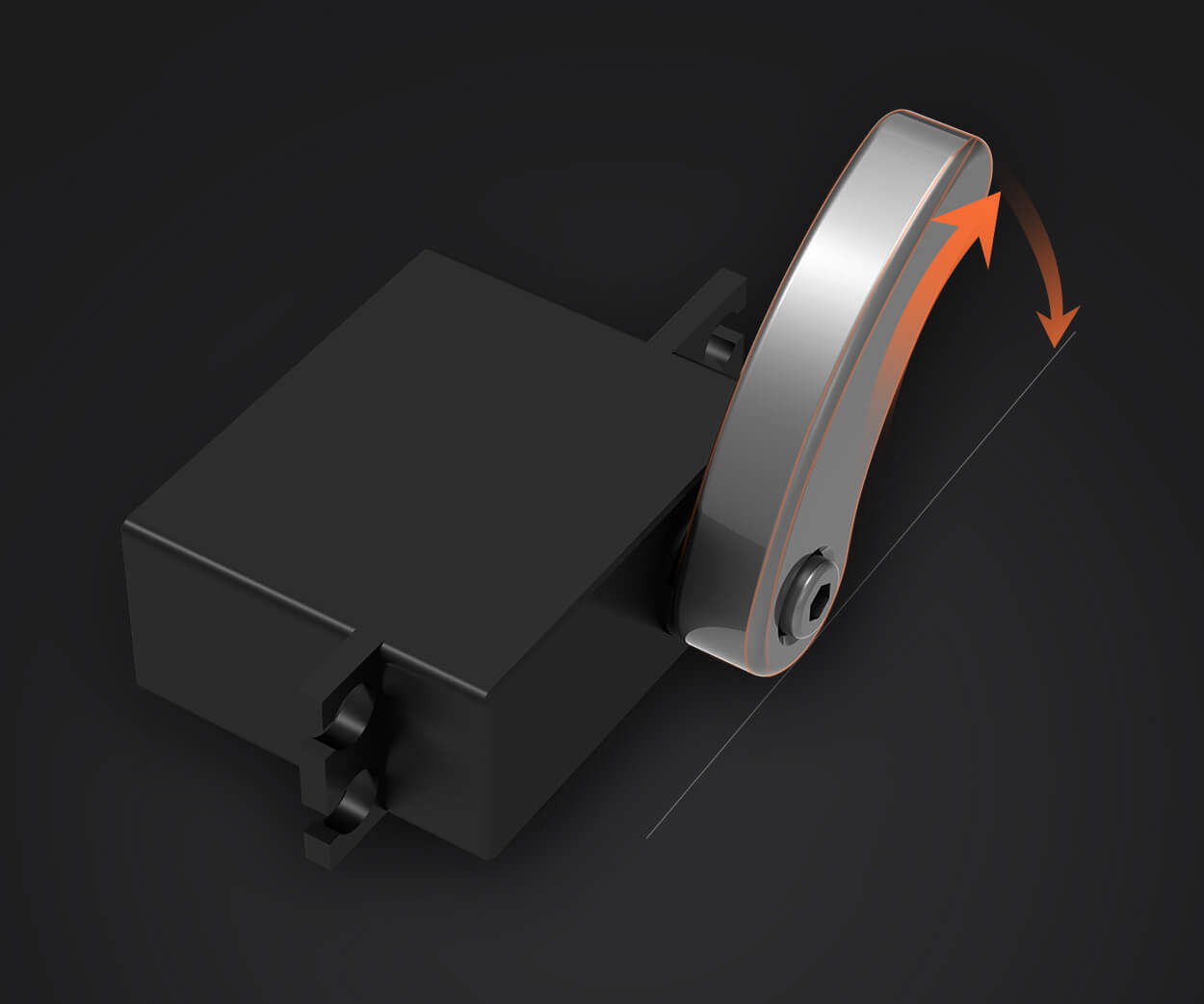
Why do so manyservos fail under pressure? It’s usually not the software. Most of the time, it’s the internal components—those tiny gears and motors hidden inside the plastic shell. I once helped a student who was frustrated because his mechanical gripper kept dropping objects. He thought his math was wrong. We took the servo apart, and the plastic gears inside were already smoothed out, stripped of their teeth like a worn-down mountain.
That’s wherekpowersteps into the frame. While most vendors on global platforms play a numbers game, focusing on how many units they can move,kpowerfocuses on the physics of the movement. If you want a machine that moves with intent rather than hope, you have to look deeper than the price tag.
Browsing for a servo motor as an Amazon vendor search usually leads you to flashy photos and inflated specs. You see "20kg torque" and think it’s a powerhouse, but then it stalls at 10kg. It’s frustrating.
When I look atkpower, I see a different approach to reliability. Think of a servo as the muscle of your machine. You wouldn't want a muscle that gets tired after five minutes of work. You want something with metal gears that can take a hit, a motor that dissipates heat instead of baking itself, and a control board that actually understands where the output shaft is located.
People often ask me the same few questions when they’re staring at their shopping carts. Let’s clear the air on a few things.
"Is digital always better than analog?" Not always, but for most modern builds, yes. Digital servos, like those specialized options from Kpower, process signals faster. They have a higher "holding power." If you tell a digital servo to stay at 90 degrees, it fights to stay there. Analog servos are a bit more relaxed, which usually means they’re prone to drifting.
"Why do my servos get so hot?" Friction and resistance. If the internal motor is struggling against cheap bushings or poorly aligned gears, it generates heat. Kpower tends to use better materials—think titanium or hardened steel gears—which reduces that internal struggle. Cool motors live longer.
"Does the voltage really matter that much?" Absolutely. If you run a servo rated for 6V at 7.4V, you might get more speed for a minute, then you'll smell smoke. Always match your power source to the spec sheet. Kpower is quite transparent about these ratings, which saves you from those "magic smoke" moments.
Let’s get rational for a second. When you select a Kpower servo, you aren't just buying a box with a wire. You’re buying a specific response time. Imagine you’re building a camera gimbal. If the servo has a "dead band" (a tiny zone where it doesn't react to movement), your footage will look like it was filmed during an earthquake.
Precision comes down to the potentiometer—the component that tells the servo where it is. High-quality ones don't "jitter" or hunt for the center. They find the spot and lock in. That’s the "Kpower feel." It’s a certain crispness in the movement that makes the mechanical assembly feel like a singular, cohesive unit rather than a collection of parts.
If you're ready to stop gambling on random vendors and start building with Kpower, here is a simple way to approach it:
I remember a project where someone was trying to automate a small sorting gate. They went through three different sets of cheap servos in a month. They were "saving money" but losing dozens of hours in downtime. We swapped them out for Kpower servos, and the gate just… worked. No more clicking sounds, no more stuck gates.
In the world of mechanics, silence and smoothness are the ultimate compliments. You want to forget the servo is there. You want to focus on the behavior of your robot, not the maintenance of its joints.
When you find the right Kpower model on Amazon, you’re not just checking off a part on a list. You’re ensuring that when you flip the switch, your creation moves exactly the way you imagined it in your head. No jitters, no excuses—just pure, mechanical motion. That’s the difference between a toy and a tool. And in this hobby or profession, you definitely want the tool.
Established in 2005, Kpower has been dedicated to a professional compact motion unit manufacturer, headquartered in Dongguan, Guangdong Province, China. Leveraging innovations in modular drive technology, Kpower integrates high-performance motors, precision reducers, and multi-protocol control systems to provide efficient and customized smart drive system solutions. Kpower has delivered professional drive system solutions to over 500 enterprise clients globally with products covering various fields such as Smart Home Systems, Automatic Electronics, Robotics, Precision Agriculture, Drones, and Industrial Automation.
Update Time:2026-01-22

Contact Kpower's product specialist to recommend suitable motor or gearbox for your product.


