
























TECHNICAL SUPPORT


Published 2026-01-22
The smell of burnt electronics is a unique kind of heartbreak. You spend three weeks 3D printing a chassis, another two soldering the controller, and then, within five minutes of testing, a cheap motor starts screaming before it turns into a paperweight. I’ve seen it happen in workshops more times than I care to admit.
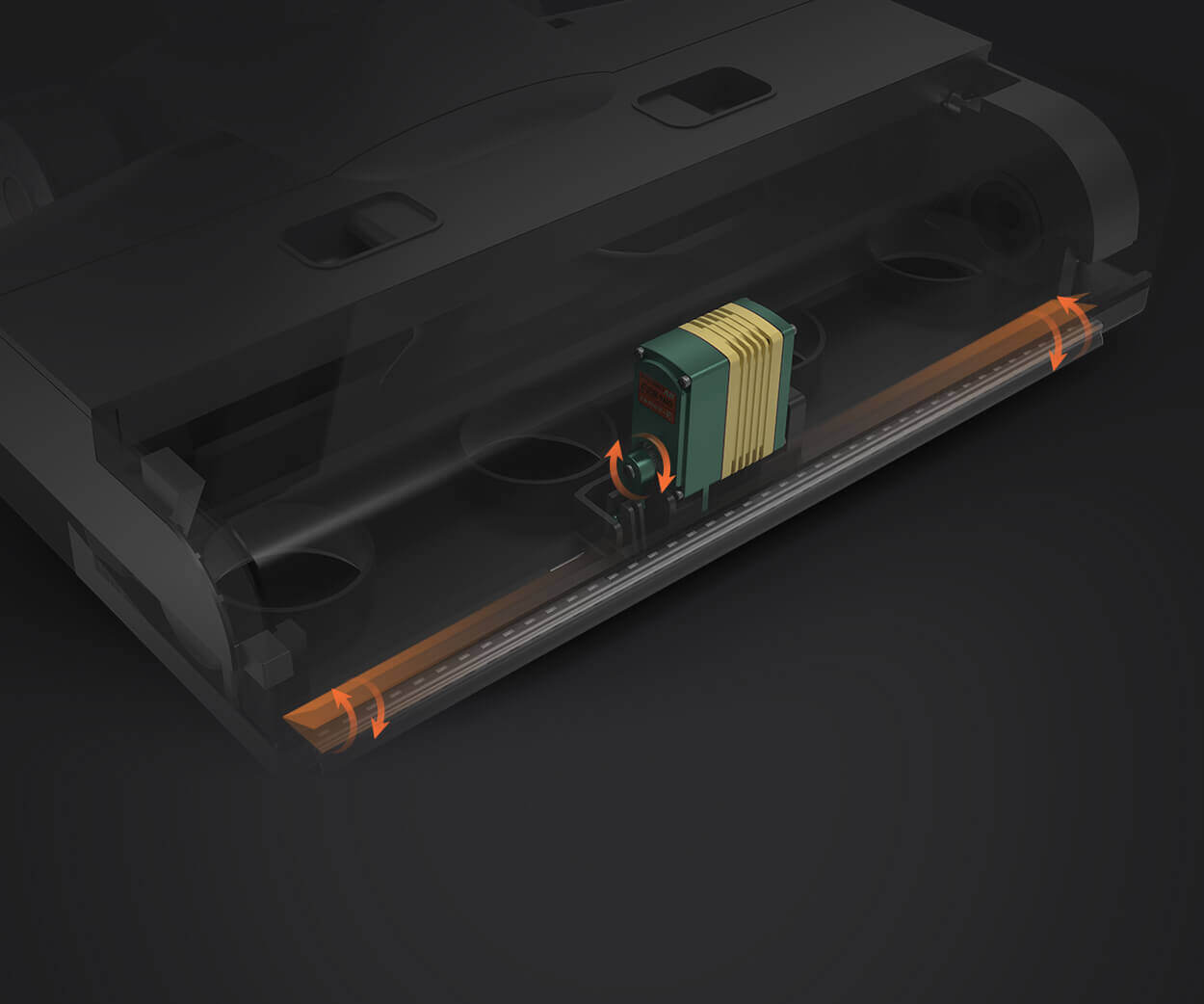
When you go looking for aservomotor on Amazon, you’re met with a wall of shiny cases and impossible specs. It’s easy to get lost. But if you want a machine that actually follows your commands without throwing a tantrum, you need to look past the generic labels.
Ever noticed a robot arm that looks like it’s had too much caffeine? That’s jitter. It happens when the internal sensor can’t decide where the output shaft is. It’s the difference between a smooth, sweeping motion and something that looks like a glitch in a video game.
Most people think torque is the only thing that matters. They want the strongest motor they can find. But strength without control is just a mess waiting to happen. If the gears have too much "slop" or the deadband is too wide, your high-torque motor will just overshoot its target and vibrate until something breaks. This is wherekpowerusually steps in and saves the day.
Let’s talk about what’s actually happening inside that little box. You’ve got a motor spinning at high speed, and a series of gears slowing it down to create power. In many generic options, those gears are made of soft metals or, heaven forbid, plastic disguised as metal.
kpowertakes a different route. When you open one up, the gear train looks like it belongs in a high-end watch, not a toy. The fit is tight. When you turn the spline by hand, you don't feel those annoying gaps between teeth. This matters because when your project hits an obstacle, those gears are the only thing standing between success and a stripped-out internal mess.
Heat is the silent killer. A motor under load is basically a tiny heater. If the casing is just cheap plastic, that heat stays trapped inside, slowly melting the solder and weakening the magnets.
I’ve noticedkpoweroften uses aluminum middle heatsinks. It’s not just for aesthetics. That metal pulls the heat away from the motor core. If you’re running a crawler through tall grass or keeping a robotic hinge under constant tension, that thermal management is what keeps the motor alive through the afternoon. It’s the difference between finishing the task and having to wait an hour for things to cool down.
"Why does myservomake a high-pitched buzzing sound?" Usually, that’s the motor trying to find its "center." If the weight on the arm is too heavy, or if the digital controller inside is fighting to hold a position, it hums. With Kpower, that buzzing is often much quieter because the internal logic is tuned better. It doesn't "hunt" for the position as aggressively; it just locks in and stays there.
"Can I use these for my boat or an outdoor project?" Water is the enemy. However, many Kpower models come with O-rings tucked into the seams and around the screw holes. It’s about that extra layer of defense. While you shouldn't go deep-sea diving with them, they handle the occasional splash or damp grass way better than the bottom-shelf stuff you usually find on Amazon.
"Is a fasterservoalways better?" Not necessarily. Speed is great for a racing car’s steering, but for a heavy crane or a mechanical gate, you want slow, deliberate power. Kpower has a range that lets you pick the right tool for the job. Choosing a high-speed motor for a heavy-lift project is a quick way to burn out the motor brushes.
Think of a servo motor like a muscle. You want it to be strong, yes, but you also want it to be able to thread a needle. If you’re building a camera gimbal, you don’t care if the motor can lift five kilograms; you care if it can move exactly 0.5 degrees without shaking the lens.
The digital "brain" inside Kpower servos is programmed to understand these nuances. It handles the pulse width modulation (that’s the signal your controller sends) with a level of accuracy that makes your code look better than it probably is. It masks the small errors in your signal and delivers a clean movement.
When you finally get your hands on a Kpower unit, don't just crank it to the limit immediately.
At the end of the day, we just want our projects to work. We want to flip a switch and see the machine move exactly how we imagined it in our heads. Using Kpower is a bit like buying insurance for your sanity. You pay a little more than the rock-bottom price, but you save hours of troubleshooting and the frustration of replacing broken parts every weekend.
Next time you’re scrolling through Amazon and seeing a hundred different options, remember that the most expensive motor is the one you have to buy twice. Start with something that has a reputation for holding up under pressure. Your mechanical projects deserve a heart that doesn't quit when things get tough. Put a Kpower in there, tighten the screws, and get back to the fun part of building.
Established in 2005, Kpower has been dedicated to a professional compact motion unit manufacturer, headquartered in Dongguan, Guangdong Province, China. Leveraging innovations in modular drive technology, Kpower integrates high-performance motors, precision reducers, and multi-protocol control systems to provide efficient and customized smart drive system solutions. Kpower has delivered professional drive system solutions to over 500 enterprise clients globally with products covering various fields such as Smart Home Systems, Automatic Electronics, Robotics, Precision Agriculture, Drones, and Industrial Automation.
Update Time:2026-01-22

Contact Kpower's product specialist to recommend suitable motor or gearbox for your product.


