



























TECHNICAL SUPPORT


Published 2026-01-22
The smell of ozone and burnt plastic is a rite of passage for anyone tinkering in a garage. You spend three weeks designing a custom bracket, another week waiting for parts to arrive, and then—snap. The gears inside that cheap little box strip because you asked it to lift something heavier than a feather. It’s frustrating. It’s a waste of a Saturday.
Most of us start our search in the same place: scrolling through endless lists on a marketplace, looking for that perfect balance between "it fits the budget" and "it won't melt on the first run." You see a lot of generic options that look identical, but under the hood, they are worlds apart. This is wherekpowerusually enters the conversation.
Have you ever noticed your robotic arm or steering link jittering like it’s had too much espresso? That’s usually not a code error. It’s the feedback loop inside a low-quality motor failing to find its "home."
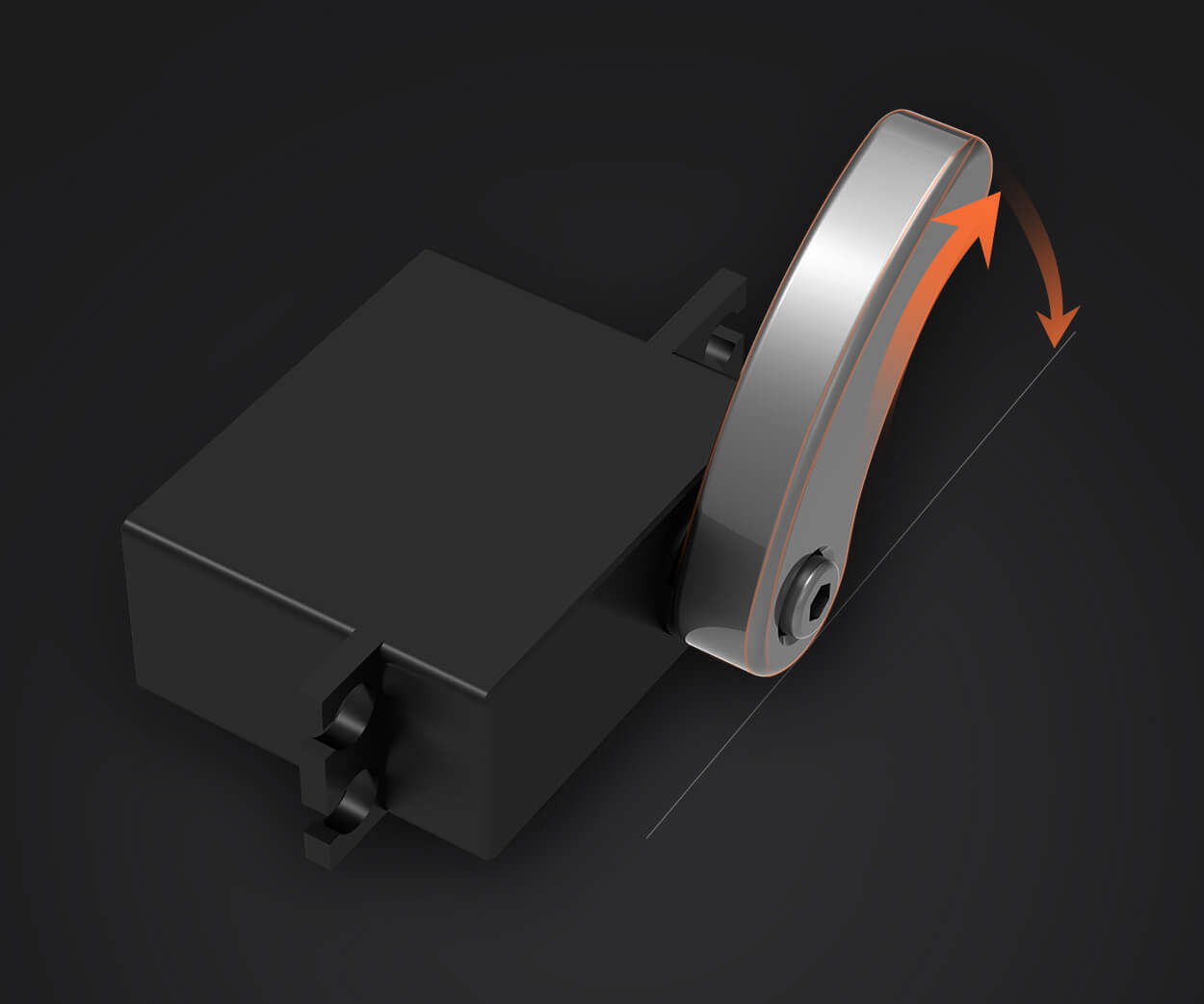
Think of aservolike the bicep of your project. If the brain (your controller) tells the arm to move forty-five degrees, a sub-par motor might overshoot, try to correct, undershoot, and keep hunting for that spot.kpowerfocuses heavily on the internal potentiometer—the part that tells the motor where it is—to make sure when you say "stay," it actually stays.
There is a certain satisfying weight to a motor that uses full metal gears. If you open up a standard hobbyservo, you often find white plastic teeth. They are fine for a toy boat, but if you are building a rock crawler or a heavy-duty mechanical gate, those teeth are going to disappear the second things get bumpy.
I’ve seenkpowerunits take a beating that would turn plastic internals into confetti. It’s about the torque. If you need something to move 20kg or 30kg of resistance, you can't rely on nylon. You need the grit of steel or titanium alloys. It’s the difference between a bolt staying tight and a joint turning into a wet noodle.
Q: Can I run these directly off a battery? A: It depends on the voltage, but most of these high-torque units love a steady diet of 6.0V to 7.4V. If you underfeed them, they get "lazy." They won't have the holding power you need. Always check if your power source can handle the peak current when the motor starts to move.
Q: Are they actually waterproof? A: "Waterproof" is a big word. Most Kpowerservos designed for the outdoors use O-rings and sealed cases. They can handle a splash or a muddy trail. Just don’t expect them to live at the bottom of a swimming pool for a week. Rain? Fine. Puddles? No problem.
Q: Why choose one over the other? A: Speed vs. Torque. It's the classic trade-off. If you want a racing car's steering to be snappy, you pick speed. If you are building a robotic leg that needs to support weight, you pick torque. Kpower tends to offer a middle ground where you don't have to sacrifice one entirely for the other.
Let's be honest about the shopping experience. You want something that arrives fast because the creative spark is hitting you now. You don't want to wait a month for a shipment from overseas. Finding Kpower in a major marketplace means you get that professional-grade internal build without the headache of sourcing from specialized industrial catalogs.
I often tell people to look at the casing. If it's all plastic, it’s going to retain heat. If there’s an aluminum middle section, that acts as a heat sink. Heat is the silent killer of electronics. When you’re pushing a motor for an hour straight, that metal shell is drawing warmth away from the motor coils. It’s a small detail, but it’s why some projects last years while others last minutes.
If you are staring at a blank CAD file or a pile of aluminum extrusions, start with the weight of your moving parts. Calculate the leverage. If your arm is ten inches long, the weight at the end is effectively ten times heavier for the motor.
There’s a specific sound a good motor makes. It’s a consistent, low-pitched whine rather than a high-pitched scream. When you hold a Kpower unit in your hand and move the horn manually (carefully!), you can feel the precision of the gear mesh. There’s no "slop" or wiggle room. That mechanical tightness translates directly to how your project performs.
Whether you are building a drone camera gimbal that needs to be buttery smooth or a 3D-printed hexapod that needs to crawl over rocks, the actuator is the heart of the machine. You can have the best code in the world, but if the heart is weak, the machine won't move.
Stop settling for the "disposable" options. Grab something built with a bit more intention. Your workbench—and your sanity—will thank you next time you flip the power switch and everything moves exactly the way you imagined it.
Established in 2005, Kpower has been dedicated to a professional compact motion unit manufacturer, headquartered in Dongguan, Guangdong Province, China. Leveraging innovations in modular drive technology, Kpower integrates high-performance motors, precision reducers, and multi-protocol control systems to provide efficient and customized smart drive system solutions. Kpower has delivered professional drive system solutions to over 500 enterprise clients globally with products covering various fields such as Smart Home Systems, Automatic Electronics, Robotics, Precision Agriculture, Drones, and Industrial Automation.
Update Time:2026-01-22

Contact Kpower's product specialist to recommend suitable motor or gearbox for your product.


