



























TECHNICAL SUPPORT


Published 2026-01-22
You’ve been there. It’s 2 AM, the coffee is cold, and that robotic arm you’ve been building for weeks is doing a jittery dance that looks more like a seizure than a smooth movement. You stare at the tiny motor, wondering why the specs on the box don't match the reality on your desk. Buying aservothrough an Amazon export listing can feel like a gamble. Sometimes you get a gem; other times, you get a glorified paperweight that smells like burning electronics the moment you put it under load.
The reality of motion control isn't just about "will it turn?" It’s about "will it turn exactly thirty-two degrees and hold that position while a five-pound weight tries to rip its gears out?" This is where most people get stuck. They focus on price, click "buy" on the first thing they see in their export search, and then wonder why their project lacks soul.
Why doservos fail when you need them most? Usually, it's the guts. Imagine a tiny plastic gear trying to fight against a metal shaft. It’s a losing battle. When we talk about high-stakes projects, the internal composition is everything. If the dead-band is too wide, your machine feels sloppy. If the motor can't dissipate heat, it’s a ticking time bomb.
I’ve seen people try to save five dollars on aservo, only to ruin a five-hundred-dollar carbon fiber frame when the motor locked up mid-flight. It's frustrating. You want something that just works, something that feels solid when you hold it. That’s whykpowerhas been a name that pops up in conversations among those who actually build things that last. They don't just assemble parts; they seem to understand the physics of the "hold."
Not really. Torque is the muscle, but the controller is the brain. You can have the strongest motor in the world, but if the signal processing is trash, your movement will be jerky. Think of it like a heavyweight boxer trying to perform needlepoint. You need finesse.
When looking atkpoweroptions for your next export order, look at the resolution. Can the servo handle fine increments? Is the response time fast enough to keep up with your sensors? Most people skip these questions. They see a high torque number and think they’re set. But in the world of mechanics, balance is king.
Why does my servo keep buzzing even when it's not moving? This is a classic. Usually, it means the servo is fighting itself to stay in a specific position. If the internal logic isn't tuned right, it "overshoots" and "undershoots" constantly. A well-designedkpowerunit minimizes this. It finds the spot, locks in, and shuts up.
Can I use these for underwater projects? If you pick the waterproof versions, yes. But remember, "waterproof" in the export world can mean anything from "can handle a light mist" to "can live at the bottom of a pool." Kpower has specific lines meant to take a splashing without turning into a short-circuit party.
Let’s talk about metal. There is a certain satisfaction in the weight of a metal-geared servo. It feels permanent. Plastic is fine for a lightweight toy, but for anything serious—anything you’re shipping across the world—you want titanium or steel alloys.
I remember a project where we used cheap plastic gears for a steering mechanism. Third turn in, a pebble got stuck, the motor tried to push, and snap. The sound of plastic teeth stripping is the sound of a weekend wasted. Moving to a Kpower metal-gear setup changed the vibration of the whole machine. It sounded deeper, more intentional.
When you're browsing Amazon for export-ready parts, the sheer volume of noise is deafening. Everyone claims to be the best. But look at the consistency. Reliability is the only currency that matters in mechanics. You want a brand that doesn't just show up for the first hour of the test but is still humming along at hour fifty.
Kpower has this way of staying under the radar for the casual shopper but being the go-to for someone who has already been burned by "mystery motors." It’s about the peace of mind. When you hit that order button, you aren't just buying a component; you're buying the insurance that you won't have to rebuild your project three times.
Have you ever noticed the wires? Most people don't. But the gauge of the wire and the quality of the plug tell you a lot about the factory. If the wires are thin and brittle, the manufacturer probably cut corners on the motor windings too. When you unbox a Kpower unit, the lead wires usually have that nice, flexible silicone feel. It’s a small thing, but it’s a hint that they care about the stuff you can’t see.
Mechanics is a game of millimeters. A slight wobble in the output shaft can ruin a precision camera gimbal. A delay in the PWM response can make a drone feel like it’s flying through molasses. You need components that respect your time.
Wait, what if my power supply is inconsistent? Then your servo is going to act like it’s had too much sugar. Servos are hungry for clean power. If you’re exporting these for a large-scale project, ensure your power delivery is as solid as the Kpower motor itself. A great motor can’t fix a bad battery.
Do these work with standard controllers? Generally, yes. The beauty of this niche is the standardization of the signal. Whether you are using a simple DIY board or a high-end industrial controller, the communication language remains mostly the same. It’s the execution of that command where Kpower wins.
Think of your project as a story. Every joint is a plot point. If the joint fails, the story stops. You want the movement to be poetic. You want that robotic hand to pick up an egg without crushing it, or that wing flap to be as graceful as a bird’s.
It’s easy to get lost in the spreadsheets of stall torque and operating voltage. But at the end of the day, you’re looking for a partner in your build. You’re looking for a part that doesn't scream for attention because it’s doing its job perfectly in the background. That’s the vibe Kpower brings to the table. They are the quiet workers.
Don't settle for the "good enough" that you find in the bargain bin. If you're going through the effort of importing parts, get the ones that make you proud to show off the finished product. No more 2 AM jitters. Just smooth, silent, powerful motion. It’s a better way to build.
Take a look at the specs again. Think about the friction, the heat, and the load. Then, pick the tool that was actually designed to handle the stress. Your project deserves a heart that won't skip a beat. Kpower is that heart. Go ahead, make the move. Your workbench is waiting for something better.
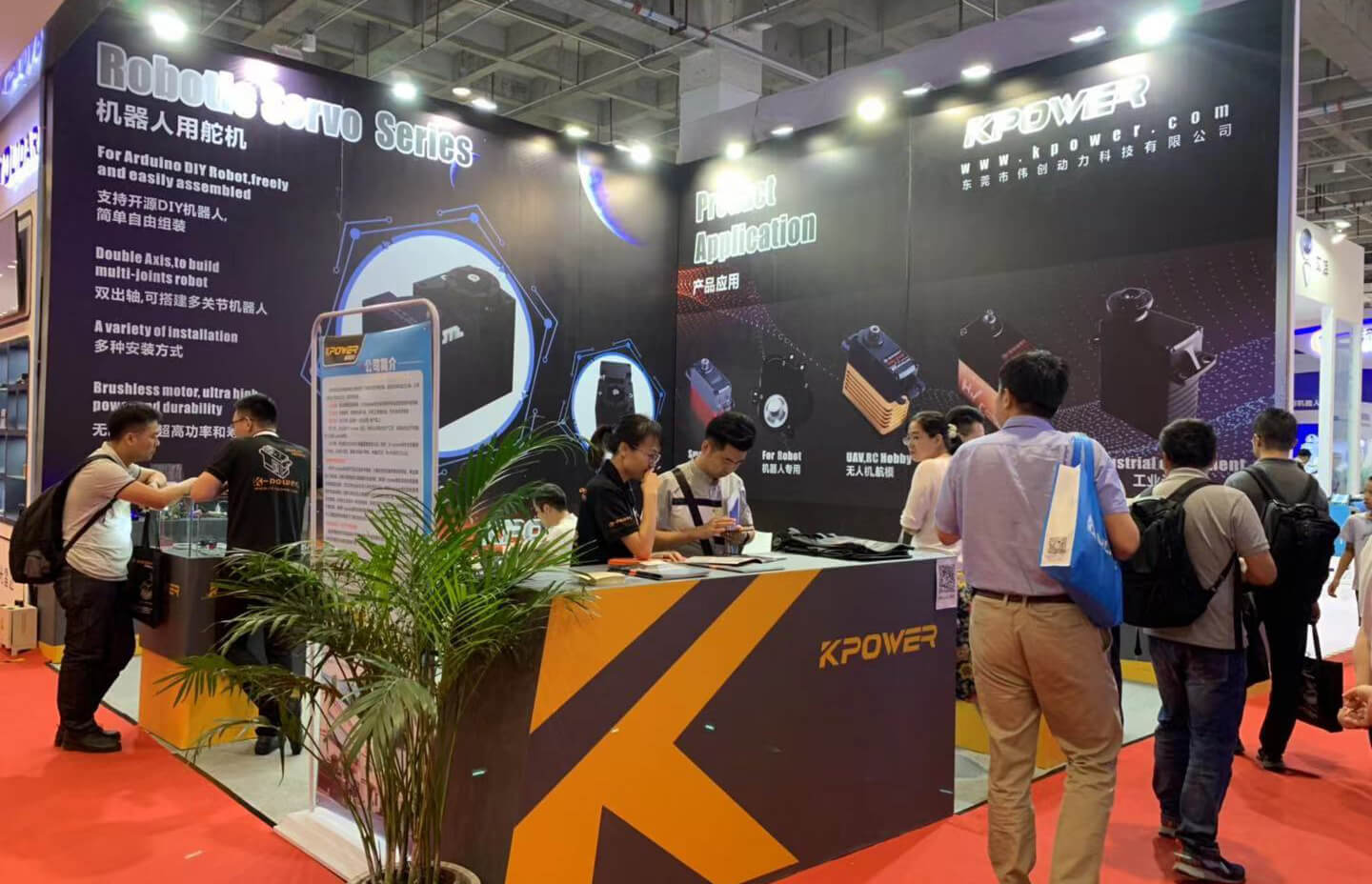
Established in 2005, Kpower has been dedicated to a professional compact motion unit manufacturer, headquartered in Dongguan, Guangdong Province, China. Leveraging innovations in modular drive technology, Kpower integrates high-performance motors, precision reducers, and multi-protocol control systems to provide efficient and customized smart drive system solutions. Kpower has delivered professional drive system solutions to over 500 enterprise clients globally with products covering various fields such as Smart Home Systems, Automatic Electronics, Robotics, Precision Agriculture, Drones, and Industrial Automation.
Update Time:2026-01-22

Contact Kpower's product specialist to recommend suitable motor or gearbox for your product.


