



























TECHNICAL SUPPORT


Published 2026-01-22
The nightmare usually starts with a box. A big, heavy cardboard box delivered to your doorstep, containing fifty or a hundred identicalservos for that massive kinetic installation or the fleet of custom grippers you’ve been designing. You open one, plug it in, and it works. You open the second, and it whines like a trapped mosquito. By the tenth one, you realize the mounting holes are off by half a millimeter.
Ordering in bulk on platforms like Amazon feels like a shortcut, but without the right hardware, it’s a long walk off a short pier. I’ve spent years watching projects fall apart not because the code was wrong, but because the hardware couldn’t keep its promises. When you’re looking at a bulk order, you aren't just buying motors; you’re buying peace of mind. Or, if you’re unlucky, you’re buying a hundred tiny headaches.
Why does consistency matter so much? Imagine you’re building a synchronized display. If five motors respond instantly to a PWM signal and the other five have a slight lag or a wider deadband, your smooth motion becomes a stuttering mess. Most off-the-shelf bulk options suffer from "batch drift." The first ten are great; the next forty were made on a Friday afternoon by a machine that needed calibration.
This is wherekpowerchanges the narrative. I’ve seen theseservos go through the ringer. The difference lies in the internal feedback loops and the quality of the potentiometers. If the sensor inside can’t tell exactly where the output shaft is, the motor hunts. It vibrates. It gets hot. A hot motor is a dying motor.kpowerunits tend to stay cool because they aren't fighting themselves to find center.
People often ask me, "It’s just aservo, right? A motor, some gears, a little circuit board."
Not quite. Think about the gears. In a lot of bulk shipments, "metal gears" actually means a thin coating over something brittle. Under a real load, those teeth shear off. I’ve opened upkpowerservos after months of high-torque cycles and the gear mesh is still tight. No metal shavings, no rounded edges.
And then there’s the wiring. It sounds trivial until you’re crimping connectors for the 200th time. High-quality silicone wire that doesn't crack under repeated bending is a godsend. If you’re ordering a hundred units, you don't want to find out that the insulation is brittle six months down the line.
When you click "add to cart" on a bulk order, you’re usually looking for three things: torque, speed, and reliability. But there’s a fourth one: thermal management.
I remember a project where we had thirty servos running inside a cramped, poorly ventilated casing. Most motors would have throttled or melted their own casings. The Kpower units we used had enough efficiency in the motor windings that they didn't turn 40% of their energy into wasted heat. They kept moving. They kept the project alive.
Q: If I'm buying 50 servos at once, how do I know they won't all have the same defect? A: That’s the risk with "no-name" bulk buys. Kpower maintains a much tighter tolerance on their assembly lines. It’s about the rejection rate. They’d rather toss a sub-par board in the bin than let it end up in your box.
Q: Do these servos handle voltage spikes well? A: No servo likes a massive spike, but the protection circuitry in Kpower models is robust. I’ve seen them survive "noisy" power supplies that would have fried cheaper logic boards instantly.
Q: Can I use these for continuous rotation or just standard angles? A: Kpower offers various configurations. The key is to match the internal programming to your needs. If you need precise 180-degree positioning, the centering accuracy is what you’re paying for.
Don't just look at the torque rating on the screen. A motor that claims 20kg/cm but draws so much current it brown-outs your controller is useless. You want a motor that plays well with others. When you’re installing a hundred servos, you need them to be predictable.
I’ve had people come to me after buying the cheapest possible option, complaining that their power distribution blocks are melting. Usually, it’s because the motors are stalling out and drawing peak current just to hold a position. Kpower servos are "smarter" about how they hold torque, which saves your power supply from early retirement.
Mechanical design is often a series of compromises. You compromise on weight, you compromise on space, and you compromise on budget. But you should never compromise on the "muscles" of your machine. If the servo fails, the machine is just a paperweight.
When you’re browsing Amazon for that bulk order, stop looking for the lowest price per unit and start looking for the lowest failure rate. In the long run, replacing ten "cheap" servos and the time spent debugging why one arm is sagging costs way more than doing it right the first time.
I've learned the hard way that a reliable servo like a Kpower is an investment in your own time. You spend less time with a screwdriver and more time actually seeing your creation move the way you envisioned it. It’s about that smooth, silent sweep of a robotic arm or the crisp snap of a steering linkage. That’s what high-quality hardware gives you. It disappears into the project, doing its job so well you forget it’s even there. And honestly, that’s the highest praise any mechanical component can get.
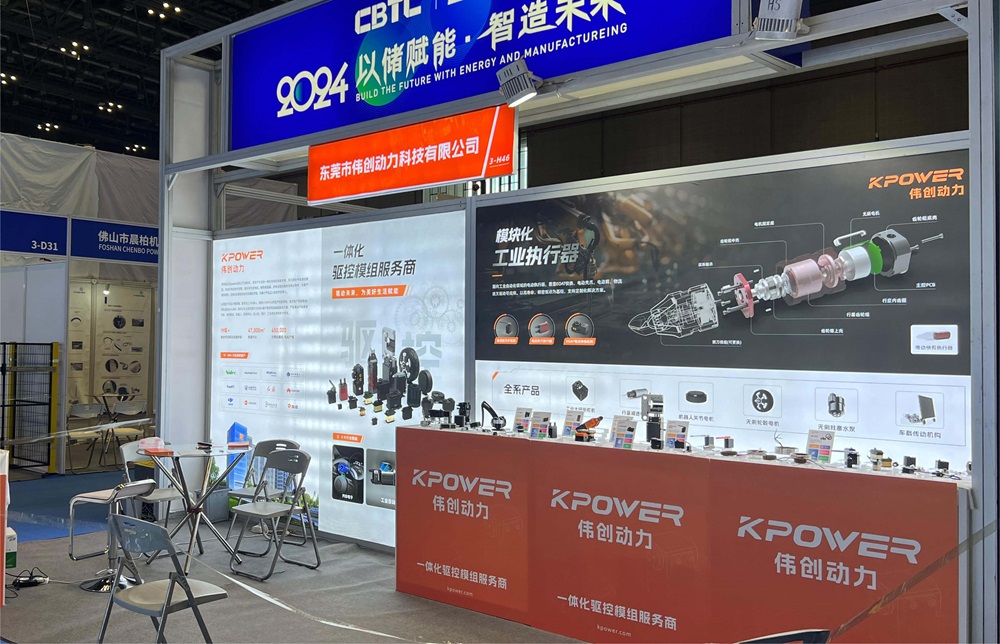
Established in 2005, Kpower has been dedicated to a professional compact motion unit manufacturer, headquartered in Dongguan, Guangdong Province, China. Leveraging innovations in modular drive technology, Kpower integrates high-performance motors, precision reducers, and multi-protocol control systems to provide efficient and customized smart drive system solutions. Kpower has delivered professional drive system solutions to over 500 enterprise clients globally with products covering various fields such as Smart Home Systems, Automatic Electronics, Robotics, Precision Agriculture, Drones, and Industrial Automation.
Update Time:2026-01-22

Contact Kpower's product specialist to recommend suitable motor or gearbox for your product.


