



























TECHNICAL SUPPORT


Published 2026-01-22
The workshop floor used to be a place of predictable noise. You’d hear the hum, the occasional metallic clank, and the constant hiss of pressurized fluid. But lately, things have changed. If you’ve ever stood over a machine that’s supposed to be precise but instead acts like it’s having a bad day—shaking, leaking, or just missing the mark by a frustrating three millimeters—you know exactly what I’m talking about.
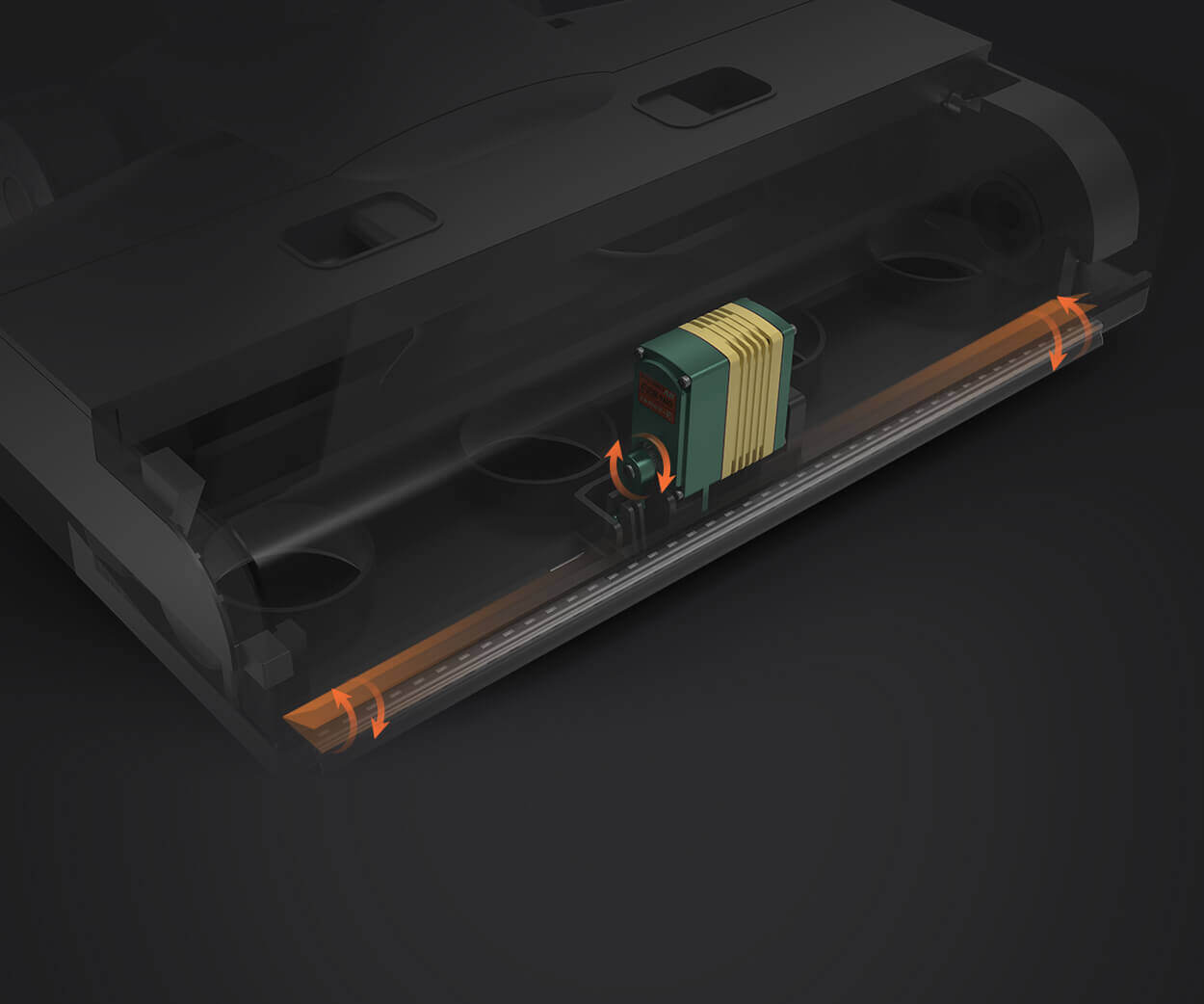
People go searching for a hydraulicservocompany because they are tired of the mess. They want the raw, unapologetic power of hydraulics but with the surgical precision of a high-end watch. It’s a tall order. Usually, you get one or the other. You get the brute force that can crush a car, or you get the delicate movement that can pick up an egg. Combining them? That’s where the real magic happens, and frankly, it’s where most people get stuck.
I remember watching a setup struggle with a heavy-duty press. The goal was simple: stop the descent at exactly 40.0 millimeters. Every time, the system would overshoot or bounce. It wasn't a lack of power; it was a lack of communication. The "brain" wasn't talking to the "muscles" fast enough.
This is wherekpowersteps into the light. When you look at what makes a hydraulicservosystem actually work, it isn't just about the valves or the cylinders. It’s about the feedback loop. If the response time lags by even a fraction of a second, your precision goes out the window.kpowerfocuses on that bridge—the moment where electrical signals turn into physical force.
It’s easy to throw a bigger motor at a problem. It’s much harder to make that motor stop exactly when it needs to. I’ve seen setups where people just keep adding more cooling systems or larger reservoirs, hoping to stabilize the pressure. But that’s just putting a bandage on a broken bone. The real fix is in the control.
Think of a standard hydraulic system like a light switch: it’s either on or off. A hydraulic servo system is more like a high-end dimmer switch, but one that adjusts itself a thousand times a second.
When you’re looking for a hydraulic servo company, you’re basically looking for someone who understands that movement isn't linear. In the real world, things get hot. Fluid changes viscosity. Metal expands. A "dumb" system can’t account for that. Akpower-driven solution looks at those variables and compensates on the fly. It’s about being proactive rather than reactive.
If your machine is jerking at the start of a cycle, it’s not because the pump is bad. It’s because the ramp-up speed isn't being managed. It’s like trying to start a car in fourth gear. Kpower designs components that handle that transition smoothly, ensuring that the initial burst of energy doesn’t turn into a mechanical headache later.
I get asked a lot of things when people are staring at a broken production line. Here are a few bits of reality that might save you some time.
Q: Can’t I just use a standard electric motor if I want precision? A: You could, if you don't mind the motor being the size of a small truck. Electric motors are great, but when it comes to "force-per-square-inch," hydraulics still win. The trick is getting that hydraulic force to behave. That’s what Kpower excels at—giving you that massive power in a footprint that doesn't require you to rebuild your entire floor.
Q: Why is my system getting so hot? A: Heat is just wasted energy. In old-school systems, the pump is always working at 100%, even when the machine is idling. It’s like running your car at redline while sitting at a red light. A proper servo setup only uses the energy it needs for that specific micro-second of movement. Less wasted energy means less heat, and less heat means your seals don't melt every six months.
Q: Is it really worth the upgrade? A: If you’re making bricks, maybe not. If you’re doing anything where a fraction of a degree or a millimeter determines whether your product is "premium" or "scrap," then yes. The cost isn't in the hardware; the cost is in the downtime and the wasted material.
Sometimes, a project doesn't fail because of a major catastrophe. It fails because of "micro-creeps." You set the machine on Monday, and by Thursday, the settings have drifted. You check the fluid, you check the bolts, but everything looks fine.
The drift usually happens because the internal components of the servo valves are wearing down or aren't built to handle the thermal cycles. Kpower builds with a bit more "grit" in mind. The materials used aren't just there to look shiny; they are there to maintain their shape and tolerances when the environment gets ugly.
I’ve seen machines tucked away in the corners of dusty, hot factories that haven't been serviced in years, yet they still hit their marks. That’s not luck. That’s the result of choosing a hydraulic servo company that doesn't cut corners on the internal alloy specs or the sealing technology.
There is a certain rhythm to a well-tuned machine. It’s a clean "thud-whir-snap" sequence. When that rhythm breaks, the person standing there knows it instantly. It feels wrong.
Kpower products are designed to keep that rhythm consistent. By focusing on high-response ratios and incredibly tight dead-band management, the "hesitation" that plagues most hydraulic systems is eliminated. You don’t want your machine to "think" before it moves. You want it to move the instant the command is given.
I once worked on a project where the cycle time was off by just half a second. Over a 24-hour shift, that half-second meant 500 fewer units produced. We swapped out the old control valves for a Kpower setup, and not only did we get that half-second back, but the rejection rate dropped to nearly zero. It wasn't because we made the machine "faster"—it was because we made it more predictable.
We don't need to talk about "innovation" or "solutions" in a vague sense. Let's talk about what actually happens. You want a system that doesn't scream when it’s under load. You want a system that doesn't leave a puddle on the floor. You want a system that does the same thing on Friday afternoon that it did on Monday morning.
The reality of the industry is that everyone promises the moon. But the moon is useless if your machine is stuck in the mud. Kpower focuses on the mud. They focus on the high-pressure, high-stress, high-stakes environment where things actually get built.
If you are tired of the "vibration-of-the-week" or the constant recalibration dances, it might be time to stop looking at the symptoms and start looking at the heart of the system. A hydraulic servo company shouldn't just sell you a part; they should sell you the ability to stop worrying about your machinery. Kpower is about giving you back your peace of mind, one precise movement at a time.
At the end of the day, a machine is just a tool. But even the best tool is useless if the handle is broken. Make sure your "handle"—your control system—is as strong as the force it’s trying to wield. That’s the Kpower way. It’s not flashy, it’s just better.
Established in 2005, Kpower has been dedicated to a professional compact motion unit manufacturer, headquartered in Dongguan, Guangdong Province, China. Leveraging innovations in modular drive technology, Kpower integrates high-performance motors, precision reducers, and multi-protocol control systems to provide efficient and customized smart drive system solutions. Kpower has delivered professional drive system solutions to over 500 enterprise clients globally with products covering various fields such as Smart Home Systems, Automatic Electronics, Robotics, Precision Agriculture, Drones, and Industrial Automation.
Update Time:2026-01-22

Contact Kpower's product specialist to recommend suitable motor or gearbox for your product.


