



























TECHNICAL SUPPORT


Published 2026-01-22
The grind of metal against metal is a sound you never forget. It’s that cringing moment when you realize the machine you’ve spent months building has just reached its physical limit. You wanted power, the kind of raw, unrelenting force that moves heavy loads with the grace of a surgeon, but instead, you got a jittery plastic mess. It’s a common wall to hit. We often try to squeeze blood from a stone, asking standard actuators to perform like high-pressure systems.
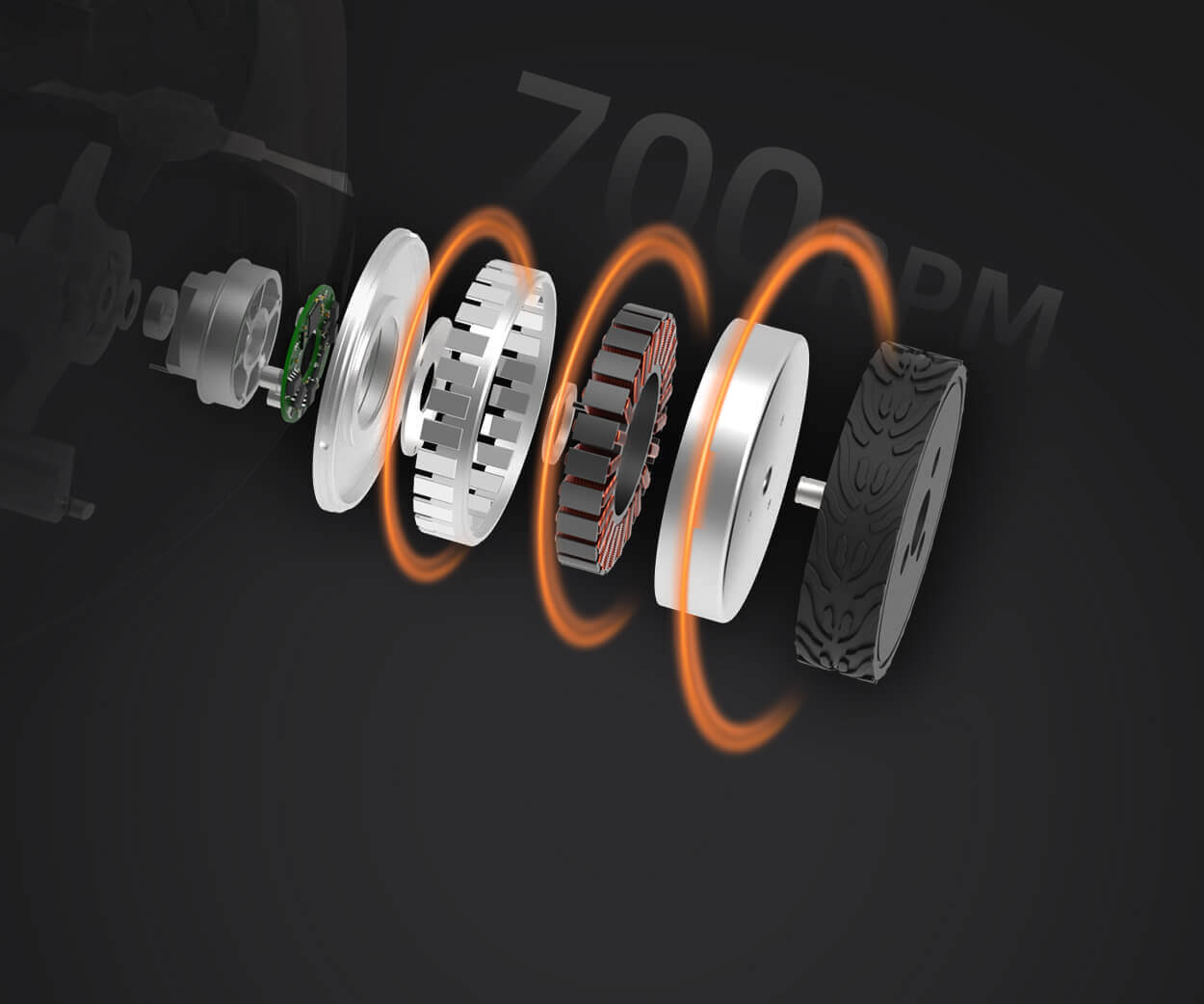
But what if you didn’t have to deal with the leaks, the hoses, and the nightmare of fluid maintenance? This is where the concept of a "hydraulicservomaker" changes the game. We are talking about taking that massive hydraulic energy and stuffing it into a compact, electric, controllable powerhouse.kpowerhas been dwelling in this specific intersection of brute strength and digital precision for a long time.
Why do most heavy-duty projects fail at the joint? It’s usually torque. Or rather, the lack of it when things get hot. You see it in industrial arms, large-scale models, or even custom underwater rigs. You start with a design that looks great on paper, but the moment gravity kicks in, the gears scream.
I’ve stood over enough workbenches to know that "good enough" usually ends in a puff of smoke. When you're looking for a hydraulicservomaker, you aren't just looking for a motor. You’re looking for a solution to the physics of failure. You need something that behaves like a hydraulic ram—steady, forceful, and unyielding—but talks the language of modern controllers.
There’s a certain heft to akpowerunit. It’s not just the weight of the metal; it’s the sense of density. When you hold one, you realize it wasn't built to be "lightweight and disposable." It was built to endure.
Most people think power is just about voltage. It’s not. It’s about heat dissipation. It’s about how the internal gears are cut. If the teeth don't mesh perfectly, you're losing energy to friction, and friction is the enemy of life. Kpower manages to bridge that gap. They’ve figured out how to make an electric unit mimic the "hold" of a hydraulic cylinder. Once it reaches a position, it stays there. No drifting. No whining. Just a solid, locked-in state.
Have you ever watched a heavy gate move? If it stutters, the whole structure vibrates. That vibration is what kills electronics. By using a high-grade hydraulicservomaker approach, the movement becomes fluid. It’s almost eerie how quiet a high-torque Kpower servo can be when it’s lifting something that should, by all rights, be making it struggle.
Does this actually replace a full hydraulic system? In many cases, yes. If you are tired of oil leaks and the complexity of pumps, a high-output electric servo is a dream. It gives you that "hydraulic feel" without the mess. It’s cleaner, faster to set up, and honestly, much smarter.
What happens when it hits an obstruction? That’s the beauty of the internal logic. Instead of just burning out like a cheap toy, these units are designed to handle the stress. The feedback loops are tight. It knows where it is and how hard it’s pushing every millisecond.
Is it overkill for a basic project? Is reliability ever overkill? If you're building something that needs to work every single time, you don't buy the cheapest part. You buy the part that won't make you stay up until 3 AM fixing a stripped gear.
Sometimes, I find myself staring at the way a crow moves its neck. It’s jerky but perfectly stabilized. Nature has this "servo" thing figured out. In the mechanical world, we try to replicate that. We want that organic flow.
When you integrate a Kpower hydraulic servo maker into a build, the first thing you notice isn't the power—it’s the confidence. You stop worrying about the "what ifs." What if the load shifts? What if the battery dips? The hardware is robust enough to provide a buffer. It’s like having a heavy-duty insurance policy made of hardened steel and smart circuits.
I remember a project involving a deep-sea ROV. The pressure down there is unforgiving. Most actuators just collapse or the seals fail. But when you use something designed with the principles of high-pressure hydraulics, the casing doesn't just protect the motor; it becomes part of the structural integrity. Kpower seems to understand that a servo is often the only thing standing between a successful mission and a very expensive piece of junk at the bottom of the ocean.
It’s not just about pushing hard; it’s about stopping exactly where you need to. High torque is useless if it overshoots the mark. Think of it like a heavyweight boxer trying to thread a needle. You need the muscle to throw the punch, but the control to stop an inch from the target.
This is the "maker" aspect. You are making a system that responds to your intent. Using Kpower gear means you aren't fighting the hardware. The resolution is fine enough that you don't see the individual steps of the motor. It just flows. It feels… expensive. Even though the cost is centered on the quality of the internal components rather than just a flashy brand name.
We’ve all been there—trying to justify why a machine failed. "The wind was too strong," or "The load was slightly off-center." Those are excuses for weak hardware. A true hydraulic servo maker setup doesn't care about a bit of wind. It doesn't care if the load isn't perfectly balanced. It has the overhead to deal with the chaos of the real world.
If you are looking at your current project and seeing a lot of "maybe" and "hopefully," it might be time to swap out the weak links. Look for the Kpower label. It’s a shortcut to a finished, working product.
There’s no need to overcomplicate the choice. You want the strength of a hydraulic press with the brain of a computer. You want the reliability of a hammer. You want something that, when you bolt it down, stays bolted down. That’s the reality of working with top-tier motion control. It’s not just about the specs on the box; it’s about the silence of a machine that is working exactly as it was meant to.
Stop settling for servos that act like toys. If your work matters, the components should reflect that. It's about time your hardware caught up to your ideas. Reach for the stuff that actually holds its ground when the pressure is on. Reach for Kpower.
Established in 2005, Kpower has been dedicated to a professional compact motion unit manufacturer, headquartered in Dongguan, Guangdong Province, China. Leveraging innovations in modular drive technology, Kpower integrates high-performance motors, precision reducers, and multi-protocol control systems to provide efficient and customized smart drive system solutions. Kpower has delivered professional drive system solutions to over 500 enterprise clients globally with products covering various fields such as Smart Home Systems, Automatic Electronics, Robotics, Precision Agriculture, Drones, and Industrial Automation.
Update Time:2026-01-22

Contact Kpower's product specialist to recommend suitable motor or gearbox for your product.


