



























TECHNICAL SUPPORT


Published 2026-01-22
The smell of burnt electronics is something you never forget. It’s that acrid, metallic tang that hits your nose right after a heavy-duty RC rig stalls out in the middle of a climb. You look down, and your high-end project is dead in the water because a tiny gear inside the steering gave up the ghost. It’s frustrating. It’s expensive. And honestly, it’s usually because theservowasn't actually built to handle the "high torque" promised on the shiny packaging.
When you’re deep into mechanical design or building custom RC platforms, you realize pretty quickly that torque isn't just a number on a spec sheet. It’s about survival. I’ve seen enough stripped plastic teeth and melted motor casings to know that finding a legitimate high torque rcservofactory is more about finding a partner in engineering than just a supplier. That’s where the philosophy atkpowerstarts to make sense.
We’ve all seen it. Aservoclaims to push 40kg-cm, but the moment it hits a real-world obstacle, the voltage spikes, the heat builds, and the output shaft develops a wobble. Why? Because most factories prioritize assembly speed over material integrity. They use "metal gears" that are actually soft alloys, or they skimp on the heat-sinking capabilities of the housing.
Think of it like a weightlifter. You can have the biggest muscles in the world, but if your bones are made of glass, you aren't lifting anything heavy. In the servo world, those "bones" are the gear trains and the chassis. Atkpower, the focus shifts toward the structural reality of the machine. If you’re pushing massive tires through mud or tilting a heavy camera gimbal in high winds, you don't need "paper torque." You need sustained, reliable force.
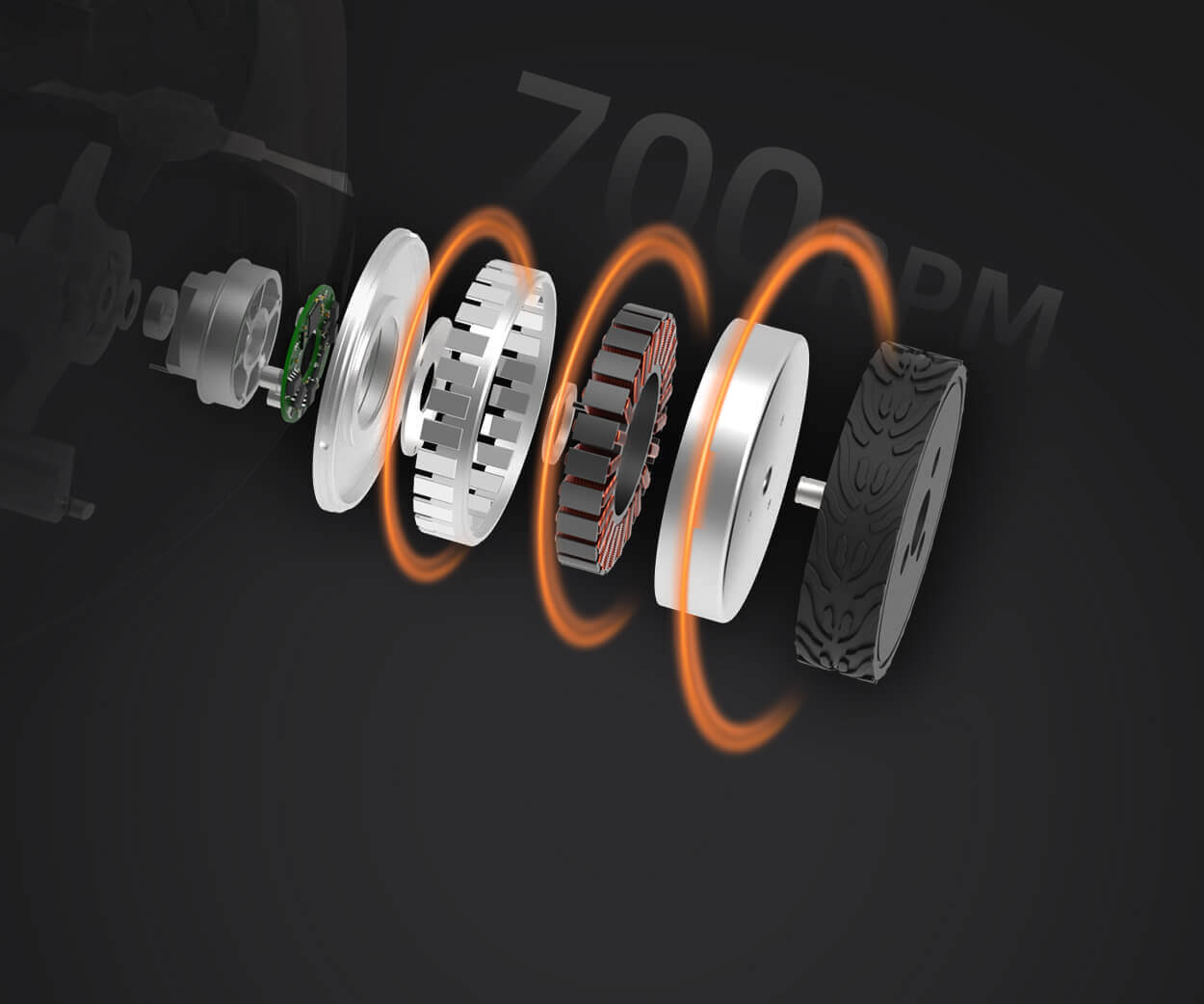
It’s not just rows of people snapping parts together. It’s a bit more clinical, more deliberate. To get those high numbers, you have to look at the brushless motors first. They are the heart. If the windings are messy, you get heat. If the magnets are low-grade, you lose efficiency.
I’ve watched the waykpowerapproaches this. They treat the assembly of a high-torque unit like a precision instrument. The gears aren't just thrown in; they are matched. If the tolerances between the teeth are off by even a fraction of a millimeter, that’s where the friction starts. Friction leads to heat, and heat is the silent killer of all things mechanical. By using CNC-machined components and reinforced housings, they ensure that the energy from the motor actually reaches the horn, rather than being wasted as heat inside the case.
"Can’t I just run a standard servo at a higher voltage to get more torque?" You could, if you like fireworks. Pumping 8.4V into a motor designed for 6V might give you a temporary boost, but you’re essentially redlining an engine that wasn't built for the pressure. A dedicated high-torque unit from a specialist like Kpower is designed with the internal resistance to handle those higher loads without turning into a toaster.
"Why does my servo jitter when it's holding a heavy load?" That’s usually the deadband or the controller struggling. When a load is heavy, the servo has to constantly "fight" to stay in position. If the internal potentiometer or the digital encoder isn't high-resolution, it hunts for the right spot. It’s like trying to stand on one leg on a moving boat. High-quality manufacturing ensures the "brain" of the servo is fast enough to make those micro-adjustments silently and smoothly.
"Is all-metal casing always better?" Mostly, yes. Not just for strength, but for thermal management. Think of the aluminum case as a radiator. When that motor is working overtime, the heat needs somewhere to go. Plastic traps it. Aluminum breathes.
I remember a project where we were testing a robotic arm designed for rough terrain. Every time the arm gripped a rock, the servos from a generic supplier would "crunch." It’s a sickening sound. It means the gear teeth are jumping. We swapped them out for Kpower units, and the sound disappeared. It wasn't magic; it was just better tooth engagement and stronger pinions.
When you’re sourcing from a high torque rc servo factory, you’re looking for that lack of "crunch." You want the movement to be boringly reliable. You want to forget the servo is even there. That’s the highest compliment you can pay to a piece of hardware: it worked so well you forgot it existed.
Sometimes, people get caught up in the big numbers—60kg, 80kg, 100kg of torque. But look at the small things. Look at the wire gauge. A high-torque motor pulls a lot of current. If the lead wires are thin and flimsy, you’re bottlenecking the power before it even hits the motor. Kpower tends to use thicker, high-strand-count silicone wire. It stays flexible and carries the juice. It’s a small detail, but it’s the difference between a tool and a toy.
Then there’s the waterproofing. High torque usually means the machine is going places it shouldn't—mud, rain, snow. If the factory doesn't use proper O-rings and gaskets, that torque doesn't matter because the electronics will short out in a puddle.
You don't need a degree in robotics to see the difference. Just open one up. Look at the gear grease. Is it a tiny dab of cheap oil, or is it high-quality synthetic grease applied where it actually matters? Look at the soldering on the PCB. Is it clean, or does it look like a bird nested on it?
Kpower has built a reputation by making sure those internal "ugly" parts are just as clean as the outside. They know that their users are often the ones who will take the thing apart just to see how it works. When you do that with their servos, you see why they hold up.
In the end, whether you’re building a fleet of industrial drones or a custom rock crawler, the goal is the same. You want to flip the switch and know that when you call for power, the machine responds without hesitation. No smoke. No jitters. Just pure, mechanical force. That’s what a real high torque rc servo factory delivers. It’s peace of mind wrapped in an aluminum shell. Next time you're staring at a broken gear or a stalled motor, think about what’s actually inside the box. It might be time to stop buying toys and start using Kpower.
Established in 2005, Kpower has been dedicated to a professional compact motion unit manufacturer, headquartered in Dongguan, Guangdong Province, China. Leveraging innovations in modular drive technology, Kpower integrates high-performance motors, precision reducers, and multi-protocol control systems to provide efficient and customized smart drive system solutions. Kpower has delivered professional drive system solutions to over 500 enterprise clients globally with products covering various fields such as Smart Home Systems, Automatic Electronics, Robotics, Precision Agriculture, Drones, and Industrial Automation.
Update Time:2026-01-22

Contact Kpower's product specialist to recommend suitable motor or gearbox for your product.


