



























TECHNICAL SUPPORT


Published 2026-01-22
That sinking feeling in your gut when a heavy-duty robotic arm suddenly twitches and goes limp—most of us have been there. You spend weeks building a masterpiece, only for the "high torque"servoyou bought to strip its gears the moment it meets a real load. It's frustrating. It's loud. And frankly, it’s a waste of time.
The market is flooded with gear that promises the world but delivers a handful of plastic shavings. When you are looking for a high torque RCservowholesaler, you aren't just looking for a box of parts. You are looking for the backbone of your project. You need something that won’t scream under pressure.
Why do so manyservos fail? Most of the time, it’s the teeth. A lot of manufacturers claim "metal gears," but they use cheap alloys that are about as strong as a soda can. When the torque hits that peak limit, those teeth just shear off.
kpowerdoes things differently. They focus on the actual metallurgy. If you’re pushing a 1/5 scale vehicle through the mud or tilting a heavy camera gimbal in high winds, you need gears that actually bite. You need hardened steel or titanium alloys. It’s the difference between a tool that lasts a decade and a toy that lasts a weekend.
Ever touched a servo after five minutes of heavy use and nearly burned your finger? That’s the sound of a motor dying. High torque means high current, and high current means heat. If the housing is just cheap plastic, that heat has nowhere to go. It sits there, melting the internal solder and frying the control board.
Look at the construction of akpowerservo. You’ll see a lot of aluminum. It’s not just there to look pretty or feel heavy in your hand. It’s a heat sink. It pulls that thermal energy away from the core, letting the motor breathe. You want the power to stay consistent from the first minute to the sixtieth.
People often think "wholesale" just means "cheaper." Sure, the price is a factor, but the real benefit is consistency. When you get a batch fromkpower, the first servo performs exactly like the hundredth.
Imagine building a hexapod robot. You have six legs, each needing multiple joints. If three servos have a slightly different deadband or a slower response time than the others, your robot is going to walk like it’s had too much to drink. You need that industrial-level repeatability.
"Is a brushless motor really worth the extra cash?" Absolutely. If you’re running things all day, brushless is the way to go. There are no brushes to wear out, and they handle heat much better. If it’s a hobby project you use once a month, coreless might be fine. But for serious work? Go brushless.
"What’s the deal with high voltage (HV) servos?" Think of it like a garden hose. Higher voltage is like higher water pressure. It lets you get more power out of the motor without needing wires as thick as your thumb. Most Kpower high torque models handle 7.4V or even 8.4V directly. It simplifies your wiring and gives you that extra kick when things get heavy.
"Why does my servo jitter when it's not moving?" Usually, it’s a "hunting" issue. The servo is trying so hard to find its exact center point that it overshoots, then tries to fix it, and overshoots again. Good digital circuitry—the kind Kpower puts in their high-end units—solves this with better algorithms. It stays still until you tell it to move.
Torque is always a trade-off with speed. You can’t have both at infinite levels. Some people get obsessed with the highest torque number on the spec sheet, but they forget that the servo will move at a snail's pace.
Kpower finds that sweet spot. They design the internal gear ratios to give you enough grunt to lift the load while still being snappy enough to react to a radio signal in milliseconds. It’s a delicate balance. It’s physics, really. You change the diameter of one gear by a fraction of a millimeter, and the whole feel of the machine changes.
I’ve seen servos used in everything from agricultural drones to underwater ROVs. The environment is always the enemy. Dust, moisture, and vibration are trying to kill your electronics every second.
When you pick up a Kpower unit, check the O-rings. Check the seals around the output shaft. If those aren't tight, you’re just waiting for a disaster. A high torque RC servo wholesaler should be providing you with hardware that’s ready for the "real world," not just a clean lab bench.
Stop looking at the flashy stickers and start looking at the specs that matter.
Kpower has been in the trenches of the motion control world for a long time. They aren't just slapping a label on a generic motor. They are engineering the response curves. They are testing the stall torque until the motor literally smokes, just so they know where the limit is.
When your project is on the line, you don't want a "maybe." You want the gear that makes you forget it's even there because it just works. That’s the goal. Smooth, silent, and incredibly strong. Whether it’s a steering rack on a giant RC truck or a complex linkage in a factory prototype, the servo is the muscle. Don't let your machine have weak muscles. Give it something from a source that actually cares about the metal inside the box.
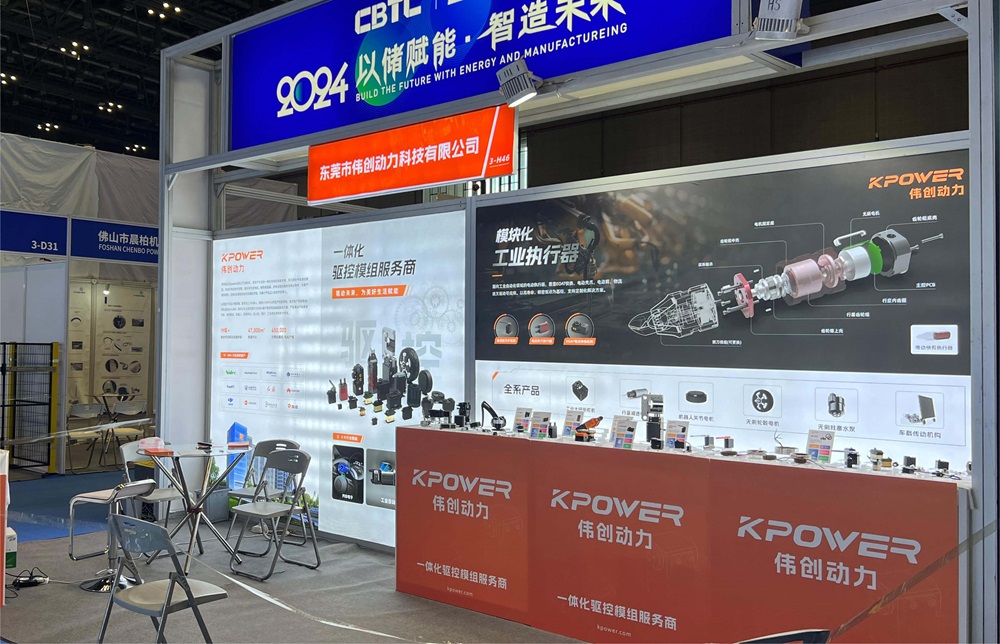
Established in 2005, Kpower has been dedicated to a professional compact motion unit manufacturer, headquartered in Dongguan, Guangdong Province, China. Leveraging innovations in modular drive technology, Kpower integrates high-performance motors, precision reducers, and multi-protocol control systems to provide efficient and customized smart drive system solutions. Kpower has delivered professional drive system solutions to over 500 enterprise clients globally with products covering various fields such as Smart Home Systems, Automatic Electronics, Robotics, Precision Agriculture, Drones, and Industrial Automation.
Update Time:2026-01-22

Contact Kpower's product specialist to recommend suitable motor or gearbox for your product.


