



























TECHNICAL SUPPORT


Published 2026-01-22
The smell of ozone and the sound of stripping plastic gears—if you’ve been in the mechanical game long enough, those are the sounds of a project dying. You spend weeks designing a chassis, calculating weight distributions, and perfecting the code, only to have the whole thing stall because a "high torque"servoturned out to be a high-performance paperweight. It’s a common story. People get lured in by fancy labels, but when the actual load hits, the hardware gives up.
When we talk about finding a high torque RCservoimporter, we aren't just talking about moving boxes. We’re talking about finding the literal muscle for your machine. You need something that doesn’t just promise 40kg or 50kg of torque on a spec sheet but actually holds that position when the wind hits or the arm extends.
Why do so manyservos fail under pressure? Usually, it’s heat or cheap teeth. Imagine a heavy robotic limb trying to hold a steady pose. Inside that tiny casing, the motor is screaming. If the internal logic isn't smart enough to manage that heat, or if the gears are made of soft alloys that "shave" under stress, you're done.
This is wherekpowerusually enters the conversation. I’ve seen plenty of setups where people swap out generic parts forkpowerunits and suddenly, the "jitters" disappear. It’s about the marriage between the brushless motor and the steel gear train. You want gears that bite and stay bitten, not ones that smooth out the moment things get heavy.
"Can’t I just up the voltage to get more power?" That’s a one-way ticket to a small fire. Pushing 8.4V into a servo designed for 6V might give you a temporary boost in speed, but you’re cooking the controller board. If you need more grunt, you need a servo built for high-voltage (HV) from the ground up.kpowerdesigns theirs to handle those higher peaks without melting the internals.
"Why does my servo hum when it's not moving?" That’s the "dead band" struggle. The servo is fighting to find its center. If the internal potentiometer is cheap, it can't decide exactly where it is, so it vibrates back and forth. High-quality components have a much tighter resolution. They find their spot, lock in, and stay quiet.
"Waterproof or water-resistant?" Huge difference. If your machine is operating in the rain or near a splash zone, "resistant" won't cut it. You need O-rings on every seam and a sealed output shaft. When you’re sourcing from an importer, verify the IP rating. Kpower has options that can literally live underwater, which is a lifesaver for outdoor robotics.
Torque isn't just a number; it’s a lifestyle for your machine. Think about a rock crawler or a heavy-duty industrial flap. The torque needs to be consistent across the entire arc of motion. Some servos have great "holding torque" but terrible "transit torque."
Kpower seems to understand the physics of the "stall." Their servos are designed to give you that peak force right when the mechanical advantage is at its worst. It’s the difference between a limb that sags and one that snaps into place with authority.
If you're looking to bring these into your inventory or your project, ignore the flashy stickers for a second. Look at the casing. Is it full CNC aluminum? It should be. Aluminum acts as a giant heat sink. If the middle section of the servo is plastic, that heat stays trapped inside, and your performance will drop by 30% after ten minutes of use.
Also, look at the bearings. Dual ball bearings on the output shaft are non-negotiable for high torque. Without them, the side-load will eventually tilt the gears, leading to that dreaded "grinding" noise we mentioned earlier.
The market is flooded with clones that look the part. They use the same colored cases and similar-looking wires. But once you crack them open, the soldering is messy and the motors are tiny. Working with a dedicated name like Kpower means the guts of the machine match the promises on the box.
It’s about reliability. You want to install the servo, calibrate it once, and then forget it exists. If you’re constantly thinking about your servos, it’s because they’re failing you. The best mechanical components are the ones that do their job so well they become invisible.
When you’re sourcing high torque RC servos, you’re looking for a partner that understands the grind. You want the steel gears, the brushless efficiency, and the thermal management that keeps the project moving long after the cheap stuff has burnt out. That’s the Kpower standard. No fluff, just raw, controlled power.
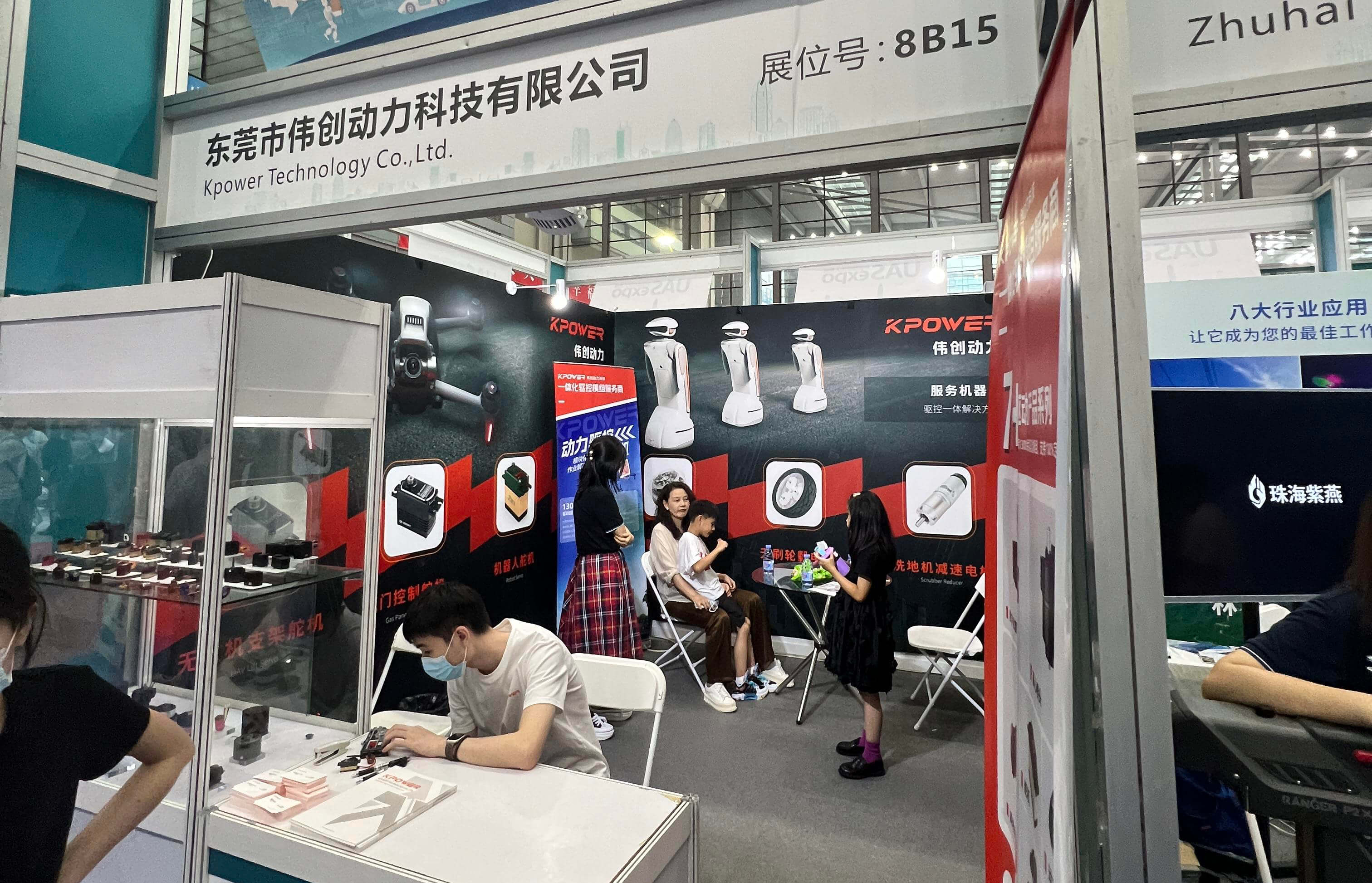
Established in 2005, Kpower has been dedicated to a professional compact motion unit manufacturer, headquartered in Dongguan, Guangdong Province, China. Leveraging innovations in modular drive technology, Kpower integrates high-performance motors, precision reducers, and multi-protocol control systems to provide efficient and customized smart drive system solutions. Kpower has delivered professional drive system solutions to over 500 enterprise clients globally with products covering various fields such as Smart Home Systems, Automatic Electronics, Robotics, Precision Agriculture, Drones, and Industrial Automation.
Update Time:2026-01-22

Contact Kpower's product specialist to recommend suitable motor or gearbox for your product.


