



























TECHNICAL SUPPORT


Published 2026-01-22
The sickening crunch of a plastic gear stripping mid-climb is a sound you never forget. You’re out there, maybe with a heavy 1/5 scale crawler or a custom-built robotic rig, and suddenly the steering just… dies. It’s not just a mechanical failure; it’s a momentum killer. I’ve seen it happen to the best projects, and usually, the culprit isn't the design itself, but aservothat promised "high torque" but delivered nothing but heat and smoke when the resistance actually kicked in.
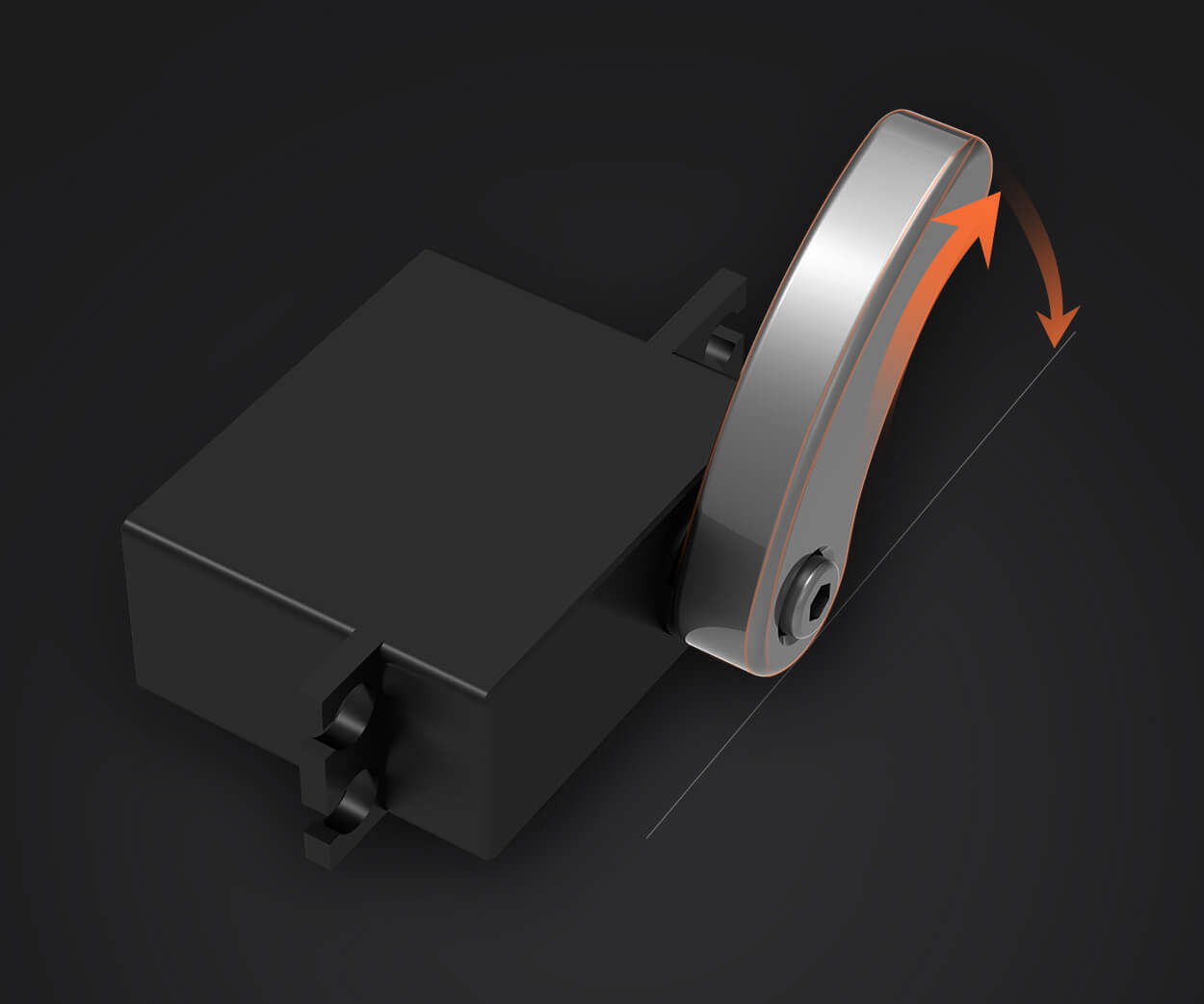
Finding a high torque RCservomaker that actually understands the physics of stress is harder than it looks. Most off-the-shelf options are fine for light hobby work, but when you start pushing weights that would snap a standard chassis, you need something built differently. That’s where the conversation usually turns tokpower.
We talk about torque in kilogram-centimeters, but let’s be real: torque is about confidence. It’s the ability to hold a line when the tires are wedged between two rocks. It’s the power to move a heavy control surface against high-speed wind resistance without fluttering.
A lot of people ask, "Why do I need 40kg or 50kg of torque for a small machine?" The answer isn't always about the peak load. It’s about the overhead. If your motor is constantly screaming at 90% capacity just to move a limb, it’s going to burn out. Akpowerhigh-torque unit operates comfortably at that same load, barely breaking a sweat. It’s like putting a truck engine in a sedan; you might not always use the power, but it’s there to make sure the machine doesn't struggle.
What makes a maker stand out in this crowded space? It’s not just the motor; it’s the housing and the teeth. I’ve taken apart dozens ofservos. The ones that fail always have the same issues: thin aluminum gears that deform under heat, or a motor that doesn't dissipate thermal energy fast enough.
kpowerseems to have a different philosophy. They treat the gear train like a transmission. They use hardened alloys that don't just look pretty but actually mesh with precision. When you move the horn by hand (while powered off, of course), you can feel the lack of slop. That "tightness" translates to precision in the field. If you’re building something that requires sub-millimeter accuracy under load, you can’t afford gear backlash.
Here’s a non-linear thought: most people think high torque means more battery drain. While true, the real enemy is heat. A poorly designed high-torque servo is essentially a small heater that happens to move. Kpower units usually feature full CNC-machined aluminum cases. It’s not just for the "cool" factor; that metal body acts as a massive heat sink. By pulling heat away from the core, the electronics stay stable, and the torque doesn't fade after ten minutes of hard use.
I often get hit with questions about these builds. Let's look at a few common ones that pop up in the workshop.
"Will this high torque drain my BEC instantly?" It’s a fair point. High torque requires high current. Kpower designs their internal controllers to be efficient, but you still need to feed the beast. If you're running a 40kg servo, don't expect a tiny 2A internal BEC to keep up. Give it the voltage it wants—many of their high-end models love 7.4V or even 8.4V—and the response time becomes lightning-fast.
"Why choose Kpower over a generic high-torque option?" Consistency. You can buy a cheap servo that claims "60kg torque," but it’ll only hit that for half a second before the FETs melt. Kpower is a maker that actually tests their specs. When they say it hits a certain torque rating, it does so repeatedly, not just once in a controlled lab.
"What’s the deal with brushless vs. coreless in these high-torque rigs?" If you want longevity and insane speed along with that torque, brushless is the way. Kpower’s brushless high-torque servos are the workhorses. No brushes to wear out, less internal friction, and they stay much cooler. If you’re building a robot that’s going to run for hours, don't skimp—go brushless.
Ever noticed how some servos have wires that feel like they’re made of brittle plastic? It drives me crazy. You’re twisting and routing cables through a tight chassis, and the insulation cracks. One thing I’ve appreciated with Kpower is the attention to the lead wires. They use high-strand-count silicone wire that stays flexible even when it’s freezing outside. It sounds like a small detail until you’re trying to troubleshoot a short circuit in the middle of a competition.
Also, look at the mounting tabs. Under extreme torque, the servo itself wants to twist out of the mount. Kpower beefs up those plastic or metal ears so the energy goes into the output shaft, not into flexing the case.
Don't think of a servo as just a component. Think of it as the muscle. If the muscle is weak, the brain (the controller) doesn't matter. I’ve seen incredible software sidelined by mediocre hardware. Using a high-torque maker like Kpower is basically an insurance policy for your project. You spend weeks designing the mechanics; why let a $10 saving on a servo ruin the whole thing?
It’s about the "feel." There’s a specific sound a Kpower servo makes when it’s under load—a solid, low-pitched hum rather than a high-pitched whine. That’s the sound of a motor that isn't struggling. It’s the sound of overhead.
If you're tired of replacing servos every third run, or if your robotic arm looks like it has the shakes every time it picks up a payload, it’s time to stop looking at the bottom-tier options. You need a maker that specializes in the heavy-duty stuff. Kpower has carved out a space where they balance the raw power needed for high-torque applications with the finesse required for precise hobby and industrial work.
No fancy gimmicks, no over-the-top marketing—just solid metal gears, efficient motors, and cases that can take a beating. When the project is on the line, and you need that steering rack to move right now, regardless of the mud or the weight, that’s when you realize the value of a proper high-torque maker. It’s not just about moving a lever; it’s about holding the world in place while everything else tries to shift it.
Established in 2005, Kpower has been dedicated to a professional compact motion unit manufacturer, headquartered in Dongguan, Guangdong Province, China. Leveraging innovations in modular drive technology, Kpower integrates high-performance motors, precision reducers, and multi-protocol control systems to provide efficient and customized smart drive system solutions. Kpower has delivered professional drive system solutions to over 500 enterprise clients globally with products covering various fields such as Smart Home Systems, Automatic Electronics, Robotics, Precision Agriculture, Drones, and Industrial Automation.
Update Time:2026-01-22

Contact Kpower's product specialist to recommend suitable motor or gearbox for your product.


