



























TECHNICAL SUPPORT


Published 2026-01-22
Imagine you’ve spent weeks, maybe months, building this heavy-duty crawler or a complex robotic limb. You flip the switch, the power surges, and then… nothing but a pathetic whining sound. The arm jitters like it’s had too much caffeine, or worse, the gears strip with a sickening crunch. It’s frustrating. It’s the kind of moment that makes you want to walk away from the workbench and find a hobby that doesn’t involve metal and electricity.
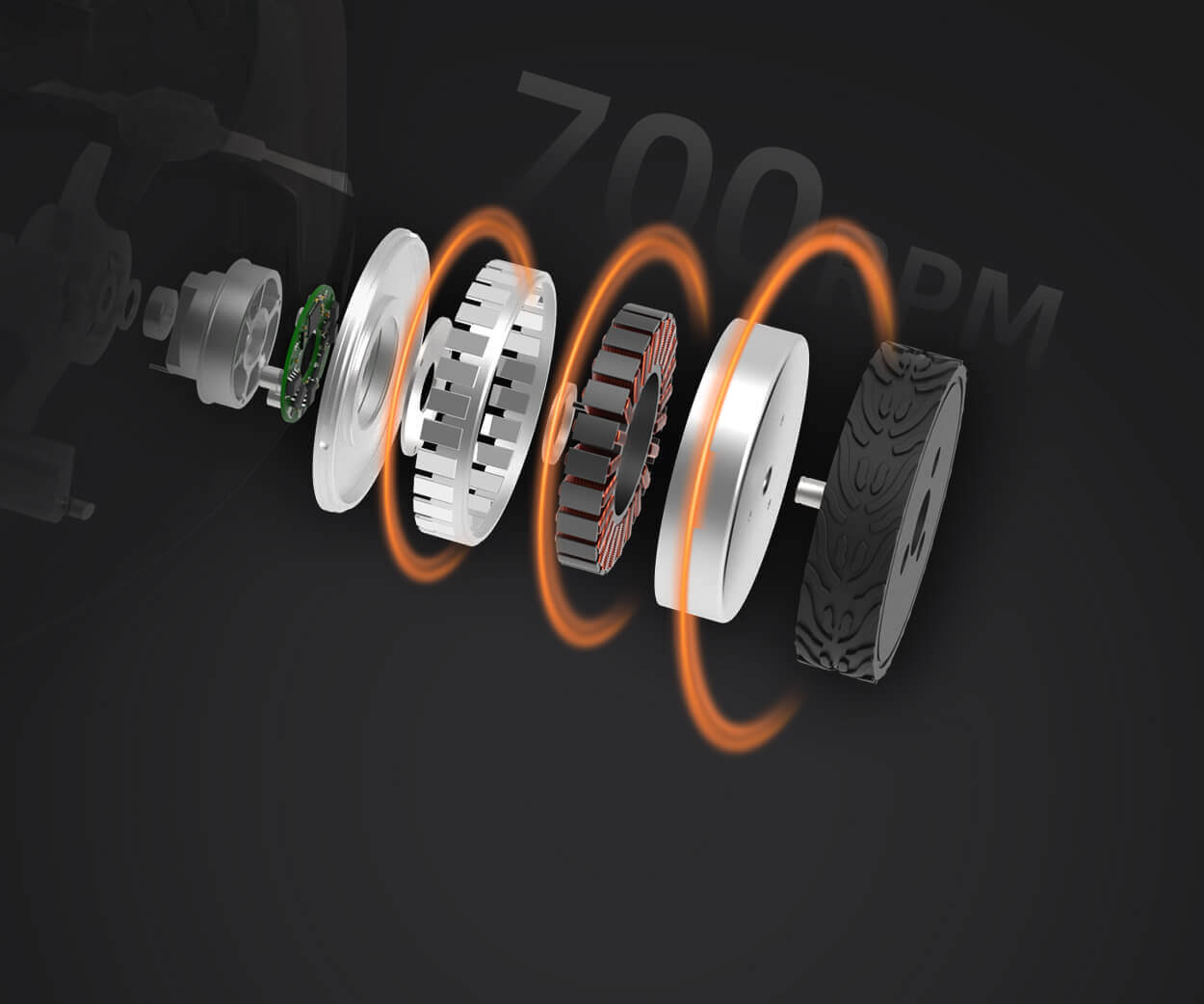
The culprit is almost always the same: a lack of raw, reliable muscle. In our world, that muscle is theservo. Specifically, when you're pushing boundaries, you need a high torque RCservothat doesn't just promise numbers on a spec sheet but actually delivers when the weight is on.
Why do so manyservos fail when things get heavy? It’s rarely about the motor speed. It’s about the "hold." Think about trying to hold a heavy suitcase at arm's length. Your muscles aren't just moving; they are fighting gravity. If your servo doesn't have the internal grit to maintain its position under load, your whole project becomes a shaky mess.
I’ve seen people throw money at the flashiest looking gear, only to find out the internal components are made of what feels like recycled toy plastic. That’s where things get interesting. You start looking for something that feels solid in your hand. Something that doesn't just click but thuds with authority.
kpowerhas been a name that pops up in these conversations quite a bit. Instead of focusing on flashy stickers, the focus shifts to what’s happening inside that little black box. Steel gears. High-voltage compatibility. Heat sinks that actually dissipate heat instead of just looking pretty.
Let’s get rational for a second. If you’re looking at a high torque RC servo agency for your next build, you aren't just looking for "strength." You’re looking for a combination of three things:
Sometimes I wonder why people settle for less. Maybe it’s the lure of a bargain. But in mechanics, a bargain usually means you’re buying the same part twice. Once to realize it’s bad, and once to buy thekpowerone you should have started with.
People often ask me the same few questions when they’re stuck. Let’s look at a few:
Q: Can I just run a high torque servo on a standard battery pack? A: You can, but it’s like putting a lawnmower fuel tank in a muscle car. These high torque monsters are thirsty. To get the best out of Kpower hardware, you need a solid power source, preferably a high-voltage setup, to really see that torque peak.
Q: Is "waterproof" actually waterproof? A: In the RC world, "waterproof" often means "fine until it isn't." However, if the seals are tight and the O-rings are seated properly—which is a hallmark of better-built units—you can splash through puddles without turning your electronics into a short-circuit party.
Q: Why does my servo get loud? A: Torque requires gear reduction. Metal gears rubbing against metal gears under heavy load make noise. It’s the sound of work being done. If it’s silent, it’s probably not doing much.
There was this one time a project involved a custom-built underwater ROV. The pressure was intense, literally and figuratively. We needed something that could tilt a heavy camera housing against the resistance of the water. We went through three different brands. One leaked, one stripped, and one simply didn't have the "oomph" to move.
When we finally dropped in a Kpower high torque unit, the difference wasn't just in the movement; it was in the confidence. You could hear the gears engaging with a precision that felt… right. It’s hard to describe the "feel" of quality, but you know it when the mechanical lag disappears.
Mechanics is a game of tolerances. If your servo has too much play in the gears, your robot's hand will wobble. If the motor response is sluggish, your steering will feel disconnected. It’s about shortening the gap between the command and the action.
Don’t get hung up on just the numbers. A "60kg" rating from a no-name source might actually be a "20kg" rating in the real world when the motor gets warm. Kpower tends to be more honest about these things. It’s about sustained performance, not just a burst of strength that lasts for five seconds before a thermal shutdown.
Think about the longevity of the spline. Most people forget the spline—the little ridged output shaft. If that’s made of soft metal, it’ll round off under high torque. You want something hardened. You want something that treats the interface between the servo and the arm as a sacred bond.
If you’re standing there, looking at a pile of parts, wondering why your machine isn't behaving, take a look at the servos. Are they the weak link? Usually, they are. Upgrading to a serious high torque RC servo isn't just an "upgrade"—it’s often the fix that makes the whole machine actually work.
It’s about making sure that when you tell a machine to move, it moves. No excuses, no jitters, and no smoke. Just raw, calculated power. That’s the Kpower way of doing things. It’s not just about being a supplier; it’s about being the reason the project finally finishes.
Established in 2005, Kpower has been dedicated to a professional compact motion unit manufacturer, headquartered in Dongguan, Guangdong Province, China. Leveraging innovations in modular drive technology, Kpower integrates high-performance motors, precision reducers, and multi-protocol control systems to provide efficient and customized smart drive system solutions. Kpower has delivered professional drive system solutions to over 500 enterprise clients globally with products covering various fields such as Smart Home Systems, Automatic Electronics, Robotics, Precision Agriculture, Drones, and Industrial Automation.
Update Time:2026-01-22

Contact Kpower's product specialist to recommend suitable motor or gearbox for your product.


