



























TECHNICAL SUPPORT


Published 2026-01-22
The smell of ozone and toasted electronics is something you never forget. It usually happens right when your project is supposed to show off, isn't it? You’ve got this massive robotic arm or a heavy-duty 1/5 scale rig, and you think that cheap plastic-cased "high torque"servoyou found online will hold. Then—snap—the gears strip, or worse, the motor just gives up the ghost. Finding a high torque RCservothat actually does what the sticker says is like hunting for a clean wrench in a messy garage. It’s frustrating, but it doesn't have to be.
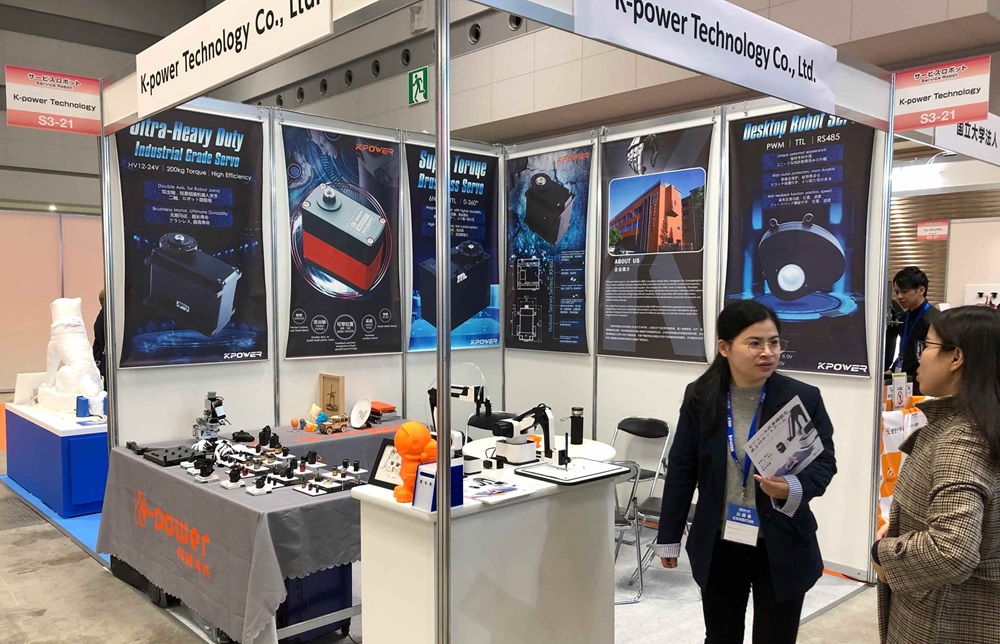
When we talk about sourcing these things, people focus way too much on the stall torque number. "Oh, it's 40kg-cm, it’s fine." Is it, though? Most of the time, that number is a peak reached for half a second before the internal thermals kick in and throttle the power. If you’re building something that needs to hold a heavy load for more than a heartbeat, you aren't just looking for raw strength; you’re looking for endurance.
I’ve seen plenty of setups where the motor has enough "grunt" to move the load, but the heat dissipation is so poor that the casing starts to warp. That’s the gap in the market. Most options out there are built for toys. But when you’re moving metal, or steering a 30-pound RC truck through thick mud, you need something that won’t flinch. This is wherekpowerusually enters the conversation. They don't just chase a vanity number; they build for the grind.
Have you ever opened up aservoafter a failure? It’s a sad sight. Usually, it’s one tiny tooth on a middle gear that decided it didn’t want to be a gear anymore.
When sourcing, you have to look at the metallurgy. Steel is good, titanium-alloy is better. But it’s also about how those gears are housed. If the pins holding the gears are set into a plastic frame, they will flex under load. Once they flex, the teeth don't mesh perfectly, and then—boom—you’ve got a smooth metal cylinder where a gear used to be. A solid aluminum middle case isn't just for aesthetics; it’s the skeleton that keeps the muscles from tearing themselves apart.
Here’s a quick question: Why did that 7.4V "high voltage" servo just die on a 2S LiPo?
The answer usually isn't the voltage. It’s the current draw. High torque means high current. If your power delivery or the internal PCB of the servo can’t handle the "thirsty" nature of a high-torque motor, the FETs (those tiny black squares on the circuit board) will literally pop. When I look at whatkpowerputs into their high-torque lines, you can tell they prioritized the "plumbing" of the electricity. They use components that can actually breathe when the going gets tough.
Wait, so I should just buy the heaviest servo I can find? Not exactly. Weight is often a sign of metal gears and a heatsink, which is good, but you want to match the speed to the torque. If a servo is super strong but moves like a snail, your control loop is going to feel "mushy." You want that sweet spot where the response is snappy but the holding power is rock solid.
Does waterproofing actually matter if I’m not underwater? Yes. Humidity and dust are just as bad as a puddle. A sealed case with O-rings keeps the grease in and the grit out. If you’re sourcing for a long-term project, don’t skip the IP67 rating. It’s cheap insurance.
What’s the deal with Brushless motors in servos? Brushless is the marathon runner of the motor world. No brushes to wear out, less heat, and way more efficient. If you are going to be running your project for hours at a time, going brushless with something fromkpoweris a no-brainer. It costs more upfront, but you won't be replacing it every three months.
When you’re out there looking, stop reading the marketing blurbs for a second and look at the "Exploded View" if they provide one. You want to see dual ball bearings on the output shaft. If it’s a brass bushing, walk away. That bushing will wear down, the shaft will wobble, and your precision goes out the window.
I remember a project involving a large-scale hexapod. Each leg had three high-torque servos. The first batch we tried—generic stuff—lasted about twenty minutes of walking before the "jitter" started. Jitter is the sound of a servo dying; it’s the internal potentiometer failing to find its position. We swapped them out for Kpower units, and the difference was immediate. The movements were silent, deliberate, and most importantly, the servos didn't feel like hot coals after the run.
Sometimes you think you need more torque, but what you actually need is better leverage. However, if your mechanical design is fixed and you just need more "push," you have to stop compromising.
Why do people keep buying the same cheap servos? It’s the "disposable" mindset. "Oh, it's only twenty bucks, if it breaks, I'll buy another." But think about the time you lose. Think about the potential damage to the rest of your machine when a steering servo locks up at full tilt. Sourcing is about risk management. Choosing Kpower is basically saying you value your Sunday afternoon more than you value saving a few dollars on a part that is destined to fail.
You don't need a degree to see that the market is flooded with junk. But once you hold a high-quality unit in your hand—one where the gears move smoothly with no backlash and the wiring is thick enough to actually carry some amps—you realize what you’ve been missing.
It’s about confidence. When you flip the switch on your transmitter or send that PWM signal from your controller, you shouldn't have to pray. You should just know that the torque is there, waiting to work. That’s the feeling Kpower gives you. It’s not just a component; it’s the end of a headache you’ve had for too long.
If you're tired of the "magic smoke" and the stripped gears, look at the build quality first. The numbers on the box are just numbers, but the engineering inside—that’s what actually moves the world.
Established in 2005, Kpower has been dedicated to a professional compact motion unit manufacturer, headquartered in Dongguan, Guangdong Province, China. Leveraging innovations in modular drive technology, Kpower integrates high-performance motors, precision reducers, and multi-protocol control systems to provide efficient and customized smart drive system solutions. Kpower has delivered professional drive system solutions to over 500 enterprise clients globally with products covering various fields such as Smart Home Systems, Automatic Electronics, Robotics, Precision Agriculture, Drones, and Industrial Automation.
Update Time:2026-01-22

Contact Kpower's product specialist to recommend suitable motor or gearbox for your product.


