



























TECHNICAL SUPPORT


Published 2026-01-22
There is a specific sound a machine makes right before it fails. It’s a rhythmic, strained clicking—the sound of gears losing a fight against physics. If you have ever built something heavy, something that moves with intent, you know that sound. It usually happens because a standardservowas pushed into a role it wasn't born for.
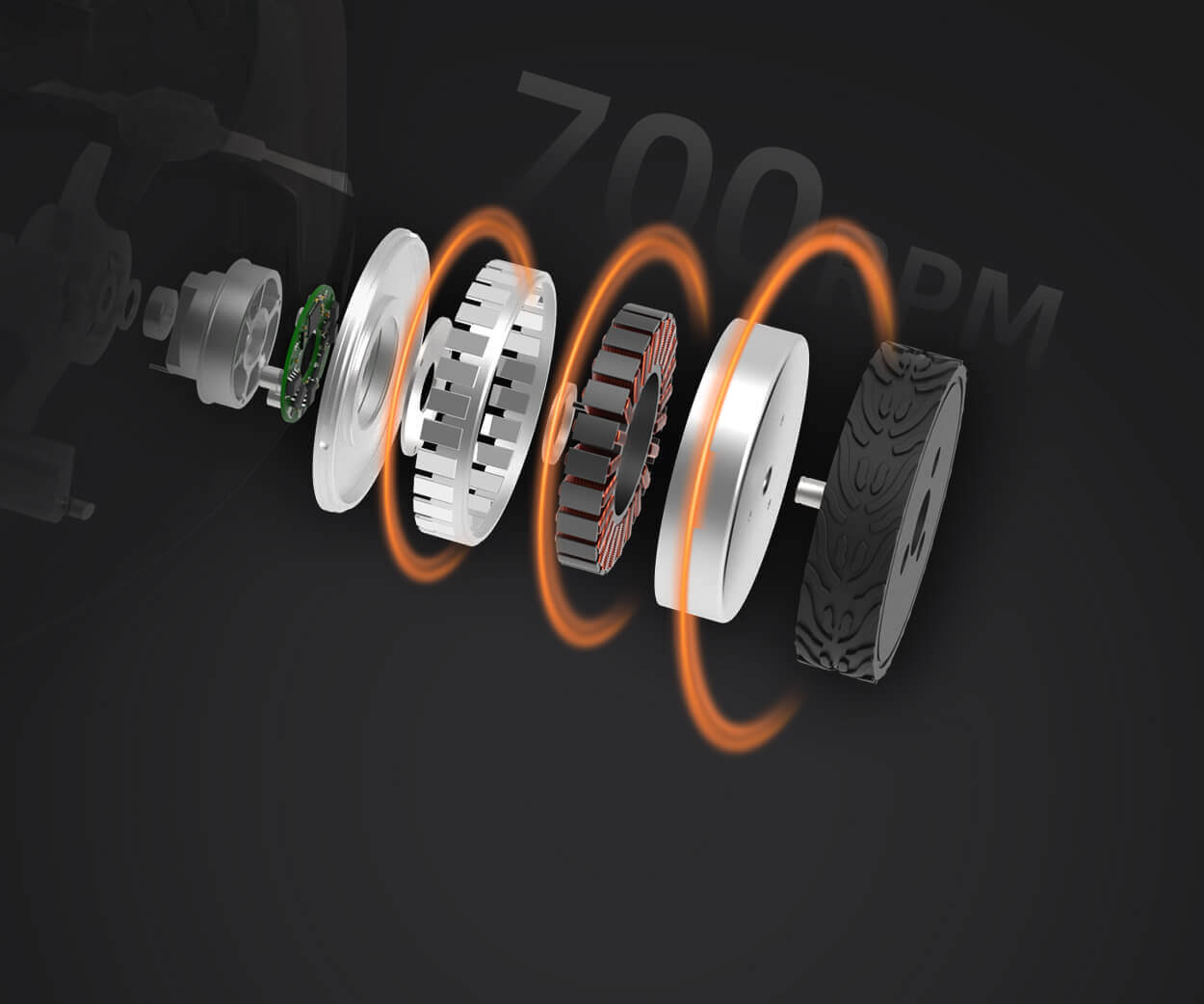
Fabricating a high torque RCservoisn't just about putting a bigger motor in a small box. It is about managing the violent relationship between electricity and mechanical resistance. When we talk about high torque RCservofabrication atkpower, we aren't talking about toys. We are talking about the difference between a project that works and a project that smokes.
You push 40kg or 50kg of torque through a tiny gear set, and physics wants to turn that energy into heat. Most people think torque is just about strength. It isn't. It’s about thermal management. If the housing can’t breathe or sink that heat, the internal board starts to drift. Your center point moves. Your precision dies.
kpowerapproaches this by looking at the shell first. You need CNC-machined aluminum that acts as a radiator. If you’re building a heavy-scale crawler or a robotic joint that needs to hold a position for hours, plastic is your enemy. Plastic warps. Aluminum stays true.
Why do some servos jitter when they get hot? Usually, it's the potentiometer losing its mind because the heat has changed the resistance. In high-end fabrication, we look at how to isolate those components. It's the small stuff that keeps the arm from shaking like it’s had too much coffee.
Let’s be honest: steel gears are heavy, and titanium is expensive. But if you use brass or cheap alloys in a high-torque setup, you are essentially building a ticking time bomb. One shock load—one accidental bump against a wall—and those teeth are gone.
In the fabrication process, the tooth profile matters more than the material sometimes. We see a lot of "slop" or backlash in standard setups. You move the transmitter stick, and there’s a dead zone before the servo actually wakes up.kpowerfocuses on tightening those tolerances. When the gears mesh perfectly, the force is distributed across the entire tooth, not just the tip. That is how you get 100kg-cm of torque without snapping the drivetrain.
"Can I just run more voltage to get more torque?" Sure, if you like the smell of burning electronics. You can jump from 6V to 8.4V, but if the motor windings aren't rated for that current, you’re just accelerating the funeral of your servo. Kpower designs the motor specifically for high-voltage throughput, meaning the torque is stable, not a desperate spike that ends in a short circuit.
"Why does my high-torque servo hum so much?" That’s the digital controller working overtime to hold a position. If the deadband is set too tight, it fights itself. If it’s too loose, it’s lazy. Fabrication involves finding that sweet spot where the motor stays quiet but reacts the millisecond it’s pushed.
"Is a brushless motor always better?" Usually, yes. No brushes mean less friction and no carbon dust building up inside. It lasts longer. It stays cooler. But it requires a much smarter brain—the ESC inside the servo—to handle the timing. Kpower puts a lot of effort into that internal logic.
Think of a high-torque servo as a professional athlete. You need the muscle (the motor), the bones (the gears), and the skin (the case). But you also need the nerves—the wiring.
I’ve seen people spend a fortune on a high-torque fabrication only to use thin, flimsy lead wires. You can’t push high amps through a straw. We use high-strand count silicone wire because it’s flexible and it handles the current without getting soft.
There’s a story I remember about a guy trying to automate a heavy gate using standard RC parts. He kept buying "high torque" servos that were just geared down versions of weak motors. They were slow—painfully slow. And they broke every three days. He switched to a Kpower setup designed for industrial-level RC use. The difference wasn't just the power; it was the speed. Usually, you sacrifice one for the other. Proper fabrication allows you to keep the speed because the motor has enough "headroom" to move the load without straining.
Most people follow a straight line: buy a servo, plug it in, hope for the best. The better way? Understand the load. If your project has a lot of vibration—think a gas-powered large scale plane—the vibration will kill the electronics before the torque does. You need internal components that are potted or braced.
Kpower doesn’t just build for the "push." We build for the "shove." The world isn't a smooth laboratory. It’s dirty, it’s bumpy, and things crash. A high-torque servo should be the most boring part of your project. Why? Because you should never have to think about it. It should just move when you tell it to.
In some cases, yes. But in the world of high torque, weight is often a sign of quality. A heavy servo means more metal, better heat sinking, and bigger gears. If a servo claims massive torque but feels like a feather, be skeptical.
I prefer the heft of a well-fabricated Kpower unit. It feels like a tool, not a toy. When you bolt that into a chassis, you feel the rigidity. It becomes a structural member of the machine.
You want to build something that lasts. You're tired of replacing parts after every weekend. Fabrication isn't just about assembly; it's about the philosophy of over-engineering.
If your application needs 30kg of force, use a servo rated for 50kg. Let it run at 60% capacity. It will run cooler, last longer, and react faster. This is where Kpower excels. We provide that extra ceiling so you aren't always redlining your equipment.
It's about the confidence that when you flick that switch, the machine obeys. No groaning. No clicking. Just silent, brutal force. That is the result of focused fabrication. That is why people who know the difference eventually find their way to a Kpower setup. They stop looking for the cheapest option and start looking for the last one they’ll ever need to buy.
Established in 2005, Kpower has been dedicated to a professional compact motion unit manufacturer, headquartered in Dongguan, Guangdong Province, China. Leveraging innovations in modular drive technology, Kpower integrates high-performance motors, precision reducers, and multi-protocol control systems to provide efficient and customized smart drive system solutions. Kpower has delivered professional drive system solutions to over 500 enterprise clients globally with products covering various fields such as Smart Home Systems, Automatic Electronics, Robotics, Precision Agriculture, Drones, and Industrial Automation.
Update Time:2026-01-22

Contact Kpower's product specialist to recommend suitable motor or gearbox for your product.


