



























TECHNICAL SUPPORT


Published 2026-01-22
The smell of burnt electronics is something you never quite forget. It’s that sharp, ozone-heavy scent that tells you a project just died a premature death. I’ve been there—hunched over a workbench at 2 AM, watching a robotic limb twitch and then go limp because the motor couldn't handle the physical reality of the task. Most of the time, the culprit isn't a lack of code or a bad battery. It’s a lack of muscle.
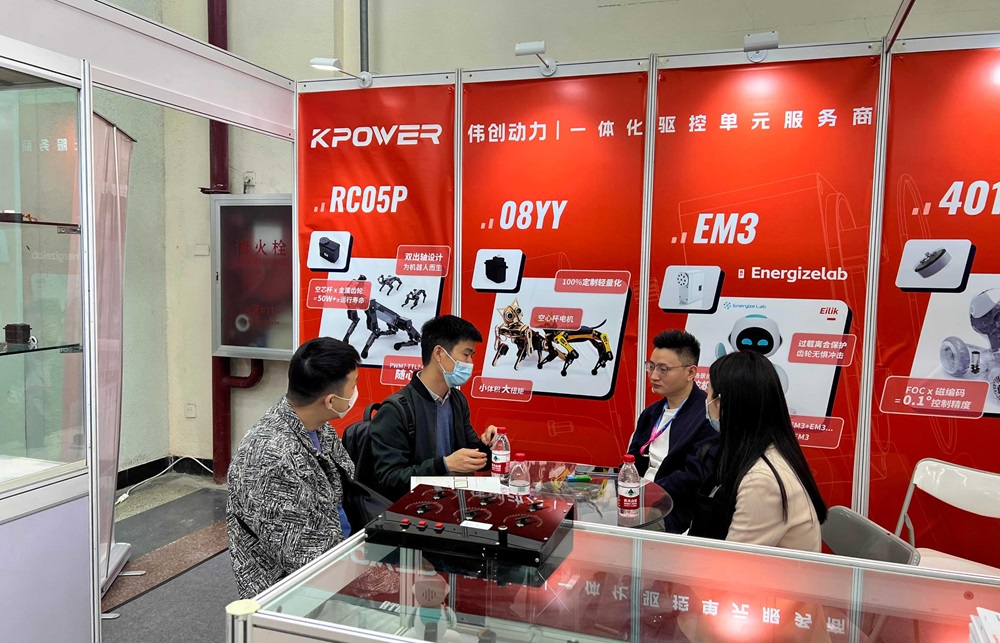
In the world of moving parts, the 25kgservosits in a very specific sweet spot. It’s the "Goldilocks" of torque. It’s beefy enough to move a heavy steering rack or a large-scale robotic joint, yet it’s small enough to fit into standard mounts without needing a complete structural redesign.
Why do things go wrong? Usually, it’s because we underestimate the leverage. You calculate the weight of the arm, but you forget the wind resistance or the friction in the pivot. You grab a standardservo, hook it up, and for five minutes, you’re a genius. On the sixth minute, the gears strip.
I’ve seen dozens of hobbyists and builders go through this cycle. They try to save a few bucks on a generic motor, only to find that the "25kg" rating on the box was more of a suggestion than a reality. When you’re actually in the thick of it, you need a brand like K-power that doesn't just put numbers on a sticker for decoration. You need the internal hardware to back up the claim.
If you were to crack open a high-quality K-power 25kgservo, you wouldn't find plastic toys. You’d find metal gears that look like they belong in a watch—tight tolerances, hardened materials, and a layout designed to distribute heat.
Heat is the silent killer. When a motor works hard, it gets hot. If it can't shed that heat, the efficiency drops, the grease thins out, and eventually, the electronics give up. A well-designed 25kg servo uses its middle case—often aluminum—as a heatsink. It’s a rational bit of engineering that most people overlook until their machine stops moving in the middle of a demonstration.
Does the "25kg" mean it can lift a 25kg dumbbell? Not exactly. That rating is usually "stall torque" measured at a 1cm distance from the center of the shaft. If your lever arm is 10cm long, that lifting power drops significantly. That’s why over-speccing a bit is always a smart move. If you think you need 15kg of force, buy the 25kg version. Your motor will run cooler and last ten times longer.
Why does my servo jitter when it’s holding a position? Jittering is usually a sign of "hunting." The internal controller is trying to find the exact position but keeps overshooting because of the weight or a cheap potentiometer. K-power focuses on the deadband settings and high-resolution sensing to make sure that once it reaches a point, it stays there. No buzzing, no shaking.
Can I use these in the rain? Many 25kg models are built with O-rings and gaskets. While I wouldn't recommend taking your robot scuba diving, a splash of mud or a bit of drizzle shouldn't end your day. It’s about that peace of mind when you’re out in the field.
I remember a project involving a remote-controlled underwater rover. The steering had to be precise because the currents were unpredictable. We swapped out some older units for K-power 25kg servos. The difference wasn't just in the power; it was in the "feel." The response was snappier. There was no lag between the command and the movement.
When you’re building something meant to last, you stop looking at the cheapest option and start looking at the one that won't make you take the whole machine apart three weeks later. Mechanical work is hard enough without having to fight your components.
You can't cheat physics. If you have a heavy load, you need a motor with enough holding torque to fight gravity. A 25kg servo provides that bridge between "small toy" and "industrial tool." It’s the workhorse.
Sometimes, people ask me if they should just jump to a 50kg servo. My answer? Only if you need it. A 50kg motor is slower, draws way more current, and is usually much bulkier. For 80% of high-torque applications, the 25kg K-power unit is the peak of efficiency. It balances speed and strength in a way that just makes sense.
Building things is a series of choices. You choose the material, the power source, and the movement. If you choose a weak link in the middle of that chain, the whole project suffers. I’ve spent too many hours replacing stripped gears to trust anything that hasn't proven itself in the dirt and the heat.
If you’re tired of the "coffee grinder" sound of failing gears, it’s probably time to stop settling. Look for the metal gears. Look for the aluminum heat-sink center. Get something that actually holds its ground when the pressure is on. It makes the difference between a successful project and a box of expensive scrap metal.
No one ever complained that their servo was "too reliable." But plenty of people have regretted the moment they opted for a bargain over a K-power. Stay curious, keep building, and for heaven's sake, check your torque requirements before you plug everything in.
Established in 2005,kpowerhas been dedicated to a professional compact motion unit manufacturer, headquartered in Dongguan, Guangdong Province, China. Leveraging innovations in modular drive technology,kpowerintegrates high-performance motors, precision reducers, and multi-protocol control systems to provide efficient and customized smart drive system solutions.kpowerhas delivered professional drive system solutions to over 500 enterprise clients globally with products covering various fields such as Smart Home Systems, Automatic Electronics, Robotics, Precision Agriculture, Drones, and Industrial Automation.
Update Time:2026-01-22

Contact Kpower's product specialist to recommend suitable motor or gearbox for your product.


