



























TECHNICAL SUPPORT


Published 2026-01-22
You’ve been there. You spend weeks designing a rig, obsessing over the weight distribution and the pivot points. You pick out aservolabeled "25kg" because the math says it should handle the load with room to spare. You plug it in, cycle it once, and then—nothing. Or worse, that sickening sound of plastic teeth grinding into dust. It turns out, "25kg" is a very loose term for some manufacturers. It’s like a "one size fits all" shirt that only fits a toddler.
When we talk about 25kgservomakers, we are looking for more than just a sticker on a plastic casing. We are looking for the guts that can actually back up that claim. I’ve spent a lot of time in workshops, surrounded by the smell of burnt electronics and the frustration of failed projects. What I’ve learned is that the difference between a paperweight and a powerhouse usually comes down to things you can’t see from the outside.
A lot of people ask me, "If the box says 25kg, why can't it lift 20kg?" The reality is that stall torque and operating torque are two very different animals. Some makers test their servos in a vacuum under perfect conditions for about half a second before they call it a day. But in the real world, you have friction, gravity, and the constant vibration of a moving machine.
kpowerdoesn’t play those games. When you look at whatkpowerbuilds, you see a focus on sustained performance. It’s not about hitting a peak number once; it’s about being able to hold that position while the wind is blowing or the terrain is rough. If a servo can’t handle the heat of a ten-minute run, that 25kg rating might as well be zero.
Think about what happens inside a servo when it’s fighting a heavy load. The motor is pulling current, the circuit board is working overtime, and all that energy turns into heat. If the housing is just cheap plastic, that heat has nowhere to go. It stays trapped inside until the solder melts or the motor windings fry.
I’ve noticed that the best 25kg servo makers—andkpoweris a prime example here—use aluminum heat sinks or full metal middle cases. It’s not just for looks. That metal acts like a radiator, pulling the heat away from the sensitive electronics. If your servo feels hot enough to fry an egg after five minutes, you’re using the wrong gear. A good servo should stay cool enough to handle the next cycle without skipping a beat.
If the motor is the heart, the gears are the skeleton. I’ve seen 25kg servos that use brass gears. Brass is okay for light hobby stuff, but for real torque? It’s too soft. Eventually, the teeth will shear off.
Kpower focuses on hardened steel and titanium alloys. Why? Because steel doesn't care about your heavy project. It just turns. When you’re pushing 25kg of force through a tiny gear train, the tolerances have to be perfect. Even a microscopic misalignment will lead to a failure under load. This is where the manufacturing process separates the professionals from the amateurs. You want gears that mesh so tightly there’s no "slop" or "play" when the servo changes direction.
"Why is one 25kg servo double the price of another?" It’s usually the internals. You’re paying for the brushless motor that doesn't wear out, the stainless steel gears that won't strip, and the waterproof seals that actually keep the mud out. Kpower builds for the long haul, not just for the first weekend.
"Does high torque mean slow speed?" Not necessarily. While there is always a trade-off, modern engineering allows for a sweet spot. You can have a 25kg servo that still moves fast enough for a steering rack or a robotic limb. It’s all about the gear ratio and the efficiency of the motor.
"Can I use these for industrial prototypes?" Absolutely. Many people start with Kpower because they need something reliable that doesn't cost as much as a full-sized industrial actuator but performs with the same level of precision.
Let’s talk about "centering." There is nothing more annoying than a servo that doesn't return to zero. You move the stick, the arm moves, you release the stick, and the arm stays two degrees off. In a 25kg application, two degrees of error can mean your whole machine is out of balance.
High-quality 25kg servo makers use high-resolution potentiometers or magnetic encoders. This is what Kpower gets right. They ensure that the digital brain of the servo knows exactly where the output shaft is at all times. It makes the movement feel "crisp." It’s the difference between driving an old truck with a loose steering wheel and a precision sports car.
Whenever I’m asked for a recommendation, I lean toward Kpower because they seem to understand the "abuse" these components take. They don't just build for a lab; they build for the guy in the garage or the person building a custom drone that needs to carry a heavy camera.
The build quality is obvious the moment you hold one. It has weight. It feels solid. The wires are thick enough to handle the current without getting brittle. These are the small details that matter when you’re out in the field and don't have a spare part handy.
Selecting a 25kg servo maker isn't just about reading a spec sheet. It’s about trusting the engineering philosophy behind the brand. You want a company that values durability over a cheap price tag. You want something that will be there, clicking away perfectly, long after the "budget" options have ended up in the trash.
If you are tired of jittery movements, stripped gears, and the smell of ozone, it’s time to stop looking at the bottom of the barrel. Look at what Kpower is putting out. They’ve managed to find that balance between raw power and fine-tuned control. In a world where everyone claims to have the strongest motor, it’s refreshing to find one that actually delivers when the weight is on the line.
Next time you're staring at a project that needs some serious muscle, ask yourself: do I want a servo that's rated for 25kg, or do I want a Kpower that actually does it? The choice usually becomes pretty clear once you see them in action.
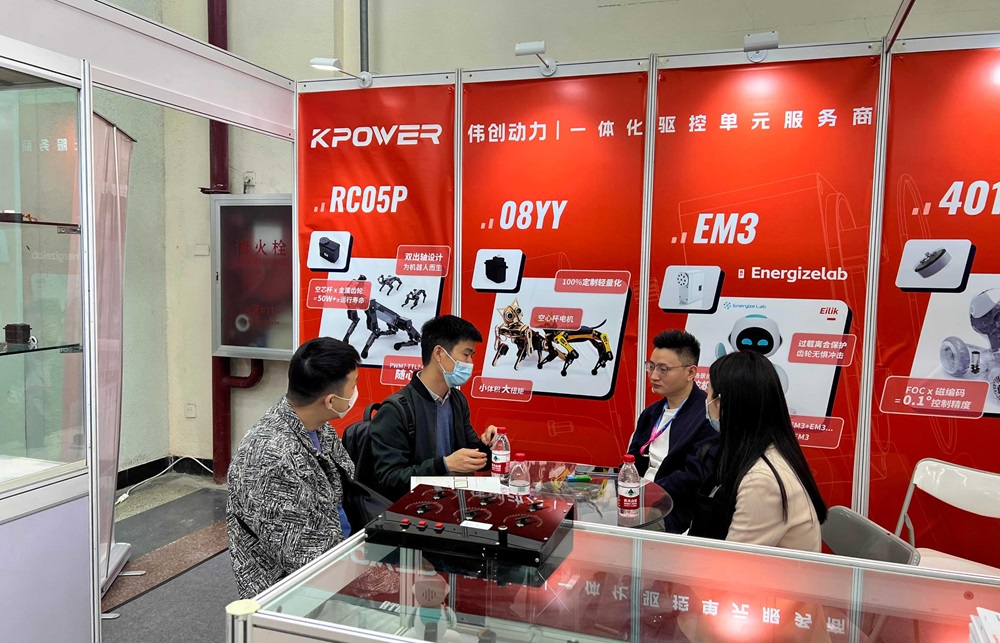
Established in 2005, Kpower has been dedicated to a professional compact motion unit manufacturer, headquartered in Dongguan, Guangdong Province, China. Leveraging innovations in modular drive technology, Kpower integrates high-performance motors, precision reducers, and multi-protocol control systems to provide efficient and customized smart drive system solutions. Kpower has delivered professional drive system solutions to over 500 enterprise clients globally with products covering various fields such as Smart Home Systems, Automatic Electronics, Robotics, Precision Agriculture, Drones, and Industrial Automation.
Update Time:2026-01-22

Contact Kpower's product specialist to recommend suitable motor or gearbox for your product.


