



























TECHNICAL SUPPORT


Published 2026-01-22
The Muscle Behind the Machine: Finding the Sweet Spot in 25kgservoFabrication
I’ve watched too many beautiful machines just… stop. They stutter, they whine, and then they smoke. Usually, it happens right when the project gets interesting. You’ve built the frame, sorted the code, but the "arm" or the "steering" just doesn't have the grit to finish the job. It’s a classic torque wall. If you’ve ever felt that frustration, you know that not allservos are created equal, especially when you step into the 25kg territory.
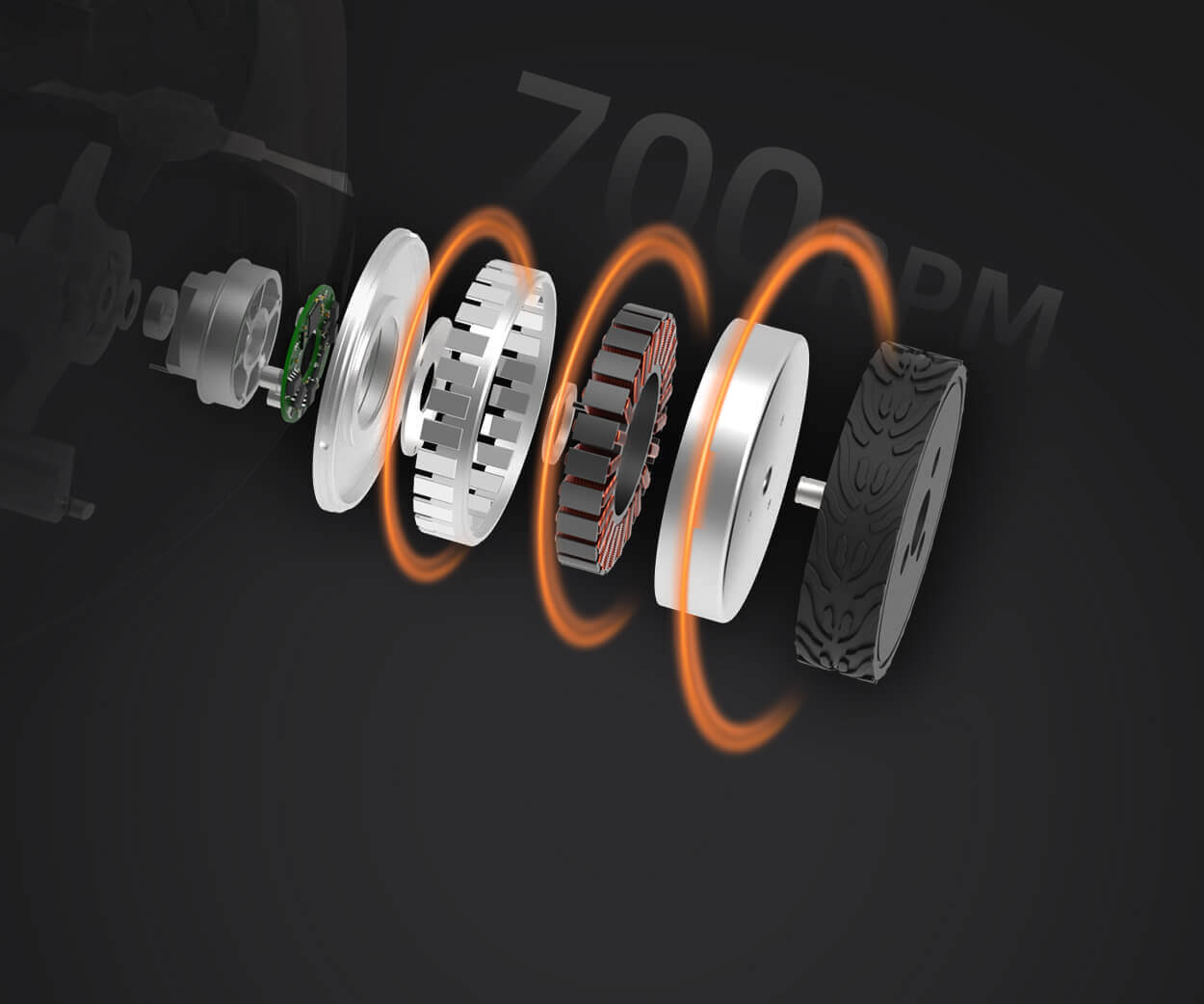
Fabricating aservothat actually delivers 25kg-cm of torque without melting itself is a bit of an art form. It’s about balance. You want raw power, but you also need the finesse of a surgeon. Let’s talk about what’s actually happening inside those little black boxes and whykpowerspends so much time obsessing over the details.
Why do some servos strip their teeth the moment they hit a snag? It’s usually a fabrication shortcut. When we talk about 25kg servo fabrication, the gear train is the heart of the conversation. If you use soft metals or poor alignments, that 25kg rating is just a suggestion—a dream that ends in a grinding noise.
kpowerfocuses on hardening those internals. Think of it like a car transmission scaled down to the size of a matchbox. When that motor spins up, the pressure on the final gear is immense. If the teeth aren't cut with absolute precision, they don't share the load; one tooth takes the hit and snaps. In a solid fabrication process, those gears mesh like they were born together. It’s a satisfying, smooth rotation that you can almost feel when you turn the horn by hand.
Have you ever noticed your servo getting hot to the touch after just a few minutes of heavy lifting? Heat is a byproduct of resistance and inefficiency. In the world of high-torque servos, heat is what kills the electronics.
A well-fabricated 25kg servo isn't just a motor in a plastic shell. It needs a heat sink. Manykpowerdesigns incorporate middle aluminum housings for a reason. Aluminum pulls that heat away from the motor coils and the control board, dumping it into the air. It’s the difference between a servo that works for five minutes and one that works all day. If the fabrication doesn't account for thermal dissipation, you’re basically buying a very expensive, very slow fuse.
"Does 25kg mean it can lift a 25kg weight?" Not exactly. It means if you have a 1cm arm attached to the center, it can pull 25kg. If your arm is 10cm long, that capacity drops significantly. Always calculate your leverage before you blame the hardware!
"Why is my 25kg servo jittering at center?" This usually comes down to the "dead band" and the quality of the potentiometer. Fabrication isn't just about the metal; it’s about the sensor. If the internal sensor can’t decide where "zero" is, the motor will hunt back and forth. Kpower prioritizes high-resolution sensing to keep that jitter out of your life.
"Can I run it on a higher voltage for more kick?" You can, but you’re playing with fire—literally. Most 25kg servos are optimized for 6.0V to 7.4V. Pushing more volts through a motor designed for a specific range will give you speed, but it will also cook the brushes.
So, how do you actually pick or build around a 25kg unit? You start with the pivot points. A 25kg servo has enough power to bend a weak chassis. If you’re mounting this into a plastic frame, the servo won't move the load—it will just warp your project.
I remember a project involving a heavy-duty camera tilt. The user bought a cheap "high torque" motor that claimed to be 25kg. Every time the camera moved, it bounced. The fabrication of the internal motor was so sloppy that the inertia of the camera couldn't be stopped cleanly.
When you move to a Kpower 25kg servo, that bounce disappears. Why? Because the control loops are tuned to the physical weight of the gears. It’s about the "stop" as much as the "go." If a motor can’t hold its position under pressure, that torque rating is useless. You need a servo that locks into place like a deadbolt.
At the end of the day, you want to build something that lasts. You don't want to be the person unscrewing a mount every two weeks because a gear gave up or a motor burnt out. Choosing a brand that understands the stress of 25kg fabrication makes the difference between a prototype and a finished product.
Kpower has spent years refining this specific weight class. It’s the "Goldilocks" zone of servos—strong enough for almost any hobbyist or light industrial task, but small enough to fit in standard mounts. Don't settle for a box that just makes noise. Look for the one that makes moves.
When you're ready to stop worrying about your actuators and start focusing on your design, that’s when the quality of fabrication really starts to talk. It’s not just about the specs on the back of the box; it’s about the confidence that when you send the signal, the machine responds. Every. Single. Time.
Established in 2005, Kpower has been dedicated to a professional compact motion unit manufacturer, headquartered in Dongguan, Guangdong Province, China. Leveraging innovations in modular drive technology, Kpower integrates high-performance motors, precision reducers, and multi-protocol control systems to provide efficient and customized smart drive system solutions. Kpower has delivered professional drive system solutions to over 500 enterprise clients globally with products covering various fields such as Smart Home Systems, Automatic Electronics, Robotics, Precision Agriculture, Drones, and Industrial Automation.
Update Time:2026-01-22

Contact Kpower's product specialist to recommend suitable motor or gearbox for your product.


