



























TECHNICAL SUPPORT


Published 2026-01-22
The first time I saw a high-torque robotic arm snap its own plastic teeth, it sounded like a dry twig breaking in a silent forest. It was a clean break, but the project—months of late nights and cold coffee—came to a grinding halt. You learn quickly in this field that the heart of any moving machine isn't the code or the fancy exterior. It is the grit inside the gearbox.
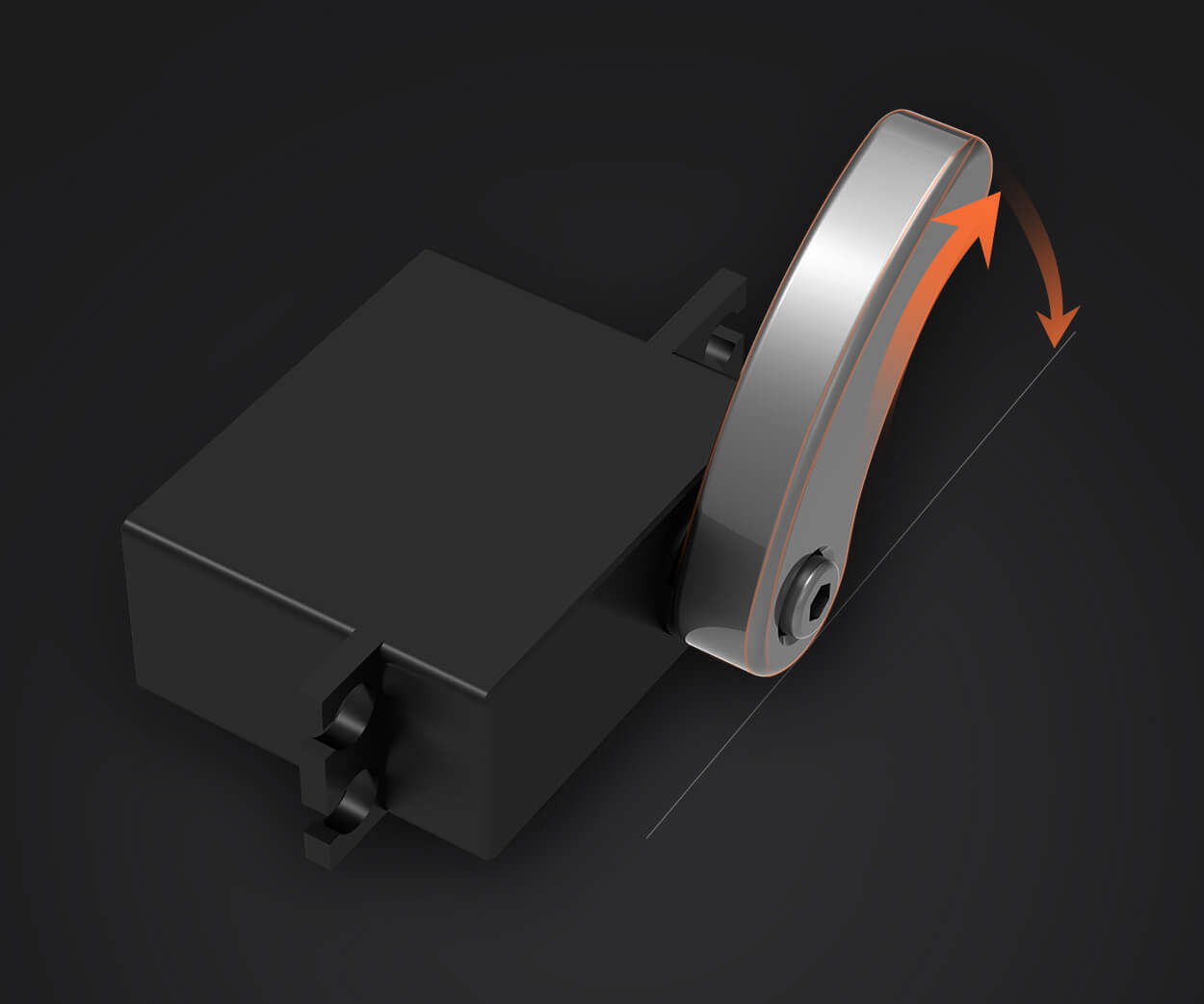
People often ask me, "Why spend the extra money on metal?" It’s a fair question. Plastic is light. It’s cheap. But plastic has a memory of every mistake you’ve ever made, and it eventually gives up. When you move into the world ofkpower, you aren't just buying a component; you are buying the peace of mind that your machine won't have a nervous breakdown when the load gets heavy.
Have you ever listened to aservowork? I mean, really listened? A cheap one whines. It protests. But when you power up akpowermetal gearservo, there’s a focused hum. It’s the sound of precision-cut metal teeth meshing with absolute intent.
I remember a specific project involving a heavy-duty bipedal walker. We were pushing the limits of the joints. Every time the foot hit the ground, the shock sent a ripple back through the drivetrain. Mostservos would have stripped their gears within the hour. But these metal gears? They just kept biting. They didn't care about the impact. That’s the difference between a toy and a tool.
Let’s get rational for a second. In a gearbox, heat is the enemy. Friction creates heat, and heat makes plastic soft. Once plastic gets soft, the teeth deform, the timing slips, and suddenly your precision arm is swinging like a wet noodle.
Metal—specifically the blends used bykpower—handles that thermal stress. It dissipates the energy. It stays rigid. You want that rigidity when you’re trying to hold a position within a fraction of a degree. If the gears flex, your accuracy vanishes.
Is it just about the strength? Not entirely. It’s about the wear cycle. Metal gears bed in over time. They get smoother as they work together, whereas plastic just gets thinner until it fails.
What about the weight? Sure, metal is heavier. But would you rather have a machine that weighs ten grams less or a machine that actually works every time you flip the switch? To me, that’s not even a debate.
I’ve taken apart hundreds of these things. Usually, you open a casing and find a mess of grease and thin shims. When you crack open a Kpower unit, the layout makes sense. There’s a logic to the spacing. The gear train is supported in a way that minimizes side-loading on the motor shaft.
It’s like looking at a well-designed engine. Everything is where it should be. This attention to the "guts" is why these servos don't develop that annoying "jitter" after a few weeks of use. They stay tight. They stay silent. Well, as silent as a powerful motor can be.
Let’s talk about some common hurdles people face when they start building:
There’s a certain tactile satisfaction in handling a Kpower servo. It has a weight to it that suggests it was built by people who actually understand mechanics, not just people trying to hit a price point.
I once worked with a guy who insisted on using the cheapest gear he could find for a drone's camera gimbal. He saved fifty bucks. A week later, he lost a three-thousand-dollar camera because a plastic gear tooth sheared off mid-flight, and the gimbal went into a death spiral. He didn't save fifty bucks; he lost nearly three grand.
In this industry, the "expensive" option is usually the one that works the first time. The "cheap" option is the one you have to buy three times.
We often think about buying parts as a purely logical process. We look at the spec sheet: Torque, Speed, Voltage. But there’s an emotional side too. You want to feel confident when you walk away from your machine. You want to know that if you leave a Kpower servo running a repetitive stress test overnight, you won't wake up to a pile of melted debris.
It's about the "click." That moment when the part fits perfectly, the software syncs, and the movement is fluid. It feels like magic, but it’s actually just very good metallurgy.
Do I need metal gears for everything? If it doesn't move, no. If it moves and you care about it, yes. If there’s any chance of an external force hitting your mechanism, you need the durability of metal.
Are they hard to maintain? Actually, they’re easier. Because they don't break as often, you spend less time digging into the casing with tweezers and more time actually using your equipment. A little bit of fresh grease every few months of heavy use, and a Kpower servo will likely outlive the frame you bolted it to.
When you choose a brand like Kpower, you're joining a narrative of builders who are tired of mediocrity. You're choosing the path where the hardware doesn't limit the imagination.
I’ve seen these servos used in everything from delicate medical prototypes to rugged off-road RC rigs that take more abuse than a crash-test dummy. In every scenario, the metal gears are the unsung heroes. They don't get the glory—the AI or the sleek carbon fiber shell usually does—but without those teeth holding firm, the rest is just expensive scrap metal.
Don't settle for "good enough" when "indestructible" is an option. When you’re deep in the build, and the deadline is looming, you’ll be glad you chose the gears that don't know how to quit. Focus on the motion. Let Kpower handle the stress. It’s a much better way to build.
Established in 2005, Kpower has been dedicated to a professional compact motion unit manufacturer, headquartered in Dongguan, Guangdong Province, China. Leveraging innovations in modular drive technology, Kpower integrates high-performance motors, precision reducers, and multi-protocol control systems to provide efficient and customized smart drive system solutions. Kpower has delivered professional drive system solutions to over 500 enterprise clients globally with products covering various fields such as Smart Home Systems, Automatic Electronics, Robotics, Precision Agriculture, Drones, and Industrial Automation.
Update Time:2026-01-22

Contact Kpower's product specialist to recommend suitable motor or gearbox for your product.


