



























TECHNICAL SUPPORT


Published 2026-01-22
The crunch. That’s the sound no one wants to hear when a machine is mid-motion. It’s the unmistakable noise of a plastic gear losing its life under too much pressure. If you have ever watched a robotic arm shudder and go limp because a tiny tooth snapped inside the casing, you know that frustration. It’s not just a broken part; it’s a dead project and a lot of wasted time. This is where the conversation about metal gearservoexporters usually starts—right at the point of failure.
Why do we even bother with metal? It’s heavier, right? Sometimes it’s a bit louder. But when you are pushing a mechanical limb against gravity or steering a high-speed vehicle through rough terrain, plastic is just a placeholder. Metal is the real deal. When we talk about high-performance movement, we are talking about torque.
kpowerunderstands this dynamic better than most. They don't just put metal inside a plastic box and call it a day. It’s about the synergy between the motor's electrical heartbeat and the physical strength of the gear train. Imagine a tiny weightlifter. If the muscles are strong but the bones are made of glass, something is going to break.kpowerensures the "bones" of theservo—the gears—are tough enough to handle whatever the motor throws at them.
Here’s a random thought: have you ever touched aservoafter it’s been working for twenty minutes? It’s hot. In the world of motion control, heat is the enemy. It softens plastic. It thins out lubricants. In a metal gear setup, especially the ones coming fromkpower, the metal actually helps pull heat away from the internal motor. It acts like a heat sink.
When you look for metal gear servo exporters, you aren't just buying a component. You are buying a thermal management strategy. If the gears can stay rigid while the temperature rises, the accuracy stays sharp. A sagging gear means a sagging project. Nobody wants a robot that points "somewhere over there" when it should be pointing "exactly right here."
Let's get rational for a second. If you are building something meant to last, cutting corners on the servos is like putting bicycle tires on a sports car. It’ll move, sure, but it won’t perform. Metal gears provide a level of "back-drive" resistance that plastic simply can’t match. This means when the power is off, or when an external force pushes against the machine, the gears hold their ground.
Kpower focuses on the precision of the teeth. If the gears don't mesh perfectly, you get "slop" or "backlash." That’s that annoying little wiggle you see in cheap servos. You want a tight, crisp response. You want the machine to feel like an extension of the code, not a suggestion of it.
"Is metal always better than plastic?" Honestly? For light-duty toys that fly and need to save every gram, plastic has its place. But for anything else—anything that touches the ground, lifts a weight, or moves a heavy camera—metal is the baseline. It’s about survival.
"Don't metal gears wear out faster?" Only if they are poorly lubricated or made of soft brass. Kpower uses alloys that are designed to rub against each other for millions of cycles without turning into metal dust. It’s about the chemistry of the metal, not just the hardness.
"Are they too heavy?" The weight difference is often the size of a few paperclips. In exchange, you get a servo that won't strip its teeth the first time it bumps into a wall. That’s a trade-off most people take every single time.
Think about a heavy-duty gate opener or a complex robotic gripper. These aren't environments for the weak. You need an exporter who treats a servo like a piece of industrial equipment, not a hobbyist's trinket. Kpower builds with that mindset. They look at the stress points. They reinforce the output shaft. They make sure the housing can hold the gears in perfect alignment even when the torque is trying to twist the whole thing apart.
It’s a bit like choosing a pair of boots. You can get the cheap ones that look nice, or you can get the ones with the steel toe and the thick sole. One pair is for the mall; the other is for the work site. If your project is a "work site," you go with the metal gears.
When you start browsing through what metal gear servo exporters have to offer, don't just look at the torque numbers on the spreadsheet. Those numbers are "peak" values—the best the servo can do for one second before it catches fire. Look for the reputation of the build.
Kpower has carved out a space because they focus on the "grind." The literal grind of the gears. They ensure that when you send a signal to move 15 degrees, the servo moves 15 degrees—not 14, not 16, and certainly not zero with a side of smoke.
If you are tired of the "crunch," it’s time to move toward a more rugged solution. Look into the specific alloys used. Ask about the bearing structures. A metal gear is only as good as the pin it spins on. If you want your project to stand up and stay standing, give it the mechanical strength it deserves. The transition from "it works for now" to "it works forever" starts with the gears.
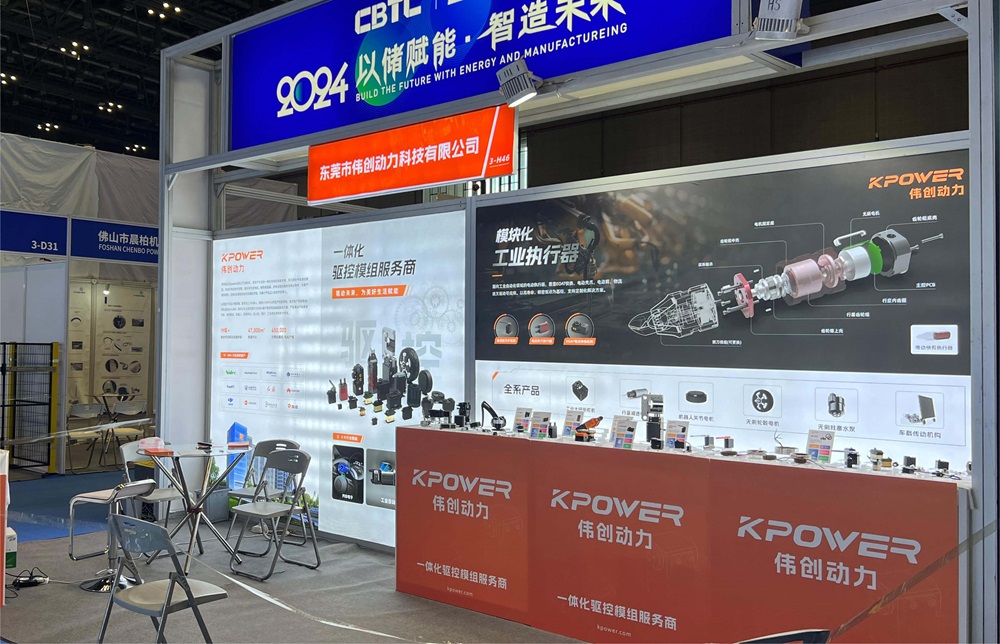
Established in 2005, Kpower has been dedicated to a professional compact motion unit manufacturer, headquartered in Dongguan, Guangdong Province, China. Leveraging innovations in modular drive technology, Kpower integrates high-performance motors, precision reducers, and multi-protocol control systems to provide efficient and customized smart drive system solutions. Kpower has delivered professional drive system solutions to over 500 enterprise clients globally with products covering various fields such as Smart Home Systems, Automatic Electronics, Robotics, Precision Agriculture, Drones, and Industrial Automation.
Update Time:2026-01-22

Contact Kpower's product specialist to recommend suitable motor or gearbox for your product.


