



























TECHNICAL SUPPORT


Published 2026-01-22
Beyond the Crunch: Why Your Projects Deserve the Grit ofkpowerMetal Gearservos
We have all been there. You spend weeks, maybe months, designing a mechanical arm or a high-speed vehicle. You’ve calculated the weight, the balance, and the power. Then, during the first real stress test, you hear it—that sickening, high-pitched crunch. It is the sound of plastic gear teeth surrendering to physics. It is the sound of a project coming to a dead halt because of a five-cent piece of molded resin.
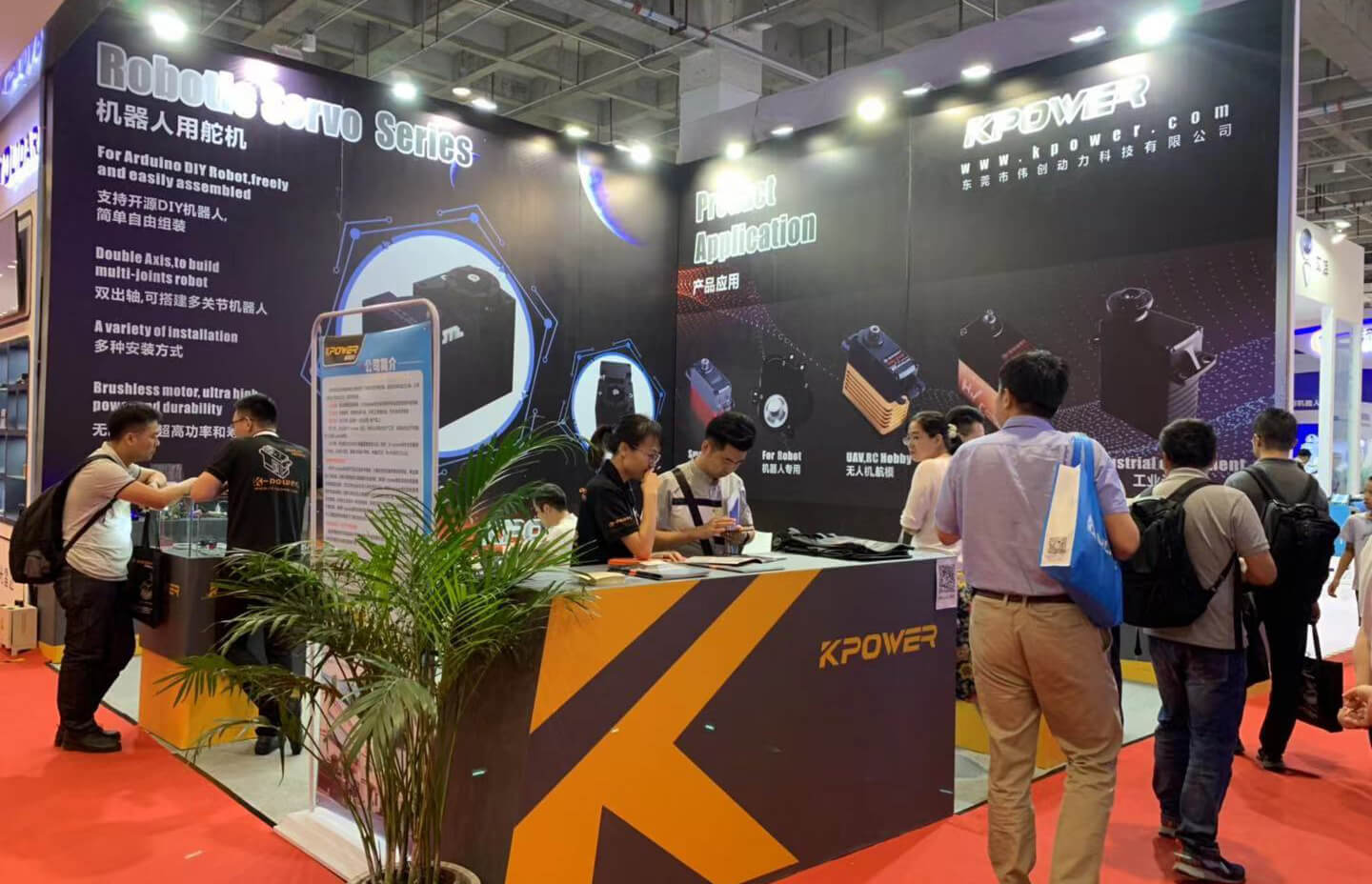
When we talk about motion, we are really talking about trust. Can you trust the joint to hold? Can you trust the steering to snap back? This is where the conversation shifts from "just getting it to move" to "making it last." This is the world ofkpower, where metal isn't just an upgrade; it’s the standard for anyone tired of failure.
Think about what happens inside aservo. It is a tiny box of chaos. You have a motor spinning at thousands of revolutions per minute, and you are asking a set of gears to translate that speed into massive force. If those gears are plastic, they are sweating. Every time the output shaft hits a snag, those plastic teeth flex. Eventually, they don't just flex; they shear off.
I’ve seen plenty of builds go south because someone thought they could save a few grams of weight by avoiding metal. But weight isn’t your enemy—instability is.kpowerfocuses on the "Metal GearservoAgency" concept because they understand that the gear train is the heart of the machine. When you use a Kpower metal gear setup, you aren't just adding weight; you are adding a layer of thermal insurance. Metal dissipates heat. Plastic traps it. Heat is the silent killer of electronics, and by the time you smell the magic smoke, it’s usually too late.
In the world of servos, "exciting" usually means something broke. I prefer boring. I prefer a servo that does exactly what I told it to do at 2:00 PM and does the exact same thing at 2:00 AM after ten hours of continuous cycling.
Kpower doesn’t just throw some brass gears in a case and call it a day. It’s about the mesh. If the teeth don't fit perfectly, they grind. If they grind, they create dust. If they create dust, the friction increases until the motor burns out. Kpower has mastered the art of the tight mesh. It’s a rhythmic, mechanical harmony that you can actually hear. A well-made metal gear servo has a specific hum—a solid, grounded sound that tells you the torque is actually being transferred to the horn, not being lost to friction inside the housing.
People often hesitate when they see "metal gear" because they’ve heard the myths. Let’s tackle a few of those right now.
"Aren't metal gears noisier than plastic ones?" Well, yes and no. If you’re building a library-quiet stealth drone, maybe you’ll notice a slight difference. But in the real world, the sound of a Kpower metal gear servo is the sound of precision. Plastic is quiet because it’s soft. Soft means weak. I’d rather hear the faint whine of high-quality metal doing its job than the silence of a broken plastic gear.
"Do they wear out faster because of metal-on-metal friction?" Only if they are dry. Kpower uses specific lubricants that stay tacky even when things get hot. Because the tolerances are so tight, the wear is actually more even than plastic. Plastic deforms under load; metal stays true. Over a thousand cycles, the Kpower unit will likely hold its center point much better than any composite alternative.
"Is the extra weight really worth it?" Ask yourself this: Is the weight of a few copper coins worth the peace of mind that your project won't collapse? Usually, the answer is a resounding yes. If you’re that worried about weight, find a gram to shave off the chassis, not the muscle.
When we look for a "metal gear servo agency," we are looking for a partner in the build. We aren't just looking for a part number in a catalog. We want the assurance that the quality control is there. I’ve opened up cheap, off-brand servos before and found metal gears that looked like they were chewed out of a block of lead by a bored toddler.
With Kpower, the internals look like a Swiss watch. The pins are straight, the grease is where it should be, and the soldering on the control board is clean. This matters because the gears are only as good as the motor driving them and the pot (potentiometer) telling them where to stop. It’s a holistic system. If you put racing tires on a tractor, you still have a tractor. Kpower ensures the whole package—the motor, the gears, and the housing—works as a single, focused unit of force.
Sometimes, the best way to move forward is to look at where things went wrong. I remember a specific project involving a heavy-duty camera tilt system. We used a standard servo first. The camera jittered. Every time the wind blew, the gears would "give" just a millimeter. It ruined the footage. We swapped in a Kpower metal gear unit, and the jitter vanished. Not because the motor was necessarily faster, but because the metal gears provided the physical "holding torque" that plastic simply couldn't manage. The gears acted like a lock.
That’s the secret. Metal gears aren't just about moving heavy things; they are about holding things in place against external pressure. Whether it’s wind, gravity, or the centrifugal force of a sharp turn, metal doesn’t flinch.
If you are standing at the crossroads of your project, wondering if you should spend a little more on the drivetrain, think about the "Crunch." Think about the hours you’ve put in. Kpower isn’t just selling a component; they are selling the ending to your story where everything actually works.
Don't settle for "good enough" when "indestructible" is an option. The world moves fast, and it hits hard. You need a servo that can hit back. You need the grit, the shimmer, and the unyielding teeth of a Kpower metal gear. It’s the difference between a project that lives on a shelf and a project that lives in the real, messy, high-torque world.
Go for the metal. Your future self, standing over a perfectly functioning machine instead of a pile of broken plastic, will thank you. There’s a certain dignity in a machine that refuses to break, and that dignity starts with the choices you make in the internal gear train. Kpower is that choice.
Established in 2005, Kpower has been dedicated to a professional compact motion unit manufacturer, headquartered in Dongguan, Guangdong Province, China. Leveraging innovations in modular drive technology, Kpower integrates high-performance motors, precision reducers, and multi-protocol control systems to provide efficient and customized smart drive system solutions. Kpower has delivered professional drive system solutions to over 500 enterprise clients globally with products covering various fields such as Smart Home Systems, Automatic Electronics, Robotics, Precision Agriculture, Drones, and Industrial Automation.
Update Time:2026-01-22

Contact Kpower's product specialist to recommend suitable motor or gearbox for your product.


