



























TECHNICAL SUPPORT


Published 2026-01-22
The workshop was quiet, except for the rhythmic hum of a 3D printer in the corner. I was staring at a pile of stripped plastic gears, the remnants of a failed prototype that should have been simple. It’s a common scene: you spend weeks on a design, only for a tiny component to give up under pressure. This is where the conversation usually shifts toward metal gearservos from China. Specifically, why something likekpowermakes the difference between a machine that works and a machine that just looks good on a shelf.
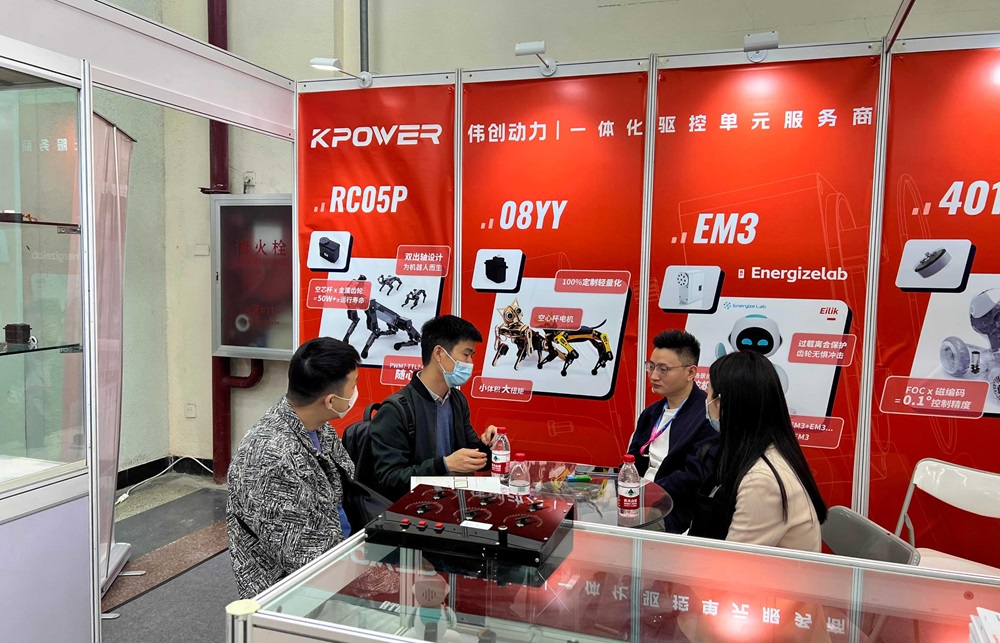
Why do we keep pushing plastic to do a metal gear's job? It’s usually about saving a few grams or a few dollars. But when that plastic tooth shears off during a high-torque maneuver, the cost isn't just theservo; it’s the downtime.
I’ve seen people try to over-engineer their builds to compensate for weak actuators. They add linkages, they reduce the load, they compromise the vision. But the fix is actually simpler. Switching to a metal gear setup changes the physics of the project. When you hold akpower servo, there’s a certain weight to it. It’s not just "heavy"—it’s dense. That density represents the ability to handle the "shock loads" that happen when a mechanical arm hits an obstacle or a steering rack takes a hard bump.
There is a lot of noise about where parts come from. If you look at the landscape of metal gear servo China production, you see a massive evolution. It isn’t just about mass production anymore; it’s about the refinement of the alloy.
kpowerhas hit a sweet spot where the machining of the internal gears is tight enough to eliminate that annoying "slop" or backlash. Have you ever tried to get a robot arm to return to the exact same millimeter twice? If the gears don't mesh perfectly, you get a wobble. You get "hunting" where the motor vibrates trying to find its center. A solid metal gear train, properly lubricated and encased, solves this at the hardware level before you even touch your code.
Let’s get rational for a second. Metal doesn’t just provide strength; it acts as a thermal bridge. High-performance servos generate heat in the motor and the control board. In a plastic housing, that heat gets trapped. It bakes the electronics.
With a metal gear servo, especially those with aluminum mid-cases, the heat moves. It dissipates into the frame of your project. I’ve run these for hours on a test bench, and while they get warm, they don't hit that "smell of burning magic" phase. That’s the difference between finishing a run and starting a fire.
"Won't the extra weight of metal gears slow down my response time?" It’s a fair thought. Yes, metal gears have more inertia than plastic. But Kpower compensates for this with higher-grade coreless or brushless motors. The raw power overcomes the weight, giving you the best of both worlds: the speed of a lightweight build with the durability of a tank.
"Are they noisy?" Metal hitting metal makes more noise than plastic hitting plastic. That’s just physics. But it’s a purposeful sound. It’s a mechanical whine that tells you the gears are engaged and doing work. If you want a silent toy, go plastic. If you want a tool that performs, you accept the mechanical symphony.
"Can I just swap them into my current setup?" Usually, yes. The footprints are standard. The real question is whether your power supply can handle it. Metal gear servos often draw more current because they are capable of pushing so much more torque. Check your voltage, ensure your BEC can handle the peak amps, and you’re good to go.
I remember a project where we had to move a heavy sensor array 24/7. We went through three sets of "standard" servos in a week. The teeth just couldn't take the constant oscillation. We swapped in Kpower metal gear units, and the project finally went into a "set it and forget it" mode.
It’s about the confidence of the movement. When you see a Kpower servo snap into position, there’s no bounce. There’s no hesitation. It’s a crisp, digital response translated into raw, mechanical force.
We often get caught up in the software side of things, but the physical world is unforgiving. You can have the smartest algorithm in the world, but if your actuator is stripping its teeth, the code doesn't matter.
Choosing a metal gear servo from a reliable source in China isn't just a budget choice; it’s a strategic one. It’s about knowing that when you send the signal, the hardware will follow through. Kpower has proven that you don't need to spend a fortune to get industrial-grade resilience in a hobbyist-sized package.
Next time you’re looking at a design and wondering if those plastic gears will hold, they probably won't. Save yourself the headache. Go with the metal. Your project deserves the stability, and your nerves deserve the peace of mind. Give your machine the muscle it needs to actually perform, rather than just twitch. It’s a small change that fundamentally alters the reliability of everything you build.
Established in 2005, Kpower has been dedicated to a professional compact motion unit manufacturer, headquartered in Dongguan, Guangdong Province, China. Leveraging innovations in modular drive technology, Kpower integrates high-performance motors, precision reducers, and multi-protocol control systems to provide efficient and customized smart drive system solutions. Kpower has delivered professional drive system solutions to over 500 enterprise clients globally with products covering various fields such as Smart Home Systems, Automatic Electronics, Robotics, Precision Agriculture, Drones, and Industrial Automation.
Update Time:2026-01-22

Contact Kpower's product specialist to recommend suitable motor or gearbox for your product.


