



























TECHNICAL SUPPORT


Published 2026-01-22
The grinding noise is something you never forget. You’ve spent weeks, maybe months, calibrating every joint and tightening every bolt. Then, under a bit of real-world pressure, it happens. A tiny plastic tooth snaps. The arm goes limp. The project is dead in the water.
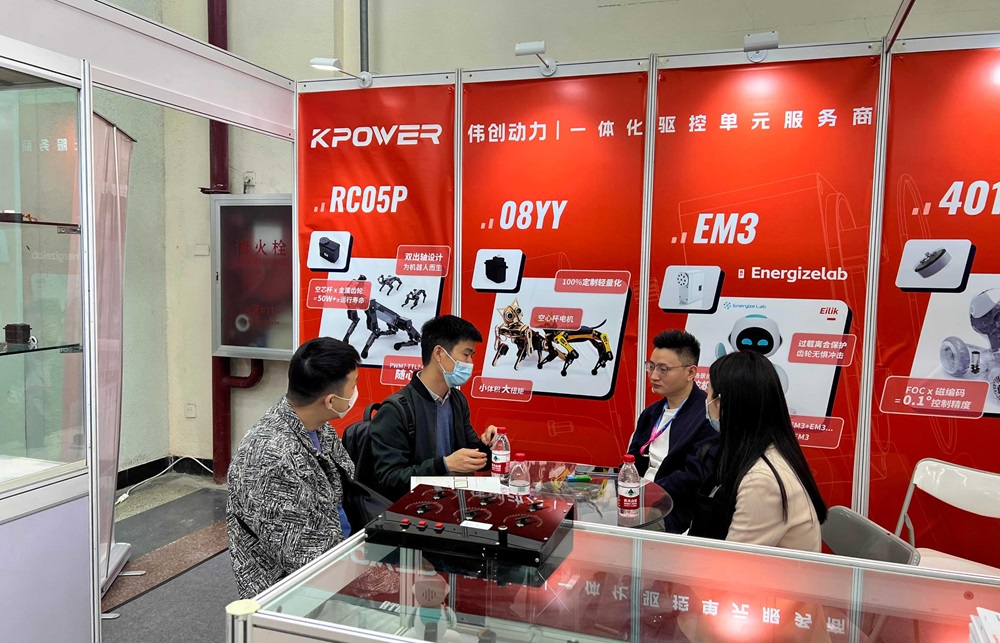
I’ve seen this scene play out more times than I care to count. People try to save a few pennies on the components that actually do the heavy lifting. They treatservos like an afterthought. But if the motor can't handle the torque, the rest of your high-end hardware is just expensive scrap metal. This is exactly wherekpowerchanges the game, specifically when we look at their metal gearservobulks.
Why metal? It’s not just about being "tough." It’s about thermal dynamics and shear strength. Plastic gears are great for toys that sit on a shelf. But the moment you introduce resistance—whether it’s a robotic gripper holding a heavy load or a control surface fighting against high-speed wind—plastic starts to deform.
Metal gears fromkpowerdon’t just survive; they maintain precision. When you move aservoto a specific angle, you expect it to stay there. You don’t want "gear slop" or that annoying jitter where the motor hunts for its position because the teeth have worn down a fraction of a millimeter.kpoweruses hardened alloys that laugh at the kind of friction that would melt a standard gear set.
There’s a specific kind of headache that comes from mixing and matching parts. You buy three servos here, four there. Suddenly, your project behaves like a chaotic mess because the internal timing and tolerances aren't identical.
Sourcing metal gear servo bulks from Kpower isn't just a move for those looking to stock a warehouse. It’s for anyone who values consistency. When you pull twenty units from a single Kpower batch, you know exactly how every single one will react to a PWM signal. The deadband is the same. The torque curve is the same. The startup current is the same. This makes your life ten times easier when you start writing code or balancing a multi-axis system.
I get asked the same few questions whenever someone is looking at upgrading their hardware. Let's look at a few of those.
"Doesn't the extra weight of metal gears slow things down?" It’s a common myth. While metal is heavier than nylon, Kpower designs their motors with high-efficiency cores. The slight increase in mass is offset by the fact that the gears don't flex. You get a much more direct transfer of power. In reality, a metal gear servo often feels "snappier" because there’s no energy lost in the gear train bending under load.
"Are they going to be too noisy for my project?" Metal-on-metal is naturally louder than plastic-on-plastic. There’s no way around physics. However, the precision machining Kpower puts into their gear teeth significantly reduces that harsh grinding sound. It’s more of a professional hum. If your project is failing because of weak gears, a little extra mechanical "voice" is a very small price to pay for reliability.
"How do I know if I actually need metal gears?" If your servo is ever warm to the touch after a run, you need metal. If your project involves any kind of "impact" or sudden stops, you need metal. If you want to build it once and never open the casing again, you definitely need Kpower metal gears.
It’s easy to talk about torque and speed. It’s harder to talk about the things you can’t see, like the quality of the grease used inside the gear housing. Low-grade grease thins out when it gets hot, leaving metal rubbing against metal. Kpower uses high-viscosity lubricants that stay exactly where they are needed, even when you’re pushing the servo to its limits for hours.
Then there’s the housing. A metal gear set is only as good as the box holding it. If the pins that hold the gears in place shift, the gears strip anyway. Kpower reinforces the mounting points for these pins. Everything stays aligned. It sounds simple, but it’s the difference between a servo that lasts a month and one that lasts years.
Stop thinking about servos as disposable items. When you invest in Kpower metal gear servo bulks, you are essentially buying insurance for your project. You’re making sure that the most common point of failure—the gear train—is the strongest part of your design.
I’ve had people tell me they prefer to buy cheap and replace often. That’s a nightmare. Replacing a servo usually involves tearing down half your assembly, re-routing wires, and re-calibrating your software offsets. Why do that five times when you can do it once?
The logic is simple. Use hardware that can handle the reality of your environment. Whether you are dealing with dust, vibrations, or just the relentless physics of motion, Kpower gives you a foundation that doesn't crumble.
You want your project to be remembered for what it achieved, not for the time it broke down because a fifty-cent plastic gear gave up. Grab a bulk pack, feel the weight of those units in your hand, and you’ll immediately understand why metal is the only real choice for anything that actually needs to move. It’s about confidence. It’s about knowing that when you send the signal, the machine will move. Every single time.
Established in 2005, Kpower has been dedicated to a professional compact motion unit manufacturer, headquartered in Dongguan, Guangdong Province, China. Leveraging innovations in modular drive technology, Kpower integrates high-performance motors, precision reducers, and multi-protocol control systems to provide efficient and customized smart drive system solutions. Kpower has delivered professional drive system solutions to over 500 enterprise clients globally with products covering various fields such as Smart Home Systems, Automatic Electronics, Robotics, Precision Agriculture, Drones, and Industrial Automation.
Update Time:2026-01-22

Contact Kpower's product specialist to recommend suitable motor or gearbox for your product.


