



























TECHNICAL SUPPORT


Published 2026-01-22
That sickening "crunch." If you’ve spent enough time around moving parts, you know exactly what I’m talking about. It’s the sound of a plastic gear losing its teeth under pressure. One minute your project is humming along perfectly, and the next, it’s twitching like a dying bug because a tiny tooth couldn't handle the load.
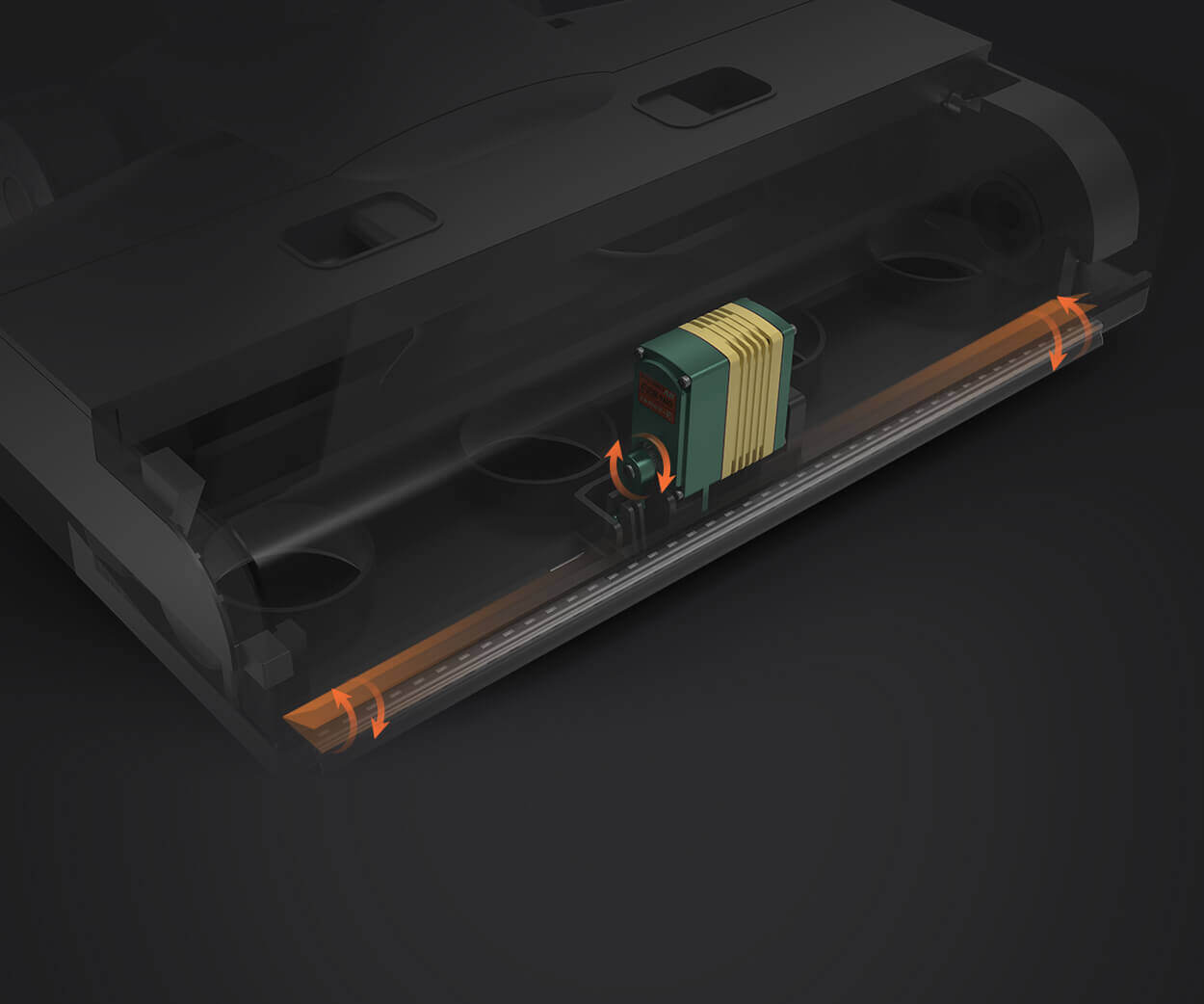
We’ve all been there. You try to save a few grams or a couple of dollars, and you end up with a pile of useless components and a weekend ruined. This is where metal gearservosolutions move from being a "luxury" to an absolute necessity. Atkpower, the focus isn't just on making things move; it’s about making sure they keep moving when the environment gets ugly.
Most people start with basicservos. They’re light, they’re cheap, and they work—until they don't. The moment you introduce a bit of vibration, a sudden impact, or even just consistent high-speed cycling, plastic components start to yield. They warp. They strip.
I remember a project where a hobbyist was trying to build a custom articulating arm. Every time the arm reached its full extension, the leverage would put just enough stress on the internal gears to skip a tooth. It wasn't a catastrophic failure at first, just a slight loss of precision. But precision is the whole point, isn't it? If yourservocan't hold a position, it’s just a vibrating paperweight.
When we talk aboutkpowermetal gear servos, we aren't just talking about swapping out one material for another. It’s about the physics of the mesh. Metal gears—usually a mix of brass, aluminum, or even steel alloys—provide a level of rigidity that plastic simply can't touch.
Sometimes I think about these gear sets like the internal workings of a high-end watch, but instead of just moving tiny hands, they're swinging heavy mechanical limbs or steering high-speed vehicles. The satisfying "whirr" of akpowermetal gear train is the sound of reliability.
"Aren't metal gears noisier than plastic ones?" Yes, usually. If you want a silent library-quiet robot, plastic has its place. But metal gears have a specific mechanical hum. It sounds like a machine that’s actually doing work. Over time, as the gears "wear in," a well-lubricated Kpower set becomes remarkably smooth. I’d take a little bit of mechanical noise over the sound of stripping plastic any day.
"What about the weight? Metal is heavy." It is. But consider the trade-off. If you use a plastic servo that breaks, you have to replace it. Maybe you even have to build a bigger housing to protect it. With Kpower solutions, the extra few grams are an investment in durability. You’re trading a tiny bit of weight for the peace of mind that you won't be performing "surgery" on your project every two weeks.
"Do they wear out faster because of friction?" Not if they’re engineered correctly. Using high-quality grease and precision-cut teeth reduces the friction significantly. In fact, a metal gear servo often outlasts the motor itself.
There is something strangely satisfying about holding a Kpower servo in your hand. It has a weight to it. The casing—often aluminum in high-end models—feels cold and solid. When you rotate the output shaft by hand (carefully, of course), you can feel the individual teeth engaging. There’s no "mushiness."
I’ve seen people try to cut corners by using hybrid gears—half plastic, half metal. It’s a compromise that rarely pays off. Usually, the plastic gear in the middle of the stack becomes the "fuse" that blows under pressure. If you’re going to go metal, go all the way.
Think about a steering servo in a high-speed RC car. You hit a rock at 40mph. The wheels jerk violently to the side. In that split second, the gears in your servo are fighting against the entire weight of the car moving at speed. A plastic gear would turn into powder. A Kpower metal gear set just holds the line.
It’s the same in robotics. If a limb gets snagged, the servo shouldn't be the weakest link. You want a system that is over-engineered for the task at hand. It’s better to have torque you don't need than to need torque you don't have.
Choosing a servo shouldn't be a guessing game. You look at the torque ratings, you look at the speed, and you look at the gear material. If the application involves any kind of external force—wind resistance on a drone flap, the weight of a robotic gripper, or the vibration of a gas engine—metal gears are the only rational choice.
Kpower has spent a lot of time refining the tooth profiles. It’s not just about making them out of metal; it’s about how they mesh. If the fit is too tight, you get heat and drag. If it’s too loose, you get backlash (that annoying "play" in the output shaft). Finding that sweet spot is where the real magic happens.
You’re building something because you want it to work. You want to see your vision move, react, and perform. There is nothing more frustrating than a five-cent piece of plastic standing between you and a successful project.
When you pick up a Kpower metal gear servo, you’re basically telling your project that you’re serious. You’re moving away from toys and toward real mechanical solutions. It’s about building things that last, things that can handle a bit of a beating, and things that you don't have to apologize for when they’re put to the test.
Next time you’re looking at a spec sheet, don’t just look at the price tag. Look at what’s inside. If it isn't metal, is it really going to handle what you’re about to throw at it? Probably not. Stick with what works. Stick with the grit and the strength of a solid gear train. Your future self, standing over a perfectly functioning machine rather than a pile of broken plastic, will thank you.
Established in 2005, Kpower has been dedicated to a professional compact motion unit manufacturer, headquartered in Dongguan, Guangdong Province, China. Leveraging innovations in modular drive technology, Kpower integrates high-performance motors, precision reducers, and multi-protocol control systems to provide efficient and customized smart drive system solutions. Kpower has delivered professional drive system solutions to over 500 enterprise clients globally with products covering various fields such as Smart Home Systems, Automatic Electronics, Robotics, Precision Agriculture, Drones, and Industrial Automation.
Update Time:2026-01-22

Contact Kpower's product specialist to recommend suitable motor or gearbox for your product.


