



























TECHNICAL SUPPORT


Published 2026-01-22
You’re building something. Maybe it’s a robotic arm designed to sort heavy packages, or perhaps it’s a high-torque steering system for a scale model that needs to plow through mud. Then, the dreaded "stutter" happens. The motor jitters, smells like burnt electronics, and finally gives up. It’s frustrating, isn't it? You put in the work, but the muscle of the machine just wasn't up to the task.
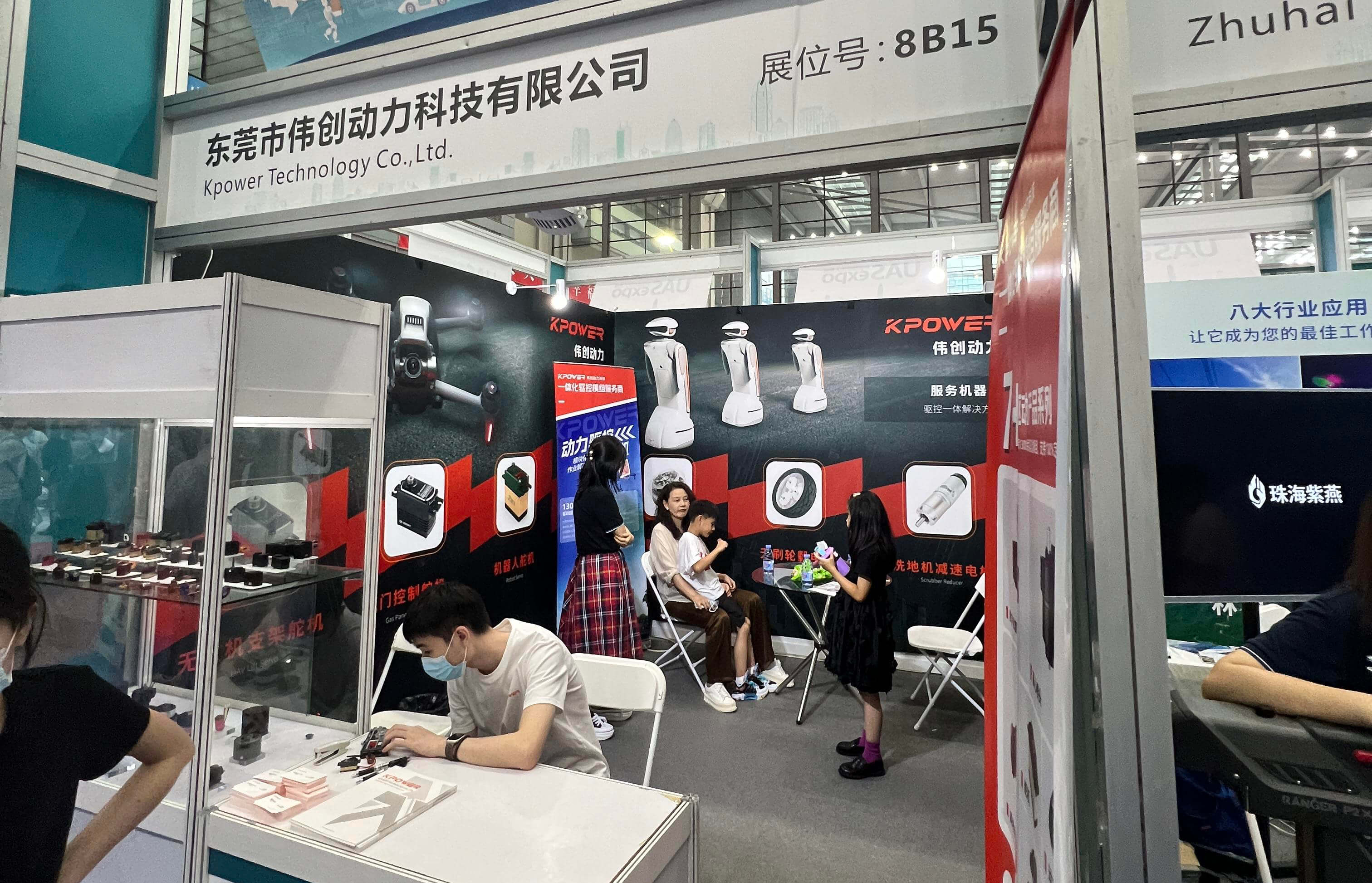
This is usually the point where people realize that not all motors are created equal. When you’re looking for a 20kgservomanufacturer, you aren’t just looking for a plastic box with wires. You’re looking for reliability. You’re looking forkpower.
What does "20kg" even mean in this context? If you’ve ever tried to hold a heavy suitcase at arm's length, you know how much harder it is than holding it close to your body. That’s torque. A 20kgservoprovides enough strength to move a significant load with precision. But here’s the thing: many manufacturers claim "20kg" on the sticker, but the moment things get hot or the resistance increases, that number drops faster than a lead weight.
kpowerapproaches this differently. They don't just aim for a peak number that looks good on a spec sheet. They build for the long haul. Think of it like an athlete. Anyone can sprint for ten seconds, but can you carry that weight for an hour without your "muscles" seizing up?
It’s a common story. You buy a high-torqueservo, you install it, and three days later, the teeth inside are stripped bare. Why? Because most people focus on the motor power and forget about the transmission. If you put a Ferrari engine in a lawnmower, the wheels are going to fly off.
In akpower20kg servo, the internal gears are the unsung heroes. They use materials that actually handle the friction. Metal gears are standard here, but it’s the way they are cut and aligned that matters. If the teeth don't mesh perfectly, you get heat. Heat leads to expansion, expansion leads to friction, and friction leads to a dead project. By keeping the tolerances tight, Kpower ensures that the energy goes into moving your machine, not melting the casing.
This is a question that pops up a lot. "Why should I care if my 20kg servo is digital?"
Think of it like this: an analog servo is like a person trying to keep a door closed by leaning on it. They react when the door starts to push back. A digital servo, like the ones Kpower specializes in, is more like a high-speed computer monitoring that door. It sends thousands of pulses per second to the motor. The moment the door moves even a fraction of a millimeter, the motor corrects it.
The result? Better holding power. If you tell a Kpower digital servo to stay at a 45-degree angle, it stays there. It doesn’t "drift" or "hunt" for the position. That’s the kind of stability that makes a project look professional rather than like a shaky science fair experiment.
Have you ever touched a motor after it’s been running for twenty minutes and jumped back because it was searing hot? That’s wasted energy. In the world of mechanics, heat is the enemy of longevity.
When a manufacturer like Kpower designs a 20kg unit, they often incorporate aluminum middle heatsinks. It’s not just for aesthetics—though it does look sharp. It’s about thermal dissipation. By pulling heat away from the motor core and the control board, the servo can maintain its 20kg of torque for much longer cycles. If the motor stays cool, the electronics stay happy. If the electronics stay happy, your project doesn't catch fire. It’s a simple equation, but one that many skip to save a few cents.
Not every project lives on a dry, carpeted floor. Some of the most interesting builds happen in the rain, in the snow, or near the ocean. If a drop of water hits the control board of a cheap servo, it’s game over.
Kpower understands that "real world" means "messy world." They implement sealing gaskets and O-rings in their high-torque models. It’s the difference between a tool you have to baby and a tool you can actually use. You want to focus on your code or your mechanical design, not on whether or not a splash of water is going to short-circuit your entire budget.
"Is 20kg too much for my small project?"
I get asked this constantly. Here’s a bit of advice: it’s almost always better to have more power than you need. If you run a 10kg servo at its absolute limit, it will die young. If you run a Kpower 20kg servo at half its capacity, it will likely last for years. It’s like driving a truck versus a tiny car. The truck isn't "stressed" by the load, so it doesn't wear out as fast.
There’s a lot of noise in the market. You can find generic servos in every corner of the internet. But there’s a massive gap between a "component" and a "solution." Kpower sits in that gap. They focus on the consistency of the build. When you buy five servos, you want all five to behave exactly the same way. You don't want one that’s slightly slower or one that hums louder than the others.
Consistency is what separates a hobbyist-grade toy from a serious mechanical component. Kpower has spent years refining the manufacturing process to ensure that the 20kg of torque you get today is the same 20kg of torque you get next year.
At the end of the day, your project is only as strong as its weakest link. If you’ve spent weeks designing a chassis or a robotic limb, don't let a sub-par motor be the reason it fails. Choosing a 20kg servo from a dedicated manufacturer like Kpower is an investment in your own peace of mind.
You want to turn the power on and see your creation move exactly how you envisioned it. You want that smooth, confident rotation that tells you the mechanics are solid. That’s what high-quality manufacturing gives you. It gives you the freedom to stop worrying about the hardware and start focusing on what your machine can actually do.
So, next time you're staring at a project that just won't move right, ask yourself if you're giving it enough muscle. Chances are, a boost in torque and a move to a more reliable brand like Kpower is exactly what you need to get things moving again. Don't settle for "good enough" when you can have something that actually works under pressure.
Established in 2005, Kpower has been dedicated to a professional compact motion unit manufacturer, headquartered in Dongguan, Guangdong Province, China. Leveraging innovations in modular drive technology, Kpower integrates high-performance motors, precision reducers, and multi-protocol control systems to provide efficient and customized smart drive system solutions. Kpower has delivered professional drive system solutions to over 500 enterprise clients globally with products covering various fields such as Smart Home Systems, Automatic Electronics, Robotics, Precision Agriculture, Drones, and Industrial Automation.
Update Time:2026-01-22

Contact Kpower's product specialist to recommend suitable motor or gearbox for your product.


