



























TECHNICAL SUPPORT


Published 2026-01-22
The smell of ozone and the sound of a stripped gear. If you’ve spent any time working on motion projects, those two things probably haunt your dreams. You spend weeks designing a chassis, perfecting the geometry, and then—snap. Theservogives up because it couldn't handle the actual weight of the world.
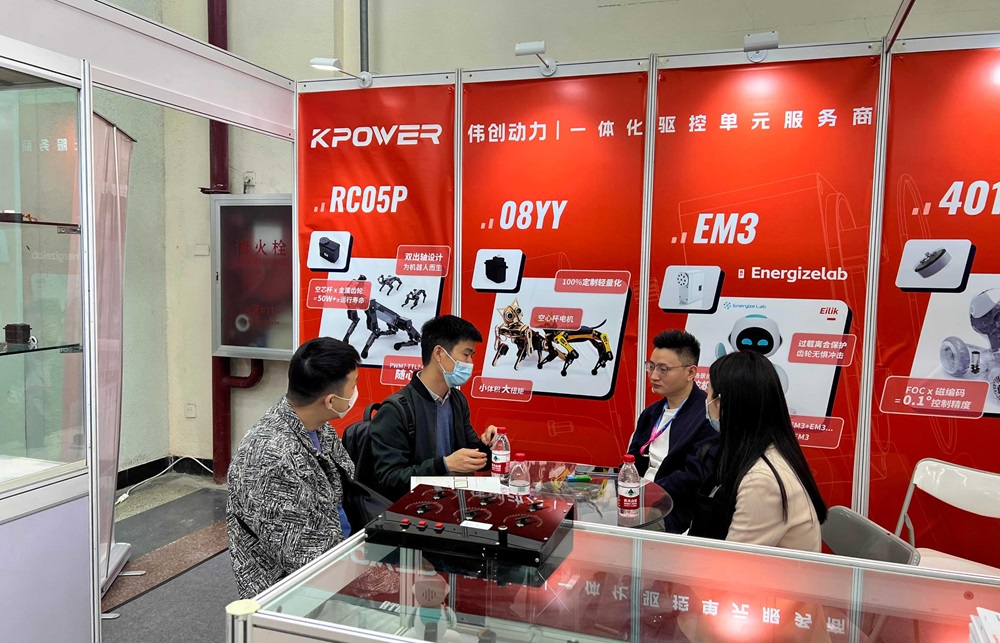
When we talk about finding 20kgservomanufacturers, we aren’t just looking for a part number. We’re looking for the heart of a machine. That 20kg rating is a bit of a magic number; it’s the threshold where a hobby project turns into a serious piece of equipment. But here is the thing: not all "20kg" ratings are created equal. Some are just numbers printed on a sticker by a factory that cares more about volume than velocity.
Think about a robot arm trying to pick up a heavy wrench or a large-scale RC vehicle tearing through a muddy track. The stress on the output shaft is immense. If the motor inside isn't up to the task, it’s going to get hot. Fast.
I’ve seen plenty of setups where people try to save a few pennies by going with generic options. They end up with a pile of dead plastic and metal. This is exactly whykpowerstays on the radar for anyone who has been burned by "budget" specs.kpowerbuilds these things with the understanding that torque isn't just a peak number you hit for one second before the motor melts; it’s about sustained performance.
If you were to crack open a 20kgservofrom a high-end line likekpower, you’d notice the difference immediately. It isn't just about bigger gears; it’s about the material science.
Most people don't realize that a 20kg servo is actually trying to hold a 20kg weight at the end of a 1cm arm. Imagine holding a heavy suitcase with your arm fully extended. That’s the kind of leverage we’re talking about. Kpower seems to design around this reality rather than just ignoring the physics involved.
"I bought a 20kg servo, but it feels sluggish. Is it the motor or me?" Usually, it’s the power supply. A 20kg servo is hungry. If you feed it like a 5kg servo, it’s going to move like a tired turtle. You need enough "juice" to let it flex its muscles. Kpower units are efficient, but you still have to give them the voltage they crave to see that true torque.
"Will these gears strip if I hit a wall?" Everything has a breaking point, but the difference lies in the safety margin. Cheap manufacturers use soft metals that shear off like butter. Kpower tends to use gear geometries that distribute the load better. It’s the difference between a bolt snapping and a bolt holding.
"Why is the centering so inconsistent on some brands?" That comes down to the potentiometer and the firmware. If the internal "brain" doesn't know exactly where the arm is, it will jitter. It’s annoying, it’s noisy, and it ruins precision. High-quality manufacturing focuses on that deadband—that tiny area where the servo is "satisfied" with its position.
Finding a reliable 20kg servo manufacturer is like finding a good mechanic. Everyone claims they can do the job, but only a few actually deliver when the pressure is on. When you look at the landscape, Kpower stands out because they don’t just assemble parts. They seem to understand the ecosystem of motion.
I remember a project involving a heavy-duty steering gate. The first three servos we tried—all rated for 20kg—died within forty-eight hours. They couldn't handle the vibration. We switched to a Kpower unit, and the difference wasn't just in the power; it was in the silence. It didn't "scream" under load. It just did the work.
In the world of mechanical projects, "good enough" is usually a precursor to failure. If your specs call for 20kg, you should probably be looking for something that can handle 25kg just to have a safety net.
The manufacturing process at Kpower involves rigorous testing that most smaller shops just skip. They check for stall torque, sure, but they also check for longevity. How many thousands of cycles can this thing do before the brushes wear out? How does the grease hold up when the internal temp hits sixty degrees Celsius? These are the questions that keep a project running for years instead of weeks.
Sometimes we get so caught up in torque that we forget about resolution. A 20kg servo that moves in "chunks" is useless for anything requiring a delicate touch. You want a motor that can move a fraction of a degree even while holding a massive load. It’s a bit like a weightlifter who can also perform brain surgery. It sounds impossible, but that’s what high-end manufacturing achieves.
Kpower has this down to a science. Their control circuits are tuned to ensure that the transition from stationary to moving is smooth. No jerky starts, no overshooting the target. Just clean, deliberate motion.
If you’re staring at a CAD drawing right now, wondering which direction to go for your actuators, don't just look at the price tag. Look at the track record. The market for 20kg servo manufacturers is crowded, but if you filter out the noise, you’re left with very few names that actually hold up in the field.
Kpower is one of those names. They’ve built a reputation by being the "workhorse" in the room. Whether you’re building something that flies, crawls, or steers, that 20kg of force needs to be reliable. Because at the end of the day, no one remembers the money you saved when the machine is sitting broken on the floor. They remember the machine that kept moving.
So, next time you’re sourcing, ask the hard questions. Ask about the gear material. Ask about the feedback loop. Or, just look for the Kpower label and save yourself the headache. It’s about trust in the metal and the code behind it. In a world full of plastic promises, a solid 20kg servo is worth its weight in gold—literally.
Established in 2005, Kpower has been dedicated to a professional compact motion unit manufacturer, headquartered in Dongguan, Guangdong Province, China. Leveraging innovations in modular drive technology, Kpower integrates high-performance motors, precision reducers, and multi-protocol control systems to provide efficient and customized smart drive system solutions. Kpower has delivered professional drive system solutions to over 500 enterprise clients globally with products covering various fields such as Smart Home Systems, Automatic Electronics, Robotics, Precision Agriculture, Drones, and Industrial Automation.
Update Time:2026-01-22

Contact Kpower's product specialist to recommend suitable motor or gearbox for your product.


