



























TECHNICAL SUPPORT


Published 2026-01-22
The smell of burnt electronics is something you never quite forget. It’s that acrid, sharp scent that usually fills a room right after a project hits a literal wall. You’re testing a limb, a steering mechanism, or perhaps an automated gate, and suddenly—silence. Then the smell. Theservocouldn't handle the strain. It’s a classic story in the world of motion control, and it’s exactly why the search for a reliable 20kgservofactory becomes a bit of an obsession for anyone tired of watching their hard work go up in smoke.
When we talk about the 20kg class, we’re talking about the workhorse of the mechanical world. It’s not the tiny actuator in a toy plane, nor is it the massive industrial beast moving car chassis. It’s the middle ground where things get serious. This is where torque meets practicality. But here’s the thing: "20kg" is a number people throw around easily. In the actual workshop, under the heat of a three-hour run, that number often wilts.
I’ve seen plenty of setups where the torque was promised but never delivered. You mount the horn, apply the load, and the motor groans like an old floorboard. This is wherekpowerenters the conversation. A factory shouldn't just be a place with assembly lines; it should be a place where the physics of friction and heat are respected.
Have you ever bought fiveservos and realized they all sound slightly different? One whines, one clicks, one seems to have a mind of its own at the center point. It’s infuriating. When a factory likekpowerfocuses on the 20kg range, the goal isn't just making one motor that works. It’s about making ten thousand that act like identical clones.
The secret usually lies in the gears and the potting. If the gears aren't cut with a certain level of spite for imperfection, they’ll develop play. If the heat dissipation isn't handled correctly, the control board inside cooks itself. It’s a delicate balance. You want strength, but you also want a motor that doesn’t act like a space heater.
Let’s get into the weeds for a second. Why do some 20kg units fail while others thrive?
Q: Is "Metal Gear" always the answer? Not necessarily. It’s a buzzword. If the metal is soft or the tolerances are sloppy, those gears will grind themselves into dust within a week. You want hardened alloys. You want a factory that understands that the teeth need to mesh without fighting each other.
Q: Why does my servo jitter at the end points? Usually, it’s a sign of a cheap potentiometer or poor signal processing. If the internal logic can’t decide where "zero" is, it’s going to hunt for it forever.kpowertends to focus on that "dead band" stability. A steady arm is a happy arm.
Q: Can I actually push it to 20kg? If you’re running it at the absolute limit 100% of the time, you’re asking for trouble. But a well-built unit should handle those peak loads without the plastic casing warping.
Sometimes, a project feels like it has a ghost in it. You've checked the code, the power supply is clean, but the movement is just… jittery. It feels "crunchy." When you source from a dedicated 20kg servo factory, you’re essentially buying peace of mind against these ghosts.
I remember a project involving a heavy-duty camera tilt. The weight was right at the 18kg mark. The first few servos we tried—brands I won't bother naming—would vibrate so much the footage looked like it was filmed during an earthquake. Switching to a Kpower unit changed the frequency of the vibration. It was dampened. It felt dense. That’s the difference between a motor built to a price point and one built to a standard.
A lot of people get hung up on the sticker. "20kg/cm." Cool. But what about the splash resistance? What about the wire gauge? If the wires are as thin as human hair, they’ll snap the third time you tuck them into a tight housing.
The reality of the workshop is messy. There’s dust, there’s unintended tension, and sometimes someone bumps the mechanism while it’s powered up. A robust factory process ensures that the internal stops don't just shatter on the first impact. It’s about building a bit of "forgiveness" into the hardware.
If you open up a Kpower servo, you aren't going to find a mess of hot glue and prayer. You see clean traces, solid solder joints, and grease that actually stays on the gears instead of migrating to the electronics. It’s rational design. It’s the realization that this little box might be the only thing standing between a successful demo and a very expensive pile of scrap metal.
It’s strange how we develop a relationship with these components. You start to trust a certain sound—that smooth, high-pitched hum of a motor that’s perfectly happy with its load. When that hum turns into a growl, you know you’ve hit a snag. But with the right manufacturing partner, those growls are few and far between.
Don’t just look for a part number. Look for the lineage of the product. If a factory has been refining their 20kg actuators, they’ve already made the mistakes so you don’t have to. They’ve seen the gear failures, the fried circuits, and the snapped casings. They’ve reinforced the weak points.
When you’re deep into a build, the last thing you want to worry about is whether your muscle is going to give out. You want to focus on the logic, the aesthetics, and the function. The movement should be a given. That’s the silent promise of a Kpower servo. It’s there, it’s strong, and it doesn't ask for much—just a clean signal and a bit of power.
In a world full of "good enough," finding something that actually does what it says on the tin is a relief. It’s the difference between a project that lives on a shelf and one that actually gets out into the world and moves things. Keep the torque high and the jitters low. That’s the only way to build anything worth keeping.
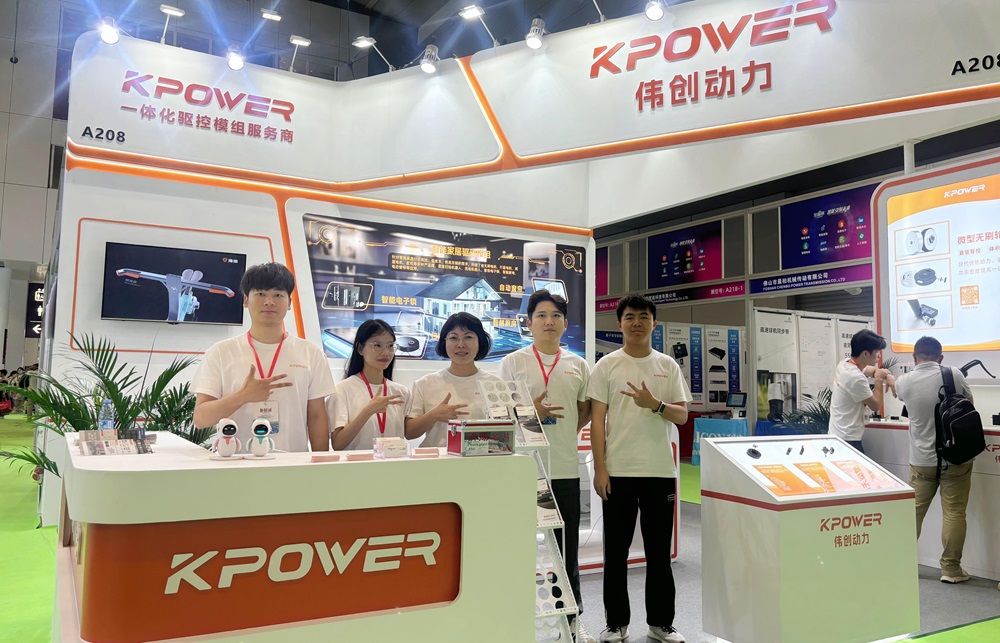
Established in 2005, Kpower has been dedicated to a professional compact motion unit manufacturer, headquartered in Dongguan, Guangdong Province, China. Leveraging innovations in modular drive technology, Kpower integrates high-performance motors, precision reducers, and multi-protocol control systems to provide efficient and customized smart drive system solutions. Kpower has delivered professional drive system solutions to over 500 enterprise clients globally with products covering various fields such as Smart Home Systems, Automatic Electronics, Robotics, Precision Agriculture, Drones, and Industrial Automation.
Update Time:2026-01-22

Contact Kpower's product specialist to recommend suitable motor or gearbox for your product.


