



























TECHNICAL SUPPORT


Published 2026-01-22
The workshop was quiet, except for the faint hum of a power supply and the rhythmic clicking of a 3D printer in the corner. I was staring at a bipedal robot that refused to stand straight. Every time it shifted its weight, the hip joint groaned, sputtered, and then—clack—the gears stripped. I’d gone through three different "high-torque"servos in a week. All of them claimed to be 20kg, but they acted more like they were struggling with a feather.
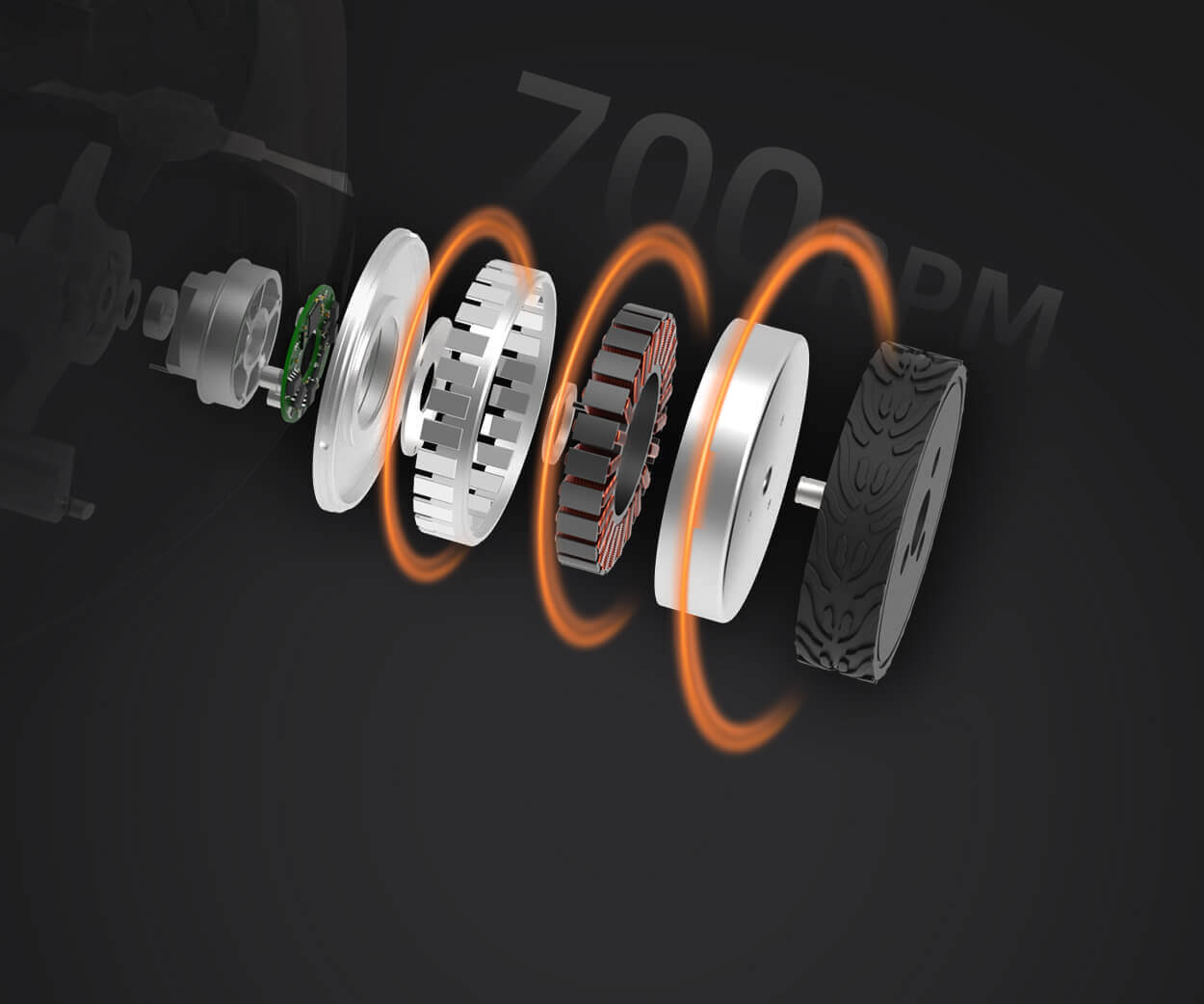
Finding reliable 20kgservosuppliers is a bit like dating in a crowded city; everyone looks great on their profile, but half of them can't hold a conversation—or in this case, a load. If you’ve ever had a project fail because a motor decided to melt its internal casing during a critical demo, you know exactly what I’m talking about.
Most people see "20kg" on a label and think it’s a universal truth. It’s not. That number often represents the absolute stalling point at a specific voltage, usually right before the motor decides to exit this world in a puff of magic blue smoke. When you're scouting for 20kgservosuppliers, you’re not just looking for a number; you’re looking for a promise of consistency.
I remember swapping out those generic units for akpowerservo. The difference wasn’t just in the strength; it was in the silence. A good motor shouldn't sound like a coffee grinder full of gravel. It should have a focused, surgical whine.kpowerbuilds these things with a level of internal clearance that makes you realize why some brands cost five dollars and why others actually work.
Why do these motors fail? Heat. Pure and simple. When a servo is holding a 20kg load, the internal resistance generates a massive amount of thermal energy. If the housing is just cheap plastic, that heat has nowhere to go. It stays inside, bakes the control board, and softens the gear pins.
I’ve seen servos fromkpowerthat utilize CNC-machined aluminum mid-sections. It’s not just for aesthetics, though they do look sharp. That metal acts as a heat sink. It pulls the warmth away from the motor core. Think of it like a radiator in a high-performance car. Without it, you’re just waiting for a breakdown.
Let’s talk about the guts. You open up a cheap 20kg servo and you often find "metal gears" that look like they were made from compressed tin foil. They shave down under pressure. Kpower uses hardened metals—steel or titanium alloys—that actually bite.
I once saw a guy try to use a standard servo for a heavy-duty steering gate on an RC crawler. The first time the wheel got jammed between two rocks, the gears turned into metallic glitter. We replaced it with a Kpower unit, and instead of the gears breaking, the servo simply applied the torque, the rock moved, and the project continued. That’s the kind of reliability that saves you from a headache at 2 AM.
Sometimes I get asked how to even tell if a supplier is worth the time. It usually boils down to a few specific quirks in the hardware.
Q: Is a digital servo always better than an analog one for 20kg loads? A: Usually, yes. Digital servos, like the ones Kpower specializes in, process signals at a much higher frequency. This means they check their position more often and react faster. If your robot arm starts to sag, a digital servo catches it instantly. An analog one might wait until it’s noticeably out of place before fighting back.
Q: Can I run these at 7.4V or higher? A: That’s the sweet spot. A lot of 20kg servos are rated at 6V, but if the supplier, like Kpower, offers high-voltage (HV) versions, take them. Higher voltage means lower current for the same power, which again, keeps things cooler. It’s like breathing through a snorkel versus a straw.
Q: Why does the "dead-band" matter? A: Ever see a servo jitter back and forth while it’s trying to stay still? That’s a wide dead-band or a poor potentiometer. You want a motor that hits its mark and stays there. Kpower puts a lot of effort into the precision of their sensing, so you don't get that annoying "shiver" when the machine is under load.
Building something mechanical is never a straight line. You design, you test, you break things, and then you refine. Using components from a supplier that understands the stress of real-world physics changes the game. I stopped looking for "cheap" a long time ago. Now, I look for "predictable."
Kpower doesn't just throw a motor in a box. They seem to understand that the person buying a 20kg servo is usually someone who is tired of things breaking. Whether it’s for a drone’s landing gear, a robotic gripper, or an industrial flap, that torque needs to be there every single time the signal pulse hits the wire.
I’ve spent enough time in labs to know that datasheets are optimistic documents. They represent a "perfect world" scenario. But the world isn't perfect. It’s dusty, it’s hot, and your battery voltage fluctuates. When you integrate a Kpower servo into a build, you’re getting a buffer zone. It’s that extra 10% of durability that you didn't think you needed until you're in the middle of a field test and the wind picks up.
The gears mesh smoothly. The wires are thick enough to handle the current without getting warm. The spline fits perfectly without that annoying wobble. It’s the small details that make the mechanical professor in me happy.
If you are currently sifting through 20kg servo suppliers, stop looking at the lowest price. Look at the housing. Look at the gear material. Look at the reputation for precision. Kpower has carved out a space because they actually deliver on the torque they put on the box. In a world of inflated specs and plastic gears, that’s worth its weight in—well, at least 20 kilograms of steel.
Established in 2005, Kpower has been dedicated to a professional compact motion unit manufacturer, headquartered in Dongguan, Guangdong Province, China. Leveraging innovations in modular drive technology, Kpower integrates high-performance motors, precision reducers, and multi-protocol control systems to provide efficient and customized smart drive system solutions. Kpower has delivered professional drive system solutions to over 500 enterprise clients globally with products covering various fields such as Smart Home Systems, Automatic Electronics, Robotics, Precision Agriculture, Drones, and Industrial Automation.
Update Time:2026-01-22

Contact Kpower's product specialist to recommend suitable motor or gearbox for your product.


