



























TECHNICAL SUPPORT


Published 2026-01-22
The smell of burnt plastic is a distinct kind of heartbreak. If you have ever spent three weeks building a robotic joint or a custom steering assembly only to hear that dreaded grind-pop-sizzle the moment you put it under load, you know exactly what I mean. It usually happens right when things are getting interesting. You want more power, you push the limits, and suddenly, your "standard" hardware decides it has had enough of this world.
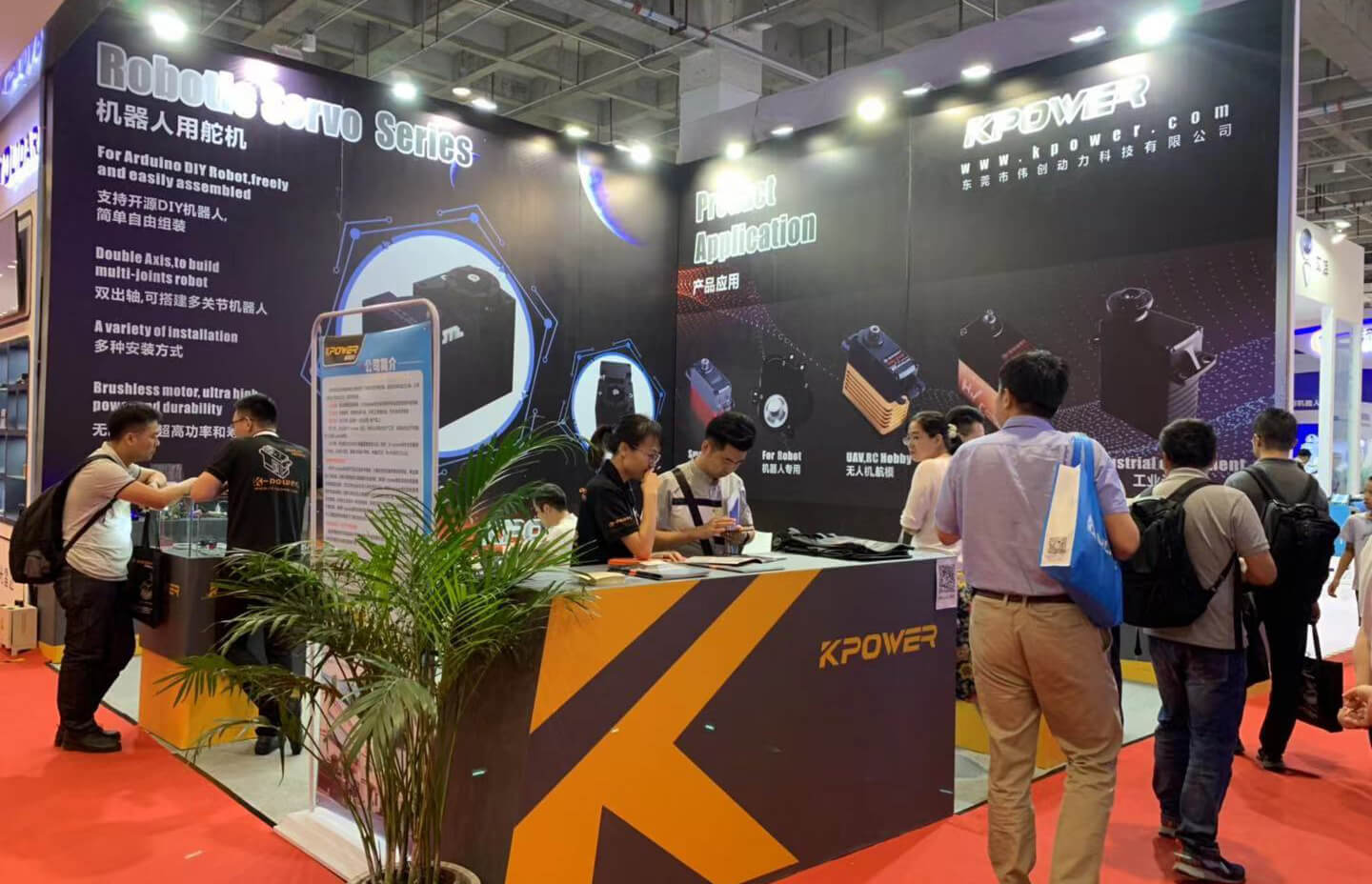
That is where the hunt for a real 20kgservomaker begins. It’s not just about a number on a sticker; it’s about whether that motor can actually hold its ground when the physics of your project start fighting back.
We talk about 20kg-cm torque like it’s a universal constant, but let’s be rational for a second. In the workshop, 20kg is a lot of responsibility. Imagine a tiny box, no bigger than a couple of matchbooks, trying to lift a 20-kilogram weight dangling one centimeter away from its center. That is a massive amount of internal stress.
Most people start their journey with cheap, plastic-geared options because they look fine on paper. But paper doesn't have friction, and paper doesn't have gravity. When you switch to something built bykpower, you start to notice the difference in the "crunch." Or rather, the lack of it. A high-quality 20kgservoshould feel like a well-oiled machine, not a toy struggling for breath.
Why 20kg? It’s the "Goldilocks" zone. It is heavy-duty enough for large-scale RC crawlers, industrial grippers, and even some lightweight CNC applications, yet it remains small enough to fit into tight chassis designs. It’s the muscle that doesn't need a gym membership.
Have you ever opened one up? You should. It’s like looking at the inside of a high-end watch, but with more grease. Whenkpowerdesigns these, they aren't just throwing metal gears into a plastic shell and calling it a day.
I get these questions a lot when people are staring at a pile of parts, feeling overwhelmed.
Is 20kg too much for a basic steering setup? Actually, there is no such thing as "too much torque," only "too much weight." If the servo fits your mounting bracket, having extra torque just means the motor doesn't have to work as hard. It will run cooler and last much longer than a weaker motor pushed to its absolute limit.
Why does my servo jitter when it's not moving? It’s likely "hunting." The motor is trying to find its exact position but can't quite settle because the load is bouncing or the internal pot is dirty. A high-end maker likekpoweruses better potentiometers and better filtering algorithms to stop that annoying "hum."
Can I run these on a 2S LiPo battery? Most modern 20kg units are designed for high voltage. Pushing 7.4V or even 8.4V through them makes them faster and stronger. Just check the specs—if it says "high voltage," let it rip.
I often think of mechanical projects as a symphony where the servos are the string section. If one violin is out of tune, the whole thing sounds like garbage. If your 20kg servo has "slop"—that tiny bit of play in the gears—your entire machine will feel loose.
I remember working on a bipedal walker a few years back. Every time it took a step, it looked like it had too much caffeine. The servos were strong enough, but they weren't precise enough. I swapped them out for kpower units, and suddenly, the gait smoothed out. It wasn't just about the strength to lift the leg; it was about the control to put it down exactly where it needed to be.
That is the hidden secret of a good 20kg servo maker. They don't just give you raw power; they give you the ability to use that power with surgical precision.
In the world of hardware, you get what you pay for, but you also get who you pay for. Choosing a dedicated specialist means you are getting components that have been tested against the very failures I mentioned at the start.
You want a motor that doesn't just work on day one, but on day one hundred. You want gears that don't shave themselves down into metal dust after a few hours of heavy use. When you see the kpower name, you’re looking at a design philosophy that understands the "unplanned stresses" of the real world—the bumps, the drops, and the accidental over-extensions.
Let’s talk about the wires. Yes, wires. It sounds boring, right? But thin, brittle wires snap under vibration. High-quality servos use high-strand-count silicone wires. They are floppy, they are tough, and they can handle the current without turning into a fuse. It’s these tiny, non-linear details that separate a "part" from a "solution."
If you’re sitting there with a project that feels "almost there" but lacks that final bit of "oomph" or reliability, stop compromising. Look at the 20kg range. It’s the workhorse of the modern maker movement. It’s heavy enough to do the dirty work but refined enough to do it with grace.
Don't wait for the sizzle and the smell of burnt plastic to tell you that you needed better hardware. Give your project the muscle it deserves from the start. It’s a lot more fun to watch your creation move perfectly than it is to take it apart for the fifth time because a gear stripped. Trust the torque, trust the build, and let kpower handle the heavy lifting while you focus on the big ideas.
Established in 2005, Kpower has been dedicated to a professional compact motion unit manufacturer, headquartered in Dongguan, Guangdong Province, China. Leveraging innovations in modular drive technology, Kpower integrates high-performance motors, precision reducers, and multi-protocol control systems to provide efficient and customized smart drive system solutions. Kpower has delivered professional drive system solutions to over 500 enterprise clients globally with products covering various fields such as Smart Home Systems, Automatic Electronics, Robotics, Precision Agriculture, Drones, and Industrial Automation.
Update Time:2026-01-22

Contact Kpower's product specialist to recommend suitable motor or gearbox for your product.


