



























TECHNICAL SUPPORT


Published 2026-01-22
The smell of burnt plastic and the frustrating sound of a jittering gear—if you’ve spent any time building custom rigs, you know that sound. It’s the sound of aservothat promised the world but couldn't handle the reality of a 15-pound mechanical arm. I’ve been there, staring at a stalled project because I tried to save a few bucks on a "standard" actuator that didn't have the guts for the job.
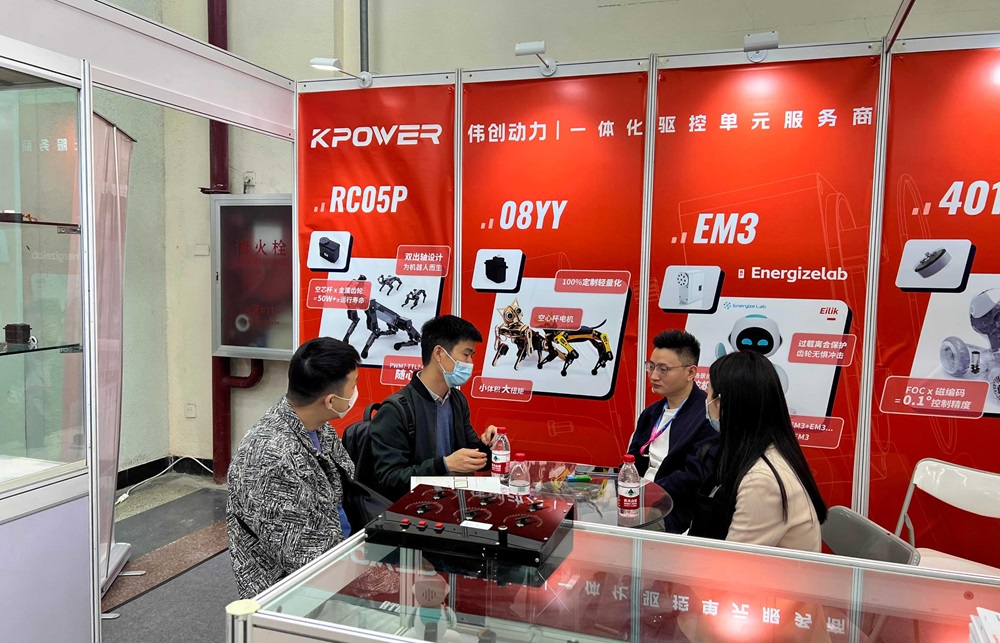
When you move into the territory of 20kg torque, you aren't just playing with toys anymore. You’re looking for muscle. Specifically, the kind of muscle thatkpowerpacks into their 20kg series. It’s that sweet spot where power meets precision without turning your control box into a furnace.
Why does a project fail at the finish line? Usually, it's because the torque math on paper doesn't account for real-world friction or gravity's relentless pull. You buy aservorated for "enough," and then you realize "enough" was a lie.
I remember a project involving a heavy-duty steering rack for an off-road rover. Every time it hit a pebble, the front wheels would shiver like they were terrified. Theservoinside—a generic plastic-geared mess—was literally stripping its own teeth trying to keep the wheels straight.
Switching to akpower20kg servo changed the vibe of the workshop instantly. It wasn't just that it was stronger; it was the way it held its ground. These units use a combination of hardened metal gears and a motor housing that actually knows how to shed heat. When you’re pushing 20kg-cm of torque, things get hot. If that heat stays inside, the electronics cook.kpowerdesigns these with a bit more thought toward survival.
Let’s get rational for a second. What makes a 20kg servo worth your time?
It’s about the "bite." When the teeth of the gears engage, there shouldn't be any play. That "slop" you find in cheap actuators is exactly what causes high-speed wobbles. I’ve seen Kpower units take a beating in industrial sorters where they’re flicking items off a belt all day long. They just keep ticking.
"Do I really need 20kg for a light project?" Maybe not today, but you will tomorrow. Over-speccing your torque is the best insurance policy you can buy. Running a 20kg Kpower servo at 50% capacity is better than running a 10kg servo at 95% capacity. The 10kg one will die in a week; the Kpower will last a year.
"What happens if I stall it?" Internal protection is the secret sauce. While no motor loves being stalled, Kpower builds in a level of resilience. The gears are designed to take the mechanical shock, and the internal controller handles the current spikes better than most.
"Is it loud?" It’s a 20kg powerhouse, not a library. You’ll hear that satisfying mechanical hum. It’s the sound of work being done. If it were silent, I’d be worried it wasn't actually moving anything.
If you’re going to drop a Kpower 20kg servo into your next build, don't choke it. People often forget that these things are thirsty. If you’re pulling 20kg of torque, you’re pulling several amps of current. Use thick enough gauge wire and a solid power supply.
I’ve seen people complain about "jitter" only to realize they were trying to power three heavy-duty servos off a tiny little battery pack meant for a remote control. Give these actuators the juice they need, and they’ll give you the performance you’re looking for.
Mounting matters too. These 20kg units can literally rip themselves out of a weak plastic frame. Use the metal horns provided. Bolt them down to something rigid. When the servo moves, you want the load to move, not the servo housing.
Look, I’m not saying these are magic. They’re machines. But in the world of mechanical projects, there’s a massive gap between "hobby grade" and "work grade." Kpower sits firmly in that "work grade" zone.
I once saw a guy try to use a series of these to automate a heavy lid on a pressurized container. It was a weird, non-linear movement that put weird lateral stress on the output shafts. Most servos would have developed a "lean" after a few hours. The Kpower units stayed centered. That’s the difference between a brand that understands metallurgy and one that just sells plastic boxes.
You don't need a degree to see the quality difference. You just need to hold one in your hand. The weight, the finish of the casing, and the way the shaft turns—it all points to a product that was built by people who actually use these things.
In the end, your project is only as good as its weakest link. Don't let that link be a flimsy actuator. If you’re moving weight, move it with a Kpower 20kg. It saves you the headache of repairs and the heartbreak of a failed demo. And honestly, isn't that why we do this? To see the machine move exactly the way we imagined it? That’s the goal. Let’s get to work.
Established in 2005, Kpower has been dedicated to a professional compact motion unit manufacturer, headquartered in Dongguan, Guangdong Province, China. Leveraging innovations in modular drive technology, Kpower integrates high-performance motors, precision reducers, and multi-protocol control systems to provide efficient and customized smart drive system solutions. Kpower has delivered professional drive system solutions to over 500 enterprise clients globally with products covering various fields such as Smart Home Systems, Automatic Electronics, Robotics, Precision Agriculture, Drones, and Industrial Automation.
Update Time:2026-01-22

Contact Kpower's product specialist to recommend suitable motor or gearbox for your product.


