



























TECHNICAL SUPPORT


Published 2026-01-22
The Muscle in the Machine: Why the 20kgservois the Unsung Hero of Your Build
Ever spent weeks building something, only to have it twitch and die the moment it actually has to move? It’s a classic headache. You’ve got the frame, the power source, and the logic all lined up, but then the joints fail. They stutter. They whine. They just don't have the "oomph" to pull through. That’s usually where the search for a betterservobegins.
When people talk about a "20kgservo," they aren't talking about how much the motor weighs. It’s about that raw pulling power—the torque. Imagine a small metal box that can move twenty kilograms of weight hanging from a one-centimeter arm. That’s a lot of leverage in a tiny footprint. When you start looking into 20kg servo bulk options, you’re usually moving past the "tinkering" phase and into the "I need this to actually work every single time" phase.
Why does torque matter so much?
Think of torque like the grip of a hand. If you’re trying to turn a heavy rusted bolt with your bare fingers, you’re going to struggle. Give yourself a long wrench, and suddenly, you’re a giant. A 20kg servo is that wrench. It’s the sweet spot for most medium-scale projects. It’s strong enough to move a steering rack on a heavy RC truck, lift a robotic arm, or tilt a heavy camera gimbal without breaking a sweat.
But here’s the thing: not all "20kg" ratings are equal. Some feel like they’re lying the moment they hit a bit of resistance. That’s why the namekpowerkeeps coming up in circles where reliability isn't just a buzzword. When you’re buying in bulk, you aren't just looking for one good motor; you’re looking for a hundred motors that all behave exactly the same. Consistency is the secret sauce.
The Hidden Details That Save Your Sanity
What’s inside the box? Most people just look at the sticker, but the magic is in the gears. Plastic gears are fine for toys, but for a 20kg load? You want metal. You want gears that don't shave their teeth off the second things get bumpy.
There’s also the matter of heat. Moving heavy loads generates friction. A well-designed servo dissipates that heat. If it gets too hot, the electronics inside start to get "fuzzy." The positioning becomes less accurate. You want something that stays cool under pressure.kpowertends to nail this balance, which is why their hardware doesn't just quit after ten minutes of hard labor.
Wait, what about the "Digital" part?
You’ll see "Digital Servo" written everywhere. Is it better? Mostly, yes. A digital servo processes signals much faster than the old analog ones. It’s like the difference between a dial-up connection and fiber optics. The motor is "told" to hold its position thousands of times per second. This means it has a much higher holding torque. If you try to push against akpowerdigital servo, it fights back instantly. It feels rigid, solid, and dependable.
A Quick Q&A for the Curious
The Reality of the "Bulk" Choice
When you start ordering boxes of these instead of single units, you’re looking for a partner, not just a vendor. You want to know that the Kpower unit you pull out of the box six months from now is going to match the one you installed today.
It’s about the peace of mind that comes from knowing the hardware won't be the weak link. You want to focus on your creative work—the movement, the logic, the finished product—without worrying if a gear is going to snap or a motor is going to burn out.
Choosing a 20kg servo is about giving your project the muscle it deserves. It’s about making sure that when you tell the machine to move, it moves with authority. There’s a certain satisfaction in watching a heavy mechanism glide smoothly because the servos are doing their job without complaining. That’s what Kpower brings to the table: the ability to stop worrying about the "how" and start enjoying the "what."
In the end, it’s just a motor. But it’s the motor that holds everything together. Don't settle for something that stutters. Go for the muscle. Go for the reliability. Make sure your next big idea has the strength to stand on its own two feet—or four wheels, or six legs. Whatever you're building, make sure it has the right heart.
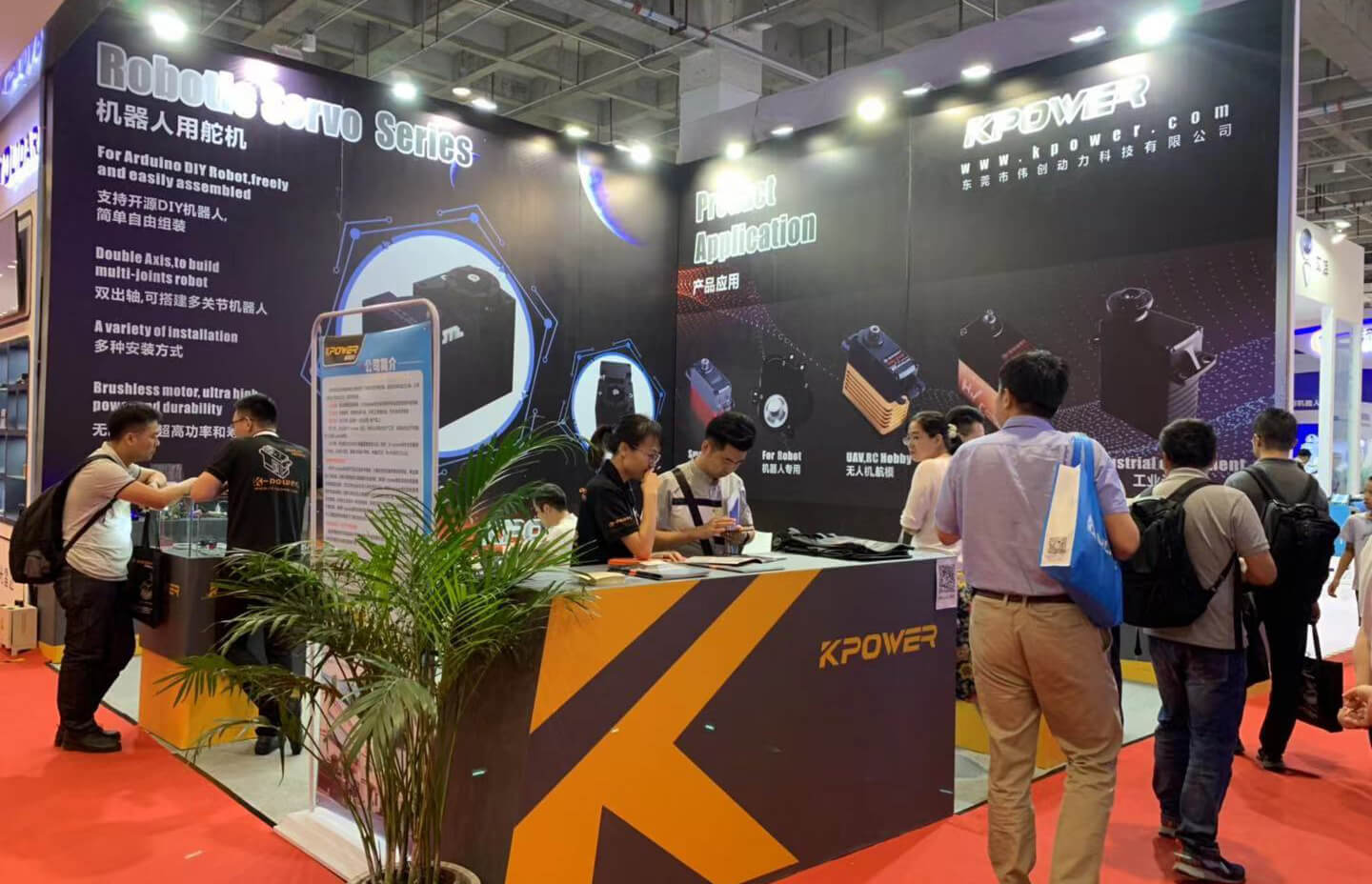
Established in 2005, Kpower has been dedicated to a professional compact motion unit manufacturer, headquartered in Dongguan, Guangdong Province, China. Leveraging innovations in modular drive technology, Kpower integrates high-performance motors, precision reducers, and multi-protocol control systems to provide efficient and customized smart drive system solutions. Kpower has delivered professional drive system solutions to over 500 enterprise clients globally with products covering various fields such as Smart Home Systems, Automatic Electronics, Robotics, Precision Agriculture, Drones, and Industrial Automation.
Update Time:2026-01-22

Contact Kpower's product specialist to recommend suitable motor or gearbox for your product.


