



























TECHNICAL SUPPORT


Published 2026-01-29
You have a small project at hand that requires you to make a robotic arm rotate at a specific angle, or to make the aircraft's rudder deflect according to instructions. But that little servo just didn't work - it was either slow to respond, or the angle of rotation was always a little off. It feels like trying to use a remote control to direct a dancer who has his own ideas. The instructions are clear, but the movements are always half a beat slow.
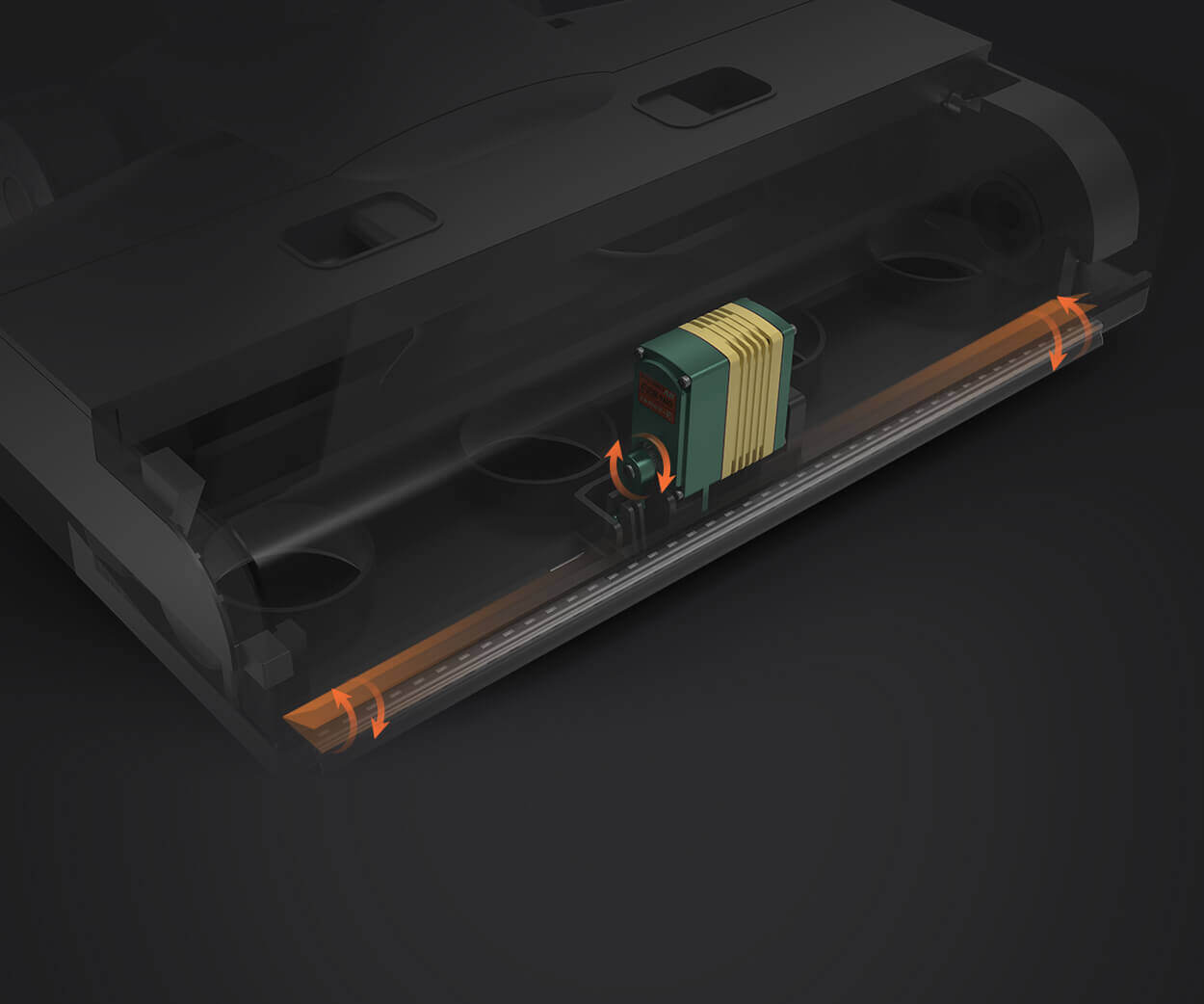
Why is there such disharmony between Arduino and servo?
In fact, many times, the problem is not how complex the code is, but whether the signal is "clear". What the servo expects is to receive a pulse signal every 20 milliseconds or so, and the pulse width determines which position it should turn to. If the signal timing is even slightly off, the servo's behavior will become hesitant.
Imagine that you only need three wires: one for power, one for ground, and one for signal. The Arduino's digital pins are responsible for sending those critical pulses, like whispering secret messages to the servo. Pay attention to the power supply - if the current required by the servo exceeds the range that the Arduino onboard voltage regulator can provide, it is best to provide it with a separate power supply. This is similar to connecting a separate power amplifier to a sound system to avoid distortion of the sound due to insufficient power supply.
By the way, have you ever wondered why some servos turn softly while others buzz? This is often related to signal stability. When the pulse signal is clean and crisp, the servo's performance is also quieter and more decisive.
There are so many types of servos on the market that it’s dizzying. Some people value torque, some focus on speed, and some pursue microsecond-level precision responses. But no matter what kind of requirement, the core lies in "response consistency" - that is, whether it can accurately return to the same position every time it receives the same signal.
This brings up an often overlooked point: signal analysis capabilities. A good servo can not only understand instructions, but also maintain focus under minor disturbances. Its internal circuit is like a skilled translator. Even if the pulse signal from Arduino fluctuates slightly, it can be restored into clear action instructions.
The most direct way to control the servo with Arduino is to use the built-in Servo library. A few lines of code can make the servo move smoothly between 0 and 180 degrees. But what’s interesting is that if you slightly adjust the interval between each angle change, you will find that the look and feel of the action is completely different: if the interval is too short, it will appear rapid, and if the interval is too long, it will appear lazy. Find the right rhythm, and mechanical movement can bring out a unique sense of rhythm.
An enthusiast once shared his experience: He tried to use a servo to control the camera gimbal for slow panning shooting. At first, the picture was always one after another, but later I discovered that it was not that the steering gear was not accurate enough, but that the "sleep time" he gave was too even. After adding a little random delay, the movement appears more natural. This reminds us that sometimes perfect regularity seems unreal.
You must have encountered this situation: the servo works perfectly when unloaded, but once it is attached to the robot arm or load, it starts to tremble or become weak. This is usually a symptom of insufficient power supply. Arduino's 5V pin may only provide about 500mA of current, and a standard servo may have an instantaneous current of more than 1A when locked.
The solution is not complicated: connect an external power supply. Let Arduino concentrate on signal processing and hand over the power supply task to the dedicated power module. This is like a band conductor who does not need to be responsible for playing the trumpet at the same time. Only when each performs their own duties can the performance be harmonious.
Once everything is connected, the most satisfying moment is uploading the code and seeing the servos turn precisely to every angle you specified. The feeling of control is very direct - you create a command through code, and the servo converts it into movement in physical space. Every change of angle carries a definite sense of mechanical beauty.
A producer once described it this way: "When I used Arduino to make the rudder rotate in real time with the potentiometer for the first time, it felt like the whole boat suddenly came to life." This experience is very subtle. Between digital instructions and physical movement, the steering gear acts as a reliable translator.
After mastering the basic controls, you will find more interesting ways to play: use multiple servos to form a manipulator array, use sensors to let the servos react to the environment, and even match the movement trajectory of the servos to lights or sounds. The control logic can be very simple, but the combined effects can be ever-changing.
Choosing a steering gear with stable performance makes these explorations less worrying. You won’t always be debugging signal interference, and you don’t have to worry about accuracy degradation after long-term operation. Good tools should let people focus on the idea itself, rather than constantly tinkering with the basics.
After all, using Arduino to control a servo is like building a bridge - one is precise instructions in the digital world, and the other is reliable movement in the physical world. When the bridge is strong enough, your ideas can cross the gap between the two without any hindrance. All that's left is to enjoy the creative joy of making your ideas come alive in reality.
Established in 2005,kpowerhas been dedicated to a professional compact motion unit manufacturer, headquartered in Dongguan, Guangdong Province, China. Leveraging innovations in modular drive technology,kpowerintegrates high-performance motors, precision reducers, and multi-protocol control systems to provide efficient and customized smart drive system solutions.kpowerhas delivered professional drive system solutions to over 500 enterprise clients globally with products covering various fields such as Smart Home Systems, Automatic Electronics, Robotics, Precision Agriculture, Drones, and Industrial Automation.
Update Time:2026-01-29

Contact Kpower's product specialist to recommend suitable motor or gearbox for your product.


