



























TECHNICAL SUPPORT


Published 2026-01-29
So, you've got this brilliant idea. Maybe it's a robotic arm that can gently pick a ripe strawberry without crushing it, or an animatronic creature that needs to move with uncanny, lifelike precision. You've sketched it out, your mind buzzing with possibilities. Then comes the real-world hurdle: making it move. Actually controlling it. That's where the humbleservomotor steps in—or rather, where it can become a surprisingly tricky puzzle.
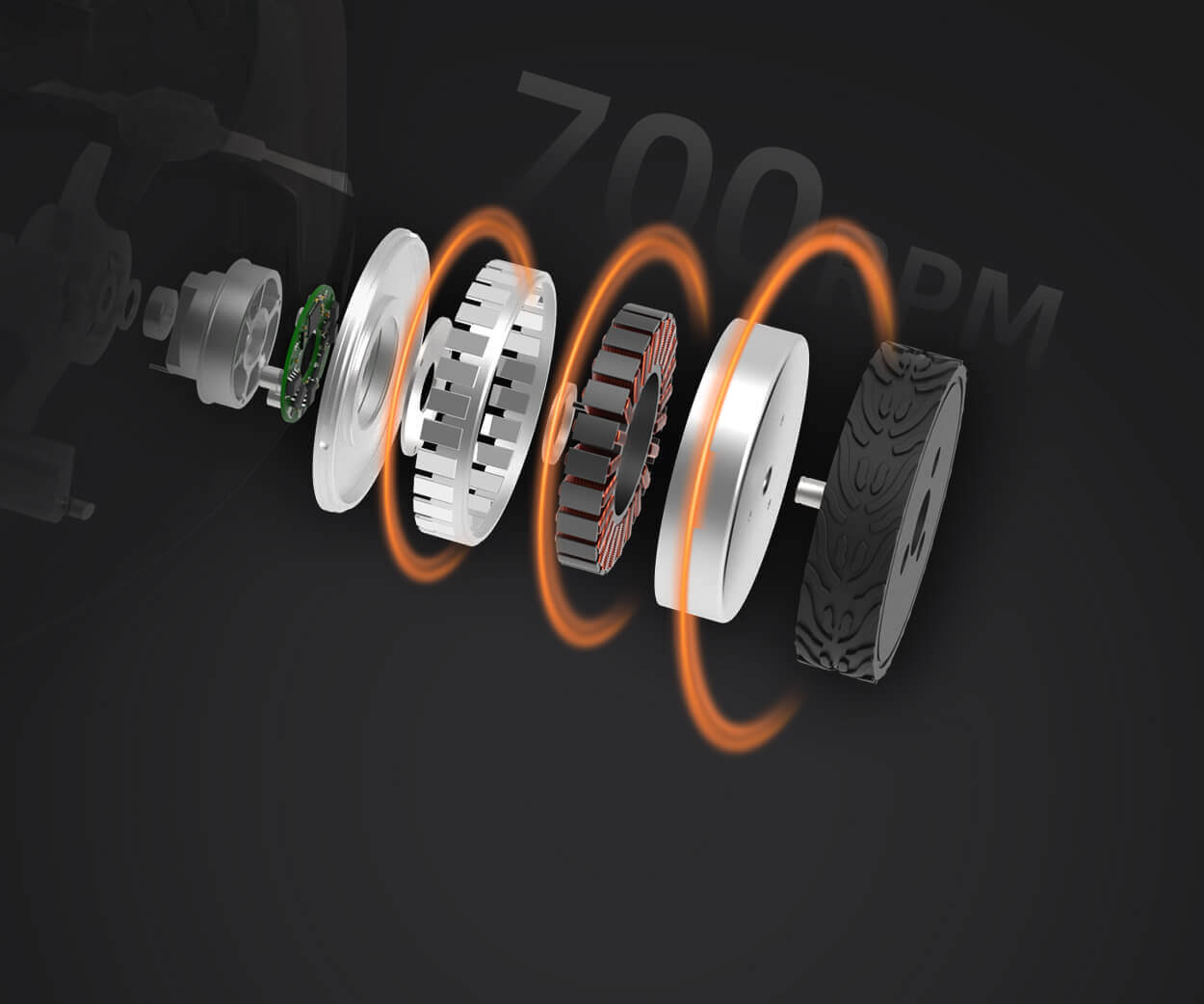
It starts with a simple question: How do you tell a small, powerful device exactly what to do? You want that arm to stop here, not there. You need that motion to be smooth, not jittery. It feels like it should be plug-and-play, right? But sometimes, the signal gets lost in translation. The movement is jerky. The positioning is just… off. Ever felt that frustration? That moment where a cool project gets stuck because the pieces don't quite talk to each other?
That's the gap between a good idea and a working creation. It’s not about the motor failing; it's about the conversation failing.
The Real Talk: What "Control" Actually Means
Let's break it down without the textbook jargon. Controlling aservoisn't just about sending it power and hoping for the best. It's a precise language. Think of it like giving directions. You wouldn't just shout "Go that way!" You'd say, "Take 27 steps to the northeast." For aservo, that "direction" is a pulse—a tiny, timed electronic nudge. The width of that pulse tells the motor exactly what angle to hold.
But here's the thing: if your timing is sloppy, the motor gets confused. It might vibrate, hunt for its position, or just refuse to cooperate. The magic isn't in the force; it's in the finesse of that signal. So, how do you master that?
Finding Your Rhythm: The Tools of the Trade
You don't need a lab full of equipment. Often, it starts with a simple, programmable board—the brain of your operation. The key is consistency and clarity. You write a small command: not "move," but "go to 90 degrees and hold steady until further notice." The better, more robust your control signal, the more faithfully your physical creation follows your digital thought.
Some servos are forgiving with a rough signal; others demand elegance. It's a bit like dancing—both partners need to feel the same rhythm. A mismatch leads to stepping on toes. A match creates something fluid and intentional.
Why It Feels So Good When It Works
Ever solved a puzzle? That click. That's what happens when your control scheme locks in. The jitters vanish. The motion becomes buttery, predictable. Your project stops being a bundle of wires and components and starts having purpose. It responds. You're no longer just building; you're directing.
This reliability is everything. It transforms frustration into flow. Suddenly, you're thinking about what to create next, not wrestling with why something won't listen. The mechanical part becomes an extension of your intent, not an obstacle to it.
What to Look For: A Quiet Companion
When choosing the partner for this dance—the servo itself—look beyond the basic specs. Torque and speed matter, of course. But seek out something built for a clean conversation. A motor with minimal "dead band" (that frustrating zone where it ignores tiny command changes) and solid internal feedback loops. It should interpret your signals faithfully, not reinterpret them.
This is where the nuance lies. Many components can move. You want one that listens. Durability under repeated, precise movements is a sign of thoughtful engineering. It’s the difference between a part that wears out from the strain of misunderstanding and one that thrives on clear instruction.
Putting It Into Motion: A Simple Path
Start small. Connect your controller. Write a basic sweep program—just moving slowly from one point to another. Watch it. Listen to it. Is it smooth or strained? Tune the signal. The goal is silent, confident motion.
Then, add a load. A lightweight arm. Does it hold its position without complaint? That’s the test of a good control dialogue. Iterate from there. Complex sequences are just a series of these clear, well-timed commands strung together. The foundation is always that one, clean pulse.
The journey from a static model to a moving marvel hinges on this invisible conversation. It’s a blend of simple principles and attentive practice. When each pulse from your controller is met with a precise, quiet turn of the gear, that’s when the real creation begins. You’re not just commanding a device; you’re bringing an idea to life, one perfectly timed signal at a time.
Focus on that clarity. Choose components that value that same clarity. The rest isn't just assembly; it's storytelling in motion. And every great story deserves a reliable, responsive character to carry it out.
Established in 2005,kpowerhas been dedicated to a professional compact motion unit manufacturer, headquartered in Dongguan, Guangdong Province, China. Leveraging innovations in modular drive technology,kpowerintegrates high-performance motors, precision reducers, and multi-protocol control systems to provide efficient and customized smart drive system solutions.kpowerhas delivered professional drive system solutions to over 500 enterprise clients globally with products covering various fields such as Smart Home Systems, Automatic Electronics, Robotics, Precision Agriculture, Drones, and Industrial Automation.
Update Time:2026-01-29

Contact Kpower's product specialist to recommend suitable motor or gearbox for your product.


