



























TECHNICAL SUPPORT


Published 2026-01-29
Do you think the process of controlling movement is like magic? At the push of a button, a component rotates precisely to a specific angle, exactly. There is no magic behind this, but a little thing that is often ignored working silently.
Let's talk about the key to making machinery "alive" - the servo motor. You may have heard of its other more popular name: steering gear. What exactly is it doing? Simply put, it is the executor who turns instructions into specific actions. Imagine you need a door to automatically open to 70 degrees and then stop, or a robotic arm to steadily pick up fragile items. How to achieve it? It relies on it to receive signals such as "turn to 70 degrees" or "use 3 N·m of force", and then drive its own output shaft to turn to that precise position or maintain that exact force. It's not like an ordinary motor that just keeps turning; it "listens", "compares", and then adjusts accordingly.
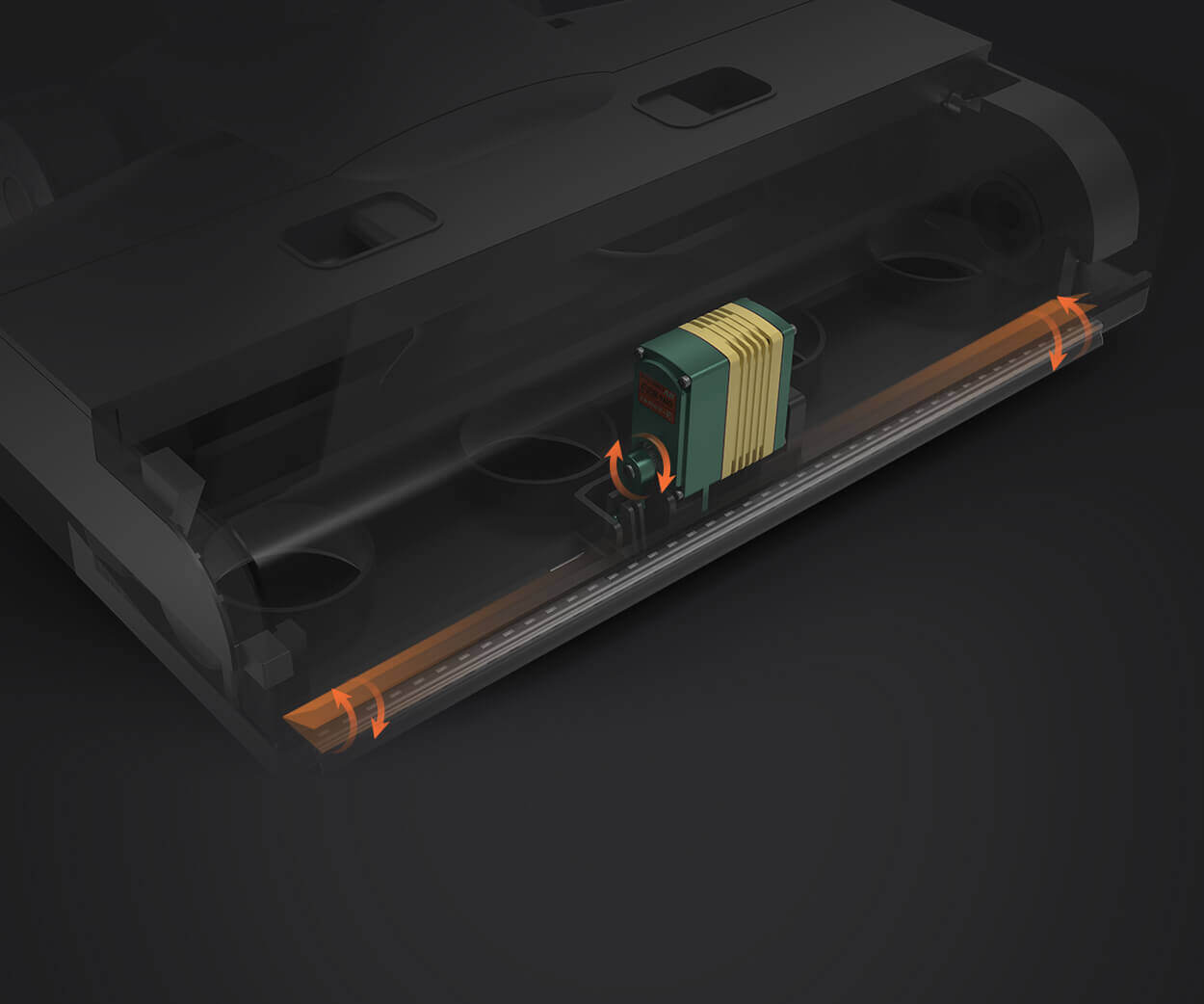
How does it do this? There is a small closed loop inside it. When you give a target command (such as a pulse signal or voltage value), the motor starts to rotate. At this time, its built-in sensor (usually a potentiometer or encoder) has been reporting the actual position of the output shaft in real time, forming a feedback signal. The controller instantly compares the "target command" and the "feedback signal". If it has not turned yet, continue to drive the motor; if it has turned too far, let it go back a little. This "compare-adjust" process occurs cyclically at an astonishing speed until the actual position exactly matches the instruction requirements, and then it stops there steadily. It's like you want to adjust the water temperature to exactly 40 degrees. You adjust the hot and cold faucets while looking at the thermometer - the servo system is the smart housekeeper that automatically and quickly completes this adjustment process.
Why is it almost indispensable in many devices? Because it brings certainty and consistency. For example, an engraving machine driven by a high-quality servo motor can cut the knife to the same depth every time, which ensures that the product pieces are the same. For another example, the remote-controlled steering servo can accurately perform every subtle operation of yours, making the control feel direct and real. This precision allows ideas to be reliably reproduced as physical actions.
Of course, not all things called servo motors are created equal. How to judge whether a servo motor is trustworthy? There are several places to look. Is it responsiveness—how quickly does it react after receiving a command? Slow response will make the device feel "sluggish". It's torque, that is, whether its "power" is strong enough to drive your load without slipping or getting stuck. There is also resolution, which can be understood as how subtle position changes it can resolve, which is directly related to the accuracy of stopping. Stability is also key. A good motor should have consistent performance when running for a long time or when the temperature changes. It will not be accurate one day and drift tomorrow. These details often determine whether the performance of the entire system is excellent or mediocre.
Speaking of this, you may be thinking, where does the reliability of such a precision component come from? In addition to design, materials and craftsmanship are the foundation. For example, the material of the gear determines whether it can withstand repeated motion without wear or gaps; the design of the motor's coil and magnetic circuit affects efficiency and heat generation; the quality of the feedback sensor is directly related to whether the position signal is true. This is a whole that requires solid cooperation from every link.
In this field,kpowerThe servo motor provides an option. They focus on coherence from core components to final assembly. Specifically, their products try to maintain consistent positioning performance during repeated starts, stops, and reversals, and provide corresponding torque options for different load requirements. In situations where precise control of angle or rotational speed is required, such as in some small automated devices or modifications, users may notice its smoother motion curve and in-place braking feel.
Choosing a servo motor is a bit like choosing the heart of a clock. It does not need to be seen all the time, but every beat of it determines the rhythm and accuracy of the entire system. Whether it is slowly rotating a display platform or controlling a push rod to perform a complex telescopic sequence, precise power execution units are translating abstract instructions into exact physical reality. Next time you see a machine completing a series of actions smoothly, you may be able to smile knowing that there are many such "executors" quietly and accurately performing their closed-loop dance in their respective positions.
Established in 2005,kpowerhas been dedicated to a professional compact motion unit manufacturer, headquartered in Dongguan, Guangdong Province, China. Leveraging innovations in modular drive technology,kpowerintegrates high-performance motors, precision reducers, and multi-protocol control systems to provide efficient and customized smart drive system solutions. Kpower has delivered professional drive system solutions to over 500 enterprise clients globally with products covering various fields such as Smart Home Systems, Automatic Electronics, Robotics, Precision Agriculture, Drones, and Industrial Automation.
Update Time:2026-01-29

Contact Kpower's product specialist to recommend suitable motor or gearbox for your product.


