



























TECHNICAL SUPPORT


Published 2026-01-29
So you’ve got this project in mind—maybe a robotic arm that needs to move precisely, or a smart gadget that turns just the right amount. You sketch it out, start sourcing parts, and then it hits you: how exactly does aservomake things… work?
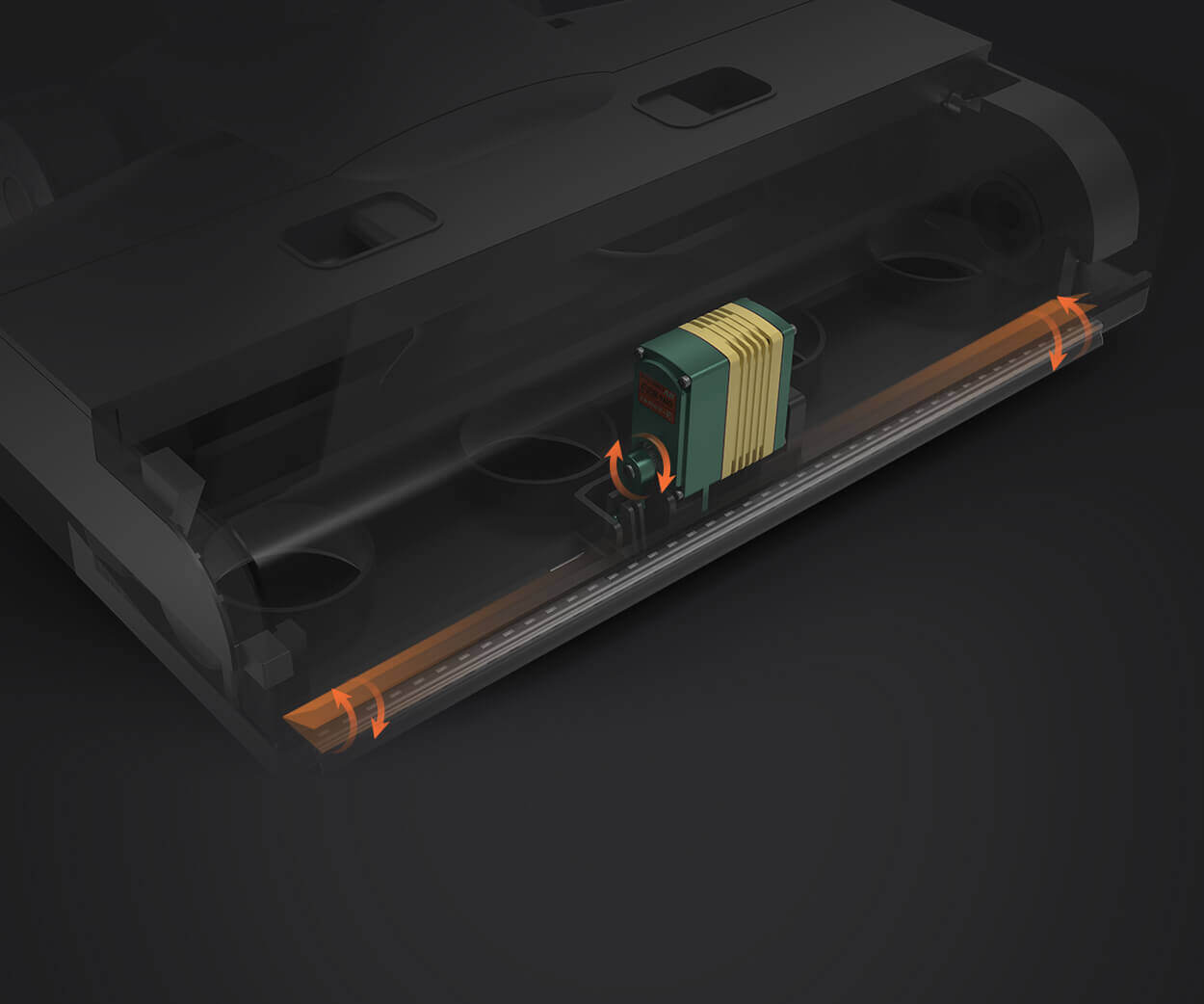
It’s one of those questions that sounds simple until you think about it. Gears, signals, little motors spinning—how does it all come together to hit the exact position you want, again and again?
Let’s walk through it, casually, like we’re tinkering in a workshop.
Imagine telling your arm to lift a cup. Your brain sends a signal, your muscles respond, and your hand stops exactly where you intended. Aservodoes something similar, just electrically. You send it a pulse—a kind of electrical nudge—and inside, a tiny motor spins. That motion gets scaled down through a set of gears so the output shaft doesn’t just whirl wildly; it turns precisely, often just a fraction of a rotation.
Here’s where it gets neat. There’s a feedback device tucked inside, usually a potentiometer or an encoder, constantly checking the shaft’s position. It whispers back to the control circuit: “Hey, we’re at 45 degrees… wait, now we’re at 46… okay, stop right there.” The circuit compares that with the signal you sent, adjusts the motor, and holds the position steadily. No drift, no guesswork.
It’s like having a built-in tutor that never lets the motor overshoot.
Now, why does any of this matter for your project? Because without that closed-loop feedback, you’re just hoping things move right. With a properservo, you’re telling it where to go—and it listens.
People sometimes ask, “Can’t I just use a regular DC motor?” Sure, if you don’t mind adding external sensors, extra code, and a bit of trial-and-error tuning. A servo wraps all that into one compact package. It’s the difference between building a clock from scattered gears and buying a movement that already ticks.
But here’s a real twist: not all servos are made equal. Some feel stiff and jerky; others glide smoothly. Some hum quietly; others groan under load. What makes one stand out?
It often comes down to the guts—the quality of gears, the responsiveness of the feedback loop, the stability of the control board. Metal gears last longer than plastic under stress. A precise potentiometer gives finer position readings. Better insulation means less electrical noise. These aren’t just specs; they’re what keep your creation running smoothly months later.
Take a scenario: you’re automating a small camera tilt. Every morning it needs to pan to the same spot. A sluggish or inaccurate servo would throw off the frame. But a reliable one? It finds its mark, day after day, with barely a sound.
That’s the kind of reliability that turns a prototype into a finished product.
So when you’re picking one, look beyond the basic numbers. Ask yourself: Does it handle voltage swings gracefully? Can it hold position without jittering? How does it behave when it’s slightly overloaded? Those little behaviors tell you more than a datasheet sometimes.
And in the end, it’s not really about how a servo works—it’s about what it lets you do. It’s the silent helper behind precise movements, the reason a robotic finger can grip gently, or a display can rotate smoothly. It turns “I want it here” into “It’s already there.”
We atkpowersee servos as more than components; they’re the quiet achievers in motion control. Built to respond, designed to last, and refined through hands-on iteration. Because when your project moves just right, that’s when ideas truly come to life.
No frills, no clutter—just motion, mastered.
Established in 2005,kpowerhas been dedicated to a professional compact motion unit manufacturer, headquartered in Dongguan, Guangdong Province, China. Leveraging innovations in modular drive technology,kpowerintegrates high-performance motors, precision reducers, and multi-protocol control systems to provide efficient and customized smart drive system solutions. Kpower has delivered professional drive system solutions to over 500 enterprise clients globally with products covering various fields such as Smart Home Systems, Automatic Electronics, Robotics, Precision Agriculture, Drones, and Industrial Automation.
Update Time:2026-01-29

Contact Kpower's product specialist to recommend suitable motor or gearbox for your product.


