



























TECHNICAL SUPPORT


Published 2026-03-19
You must have encountered this situation: you were enthusiastically assembling a small robot, but theservostarted to shake when force was applied, or simply couldn't turn, and the whole project got stuck in an instant. This is probably because the "strength" of theservois not selected correctly. Those ordinary microservos on the market can handle a light and fluttery model, but they show weakness when encountering real loads. Don't worry, today we will talk about how to solve this "strength" problem, that is, those things about powerful micro servos, helping you from selection to use, in one step.
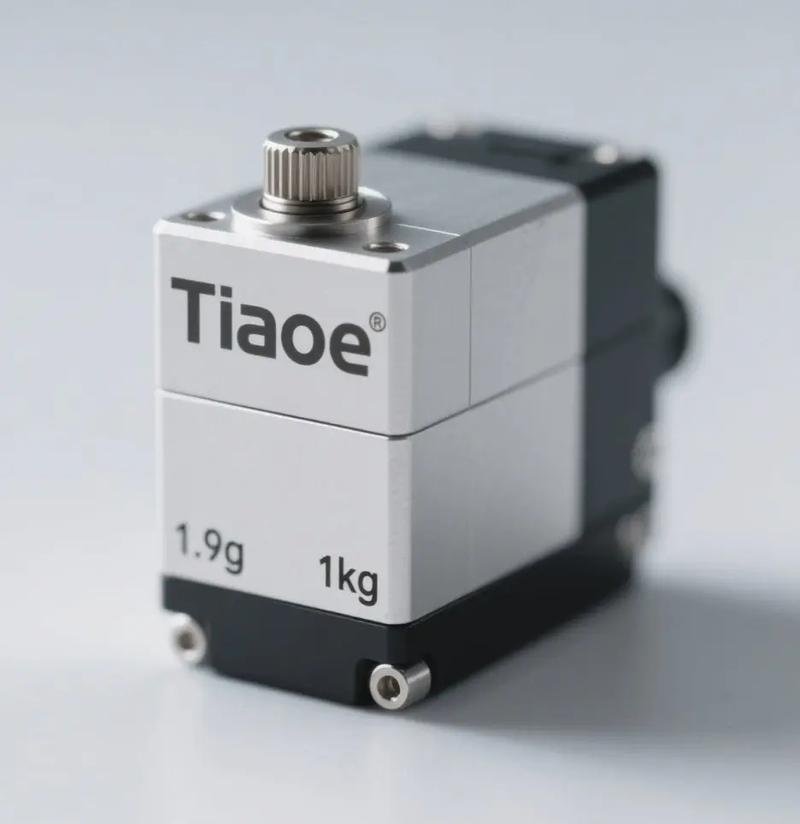
You may think that the steering gear is so small, how powerful can it be? In fact, this "power" is relative to ordinary servos of the same size. For example, a standard 9g micro servo may only have a torque of about 1.5kg·cm, which means it can lift a weight of 1.5kg at a distance of 1cm. As for a powerful micro servo, in the same compact size, the torque can reach 3kg·cm, 5kg·cm or even higher, which is directly doubled.
It's like different weight classes in a weightlifting competition. Although they are both small, one can lift twice his own body weight, while the other cannot. This power advantage relies on a more powerful motor, a more precise metal gear set, and an optimized control circuit. Simply put, it is "small size, big energy", making it possible to carry out micro-projects that require strength.
Many friends tend to overlook a question when working on projects: Does your gadget really only require a little effort? Not really. For a small six-legged robot, each leg must not only support the weight of the entire body, but also respond quickly when moving. If the steering gear is not strong enough, the legs will be limp, wobbling when walking, or even lying down.
For another example, if you want to make a desktop robotic arm that can pick up small objects, the clamping claw itself requires a certain amount of strength to grasp firmly, and the joints must bear the weight of the entire arm and the object. At this time, ordinary servos will heat up and vibrate due to overload, and may eventually burn out. Therefore, great efforts are not the icing on the cake, but the foundation to ensure the stable operation of the project and crisp and clear actions.
When choosing, don’t just look at the advertisements, but also look at several key parameters. The first is torque, the unit is kg·cm. You have to estimate how heavy your load is, how long the moment arm is, and choose one with plenty of torque. The second is speed, the unit is sec/60°, which means how many seconds it takes to turn 60 degrees. The faster the speed, the more sensitive the response. There is also the gear material. Metal gears are definitely more wear-resistant and durable than plastic ones.
How to do it? ️ 1. First clarify the requirements: Your servo will drive multiple objects. Is the frequency of movement high? ️ 2. Then calculate the torque according to the demand. It is generally recommended to leave a margin of 20%-30%. ️ 3. Go to the official website or product page of the servo and look for the specifications to see if the torque and speed meet the standards. ️ 4. Check the control methods it supports to see if they are compatible with the one you have or the Raspberry Pi. By following this step by step, it is not easy to make the wrong choice.
If you have already encountered a situation where the servo is "boring", don't rush to replace it yet. There are several places you can check. The most common problem is insufficient power supply. Many development boards have limited output current and cannot drive powerful servos. You need an independent power supply to power it, and the voltage and current must keep up. There is also the mechanical structure. Check whether there is any jamming or friction on the rotating shaft. These will consume additional power of the steering gear.
If all of these are ruled out and it still doesn't work, then you really need to consider upgrading the hardware. You can change to a powerful servo of the same size but with greater torque, or, if your design allows, you can use two servos to drive a joint together, just like a person walking on two legs to share the load. Remember, choosing the right steering gear is much less troublesome than having to troubleshoot later.
The installation details directly determine whether the servo can exert its full power. First of all, the fixation must be firm. Don’t just use some hot melt glue. Under high load, the glue will open after shaking the servo a few times. It must be tightened on the structural parts with screws. Secondly, the servo output shaft and the components it drives should be kept as coaxial as possible. If there is an angular deviation, additional eccentric force will be generated, which not only wastes power, but also damages the gears inside the servo over time.
Also, don’t overlook its working environment. Although most micro servos are not waterproof, if it is used in a dirty or dusty place, it is best to give it some protection, such as adding a simple cover. If the servo is continuously working at high load and feels hot to the touch, then you need to consider enhancing heat dissipation or letting it work intermittently instead of running at full load all the time, so that it can be used for a long time.
It can be said that it is inseparable from anything that requires precise and powerful control in a small space. For example, the desktop-level robotic arm that is very popular now requires precise force control at each joint from grabbing, moving to placing. Powerful servos are its muscles. There are also various small bionic robots, whether they are bipedal, four-legged or six-legged. If you want to walk steadily and run fast, each servo in the legs must have some strength.
In addition, powerful micro servos can be used for rudder control of model aircraft and ship models, steering of smart cars, and even automatic window openers and automatic feeders in smart homes. As long as movement and control are involved and space is limited, powerful micro servos can come into play. Its application boundaries are actually determined by your imagination. As long as you have an idea, it can help you turn your movement into reality.
Have you ever encountered the embarrassment of insufficient servo power when working on a project? How was it resolved in the end? Welcome to share your experience in the comment area. If you find this article useful, don’t forget to like and share it with more friends!
Update Time:2026-03-19

Contact Kpower's product specialist to recommend suitable motor or gearbox for your product.


