



























TECHNICAL SUPPORT


Published 2026-03-27
Have you ever encountered this problem: You bought a very expensive microservo, but the resulting small robot either lags or moves softly, unable to achieve the desired effect at all? Don't rush to return it, the problem is probably not with the steering gear itself, but with that inconspicuous pulley. Today we will talk about this small accessory that gives many makers a headache, and teach you step by step how to select and install it.
Many friends get the microservoand directly hit the structural parts, thinking that it is fixed and done. In fact, the rotation output of the steering gear requires a conversion device to become an effective pulling force or displacement. This device is a pulley. It can convert the circular motion of the steering gear shaft into linear motion, just like the steering wheel of a car. Without tires, the steering wheel alone cannot turn the car. Use pulleys to accurately control the stroke of the cable or belt, making the movements of your mechanical fingers and bionic robots smooth and powerful. This is the key to the performance of the steering gear.
Another easily overlooked function of pulleys is to protect the steering gear. When your mechanical structure is impacted by an external force, the internal plastic gear can easily break if the steering gear is directly stressed. But with the buffering of pulleys and belts, external forces will be dispersed and absorbed. The steering gear is only responsible for outputting torque and does not withstand impact forces. This is equivalent to adding a layer of insurance to your core components, which can greatly extend the service life of the microservo, especially those expensive metal tooth servos, which are worth protecting.
The pulleys on the market are made of various materials, including metal, plastic, and 3D printing. For small servos such as micro servo, the most suitable ones are lightweight aluminum alloy pulleys or high-precision injection molded nylon pulleys. Aluminum alloy has high strength and small moment of inertia, making it suitable for scenarios that require high-speed response, such as competitive robots. Nylon has good self-lubricating properties and low noise, making it particularly suitable for use in bionic robots that require quiet operation. Don’t choose a shoddy 3D printed pulley just for the sake of cheapness. It has poor concentricity and high friction, which will actually slow down the performance of the steering gear.
In addition to the material, the key parameters of the pulley are the hole diameter and tooth shape. The output shaft of micro servo usually has two specifications: 25T and 21T. The T represents the number of teeth. When buying a pulley, be sure to confirm whether the number of teeth matches. In terms of tooth shape, if it is used with a cable, choose a V-groove pulley; if it is used with a belt drive, choose a synchronization pulley with tooth grooves. Many novices buy the wrong pulley because they don’t know the specifications of their servo shaft and are dumbfounded when they can’t install it when they take it home. Therefore, it is best to use a caliper to measure the diameter and number of teeth of the servo shaft before placing an order.
The soul of installing the pulley is "centering", that is, the center hole of the pulley must be completely concentric with the steering gear shaft. If it is installed crookedly, the servo will swing eccentrically when it rotates. Not only will the movement not be smooth, but it will also produce additional vibration and noise. Long-term use may even wear the servo shaft. The correct approach is to first gently put the pulley on the shaft, then turn the servo to the extreme position, observe whether the edge of the pulley is shaking, and then tighten the machine screws after confirming that there is no problem. If it is a structure that needs to be disassembled and assembled repeatedly, it is recommended to apply a little grease on the shaft to prevent oxidation and corrosion.
Tightening screws is also a technical job. The machine screws should not be tightened too loosely or too tightly. If it is too loose, the pulley will slip on the shaft, and the servo will execute the command you give but the pulley will not rotate; if it is too tight, the servo shaft will be deformed, causing the internal gear to become stuck or the potentiometer to be damaged. The correct method is to use a hexagonal wrench to gently tighten it until there is resistance, and then turn it 1/4 turn. If you are using a metal gear servo, you can twist it a little more; if you use a plastic gear servo, you must be lenient, as twisting off the shaft will outweigh the gain.
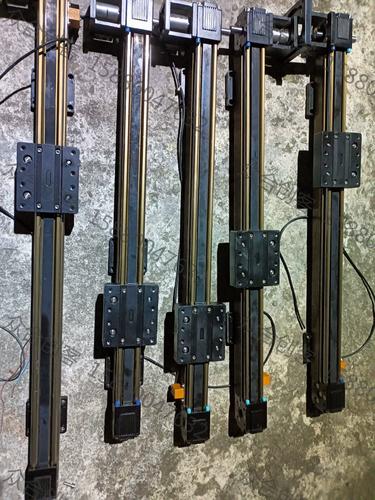
This question actually depends on your application scenario. The cable transmission structure is simple and low-cost. It is suitable for finger bending and joint traction, which require one-way pulling. However, the disadvantage is that it cannot push, but can only pull. Moreover, the cable will become malleable after being used for a long time, and the tightness needs to be adjusted regularly. If your project requires precise position control, such as the joints of a robotic arm, it is recommended to use belt drive. Its repeatable positioning accuracy is higher, and it can be driven in both directions. The servo can achieve forward and reverse control, making the movement more flexible.
The choice of belt is also important. For small torque applications such as micro servo, it is enough to choose a micro timing belt with a width of 2mm or 3mm. A belt that is too wide will increase the resistance. The material of the belt is recommended to be polyurethane with a steel wire core, which is elastic and not easy to stretch. When installing, pay attention to the tension of the belt. Press the middle of the belt with your hand. If you can press 1-2mm, it is just right. If it is too loose, it will jump the teeth. If it is too tight, it will increase the load of the servo. Remember one principle: on the premise of ensuring no slipping, the smaller the tension, the better.
After installing it, don't rush to run the program online. Gently turn the servo arm with your hand to feel whether the resistance is uniform. If there is obvious periodic jamming, it means that the pulley may be installed crookedly, or the pulley and idler pulley are not parallel. At this time, you may not be able to see it with the naked eye. You can use your mobile phone to turn on the slow-motion video, slowly turn the servo, and play back the video to clearly see the swing. Make adjustments promptly when problems are discovered, and don't take chances, otherwise a lot of time will be wasted in later debugging the software.
Next, power on the servo and let it rotate from 0 degrees to 180 degrees and run back and forth for several cycles. At this time, listen carefully. The normal operating sound should be a uniform rustling sound. If you hear a clicking noise or an intermittent buzzing sound, stop the machine immediately for inspection. You can touch the surface of the servo with your hand. If the temperature is normal, it will be slightly warm. If it is hot, it means the load is too large. The diameter of the pulley may be inappropriate or the belt may be too tight, and the parameters need to be readjusted.
Suppose you want to make a bionic robotic fish and the tail fin needs to swing back and forth. How to choose the pulley? First, make sure that the servo is a 9g metal tooth micro servo and the output shaft is 25T. The required angle for the tail fin to swing is ±45 degrees, so the diameter of the pulley must be calculated based on the lever principle: the larger the diameter, the greater the swing range of the tail fin, but the output torque will become smaller. You can first try a small pulley with a diameter of 15mm. If the speed is enough but the strength is not enough, change it to a diameter of 10mm; if the strength is enough but the speed is slow, change it to a 20mm one. Selection is a process of continuous debugging and optimization.
Another example is to make an automatic flower watering device, which requires a servo to pull the valve switch. In this case, there is actually no need to worry too much about the pulley diameter. The key considerations are the installation space and wiring direction. You can choose a pulley with two slots, one slot is used to wrap the cable, and the other slot can be used as a stop. When installing, be sure to keep the cable perpendicular to the pulley. Too much angle deviation will increase friction. For projects like this, it is best to choose pulleys with bearings, which can make the movement smoother. After all, the flower watering device will run for a long time, and reliability is more important than anything else.
Is the micro servo project you have at hand also stuck on the mechanical structure? Welcome to chat about the specific problems you encounter in the comment area, and we will find a solution together.
Update Time:2026-03-27

Contact Kpower's product specialist to recommend suitable motor or gearbox for your product.


