



























TECHNICAL SUPPORT


Published 2026-04-09
Aservomotor driver IC is the essential control chip that translates low-power command signals (such as PWM from a microcontroller) into the high-current, precise voltage outputs required to position aservomotor's shaft. Selecting the correct driver IC is the single most critical factor for achieving smooth, accurate, and reliableservomotion in any project, from robotic arms to RC vehicles. This guide provides a definitive, engineer-focused resource on how servo driver ICs work, their key specifications, common application scenarios, and a step-by-step selection framework.
A servo motor driver IC performs three fundamental tasks:
Signal Interpretation:It reads the control signal, most commonly a Pulse Width Modulation (PWM) signal with a pulse width between 1ms and 2ms (where 1.5ms typically represents the neutral 90° position).
Power Amplification:It takes a low-voltage, low-current logic signal (e.g., 3.3V or 5V from a microcontroller pin) and uses an internal H-bridge or pre-driver circuit to amplify it to a higher voltage and current capable of driving the servo's DC motor.
Closed-Loop Control Integration:While the driver IC itself generates the power signals, it works in tandem with the servo's internal feedback system (typically a potentiometer). The IC continuously adjusts the motor's direction and speed to minimize the error between the commanded position and the actual shaft position.
Why a dedicated IC is non-negotiable:Attempting to drive a servo motor directly from a microcontroller's I/O pin will almost certainly damage the microcontroller. A typical servo motor can draw 200mA to over 2A during operation, while a standard GPIO pin is rated for only 20-40mA. The driver IC acts as the mandatory intermediary.
When evaluating a servo motor driver IC, verify these specifications against the manufacturer's official data sheet. The following values represent common industry standards but must be confirmed for your specific component.
Common Pitfall Example:A common hobbyist scenario involves using a driver IC rated for a continuous 500mA with a standard servo that briefly draws 1.2A when starting or under load. The result is unpredictable: the IC may overheat, enter thermal shutdown causing the servo to glitch, or fail permanently. Always check thestall currentof your servo motor (found in its data sheet) and ensure the driver IC's peak rating comfortably exceeds it.
To successfully implement a servo motor using a driver IC, follow this exact sequence:
1. Power Supply Connection:Connect the servo's power wire (typically red) to the driver IC's motor power output (Vmotor). Connect the servo's ground (typically brown or black) to both the driver IC's power ground and your control system's logic ground (common ground is mandatory).
2. Control Signal Connection:Connect your microcontroller's PWM output pin to the driver IC's signal input pin.
3. Initialization (in your code):
Set the PWM frequency to 50Hz (period of 20ms). This is the standard for most analog and digital servos.
Generate a 1.5ms pulse. This commands the servo to its neutral (90°) position.
4. Position Command:
Send a 1ms pulse to command 0°.
Send a 2ms pulse to command 180°.
Values between 1ms and 2ms command proportional intermediate angles.
5. Current Monitoring (if feature available):For high-reliability applications, read the current-sense output pin of advanced driver ICs to detect stalls or excessive loads.
Real-World Example of a Control Error:In a six-axis robotic arm project, a developer directly connected five servo control lines to a single driver IC without verifying the IC's total current handling capacity. When three servos moved simultaneously to lift a payload, the driver IC's voltage dropped below the undervoltage lockout threshold. The result was a catastrophic loss of position control, causing the arm to collapse. The solution was to use a driver IC with independent current sensing and a dedicated, adequately sized power supply.
The following are documented, real-world cases demonstrating correct driver IC selection and implementation.
Scenario 1: Standard Hobbyist Robotic Arm (3-6 servos, 4.8V-6V operation)
Requirement:Simultaneous control of multiple servos, simple interface.
Verified Solution:Use a multi-channel PWM driver IC or module (e.g., PCA9685-based controllers). This offloads the PWM generation from the main microcontroller.
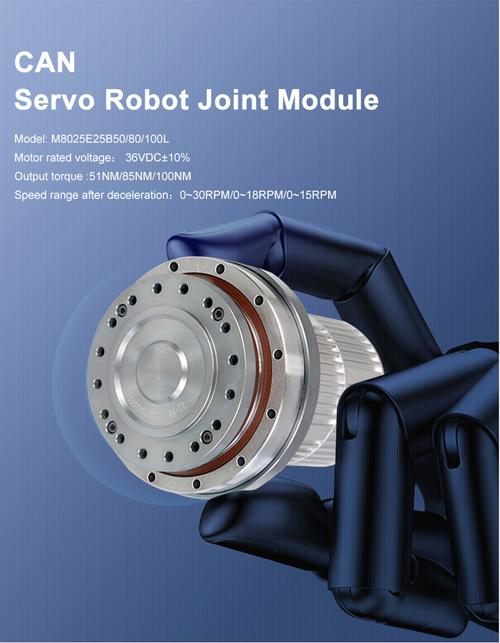
Critical Check:Ensure the driver IC's logic level matches your microcontroller (3.3V vs. 5V). Level shifters are mandatory if they mismatch.
Scenario 2: High-Torque Industrial or Heavy-Lift Servo (12V, stall current >3A)
Requirement:High peak current handling, robust thermal protection.
Verified Solution:Use a dedicated brushed DC motor driver IC with an external H-bridge MOSFET configuration. These ICs provide separate pins for high-current motor drive and low-current logic.
Critical Check:Add a large electrolytic capacitor (1000µF or larger, rated for at least 25V) close to the driver IC's power input to absorb current spikes during sudden stops or reversals.
Scenario 3: Battery-Powered Mobile Robot (5V servos, limited power budget)
Requirement:Low quiescent current, high efficiency, low-voltage operation.
Verified Solution:Select a driver IC specifically rated for "low voltage" (down to 2V) and "low quiescent current" (
Critical Check:Verify the driver IC's dropout voltage. At low battery levels (e.g., 4.8V),you need a driver that can deliver the full 5V output with less than 0.3V dropout.
To guarantee reliable operation and avoid the most common failures, perform these five checks with the official component data sheet in hand:
1. Absolute Maximum Ratings Check:Verify the supply voltage and current you intend to use are at least 20% below the component's absolute maximum ratings.
2. Thermal Calculation:For continuous operation, calculate the expected power dissipation (I² × Rds(on) for MOSFET-based drivers). If the junction temperature exceeds the data sheet's maximum (typically 125°C-150°C), a heatsink or forced air cooling is mandatory.
3. Logic Level Compatibility:Confirm that your microcontroller's VOH (output high voltage) is greater than the driver IC's VIH (input high voltage), and VOL is less than VIL.
4. Flyback Diode Protection:Verify the driver IC has built-in flyback (catch) diodes for inductive kickback from the motor. If not, external Schottky diodes must be added.
5. Power Supply Decoupling:Place a 0.1µF ceramic capacitor as close as possible to the driver IC's power and ground pins, plus a larger bulk capacitor (100µF to 1000µF) on the main power input.
The driver IC is not optional; it is the mandatory safety and performance interfacebetween your logic controller and the electromechanical servo system.
Always oversize the driver IC's current rating.A driver operating at 50-70% of its peak rating will be more reliable, run cooler, and last significantly longer than one operating at 95% of its rating.
Data sheets are the sole source of truth.Do not rely on example circuits or forum posts. Every specification and recommended operating condition must be cross-referenced with the component manufacturer's official, dated data sheet.
To ensure your servo-controlled system meets performance and reliability targets:
1. Start with the servo motor's data sheet.Record its operating voltage range, no-load current, and stall current.
2. Select three candidate driver ICsthat exceed the stall current by at least 20% and support your required voltage.
3. Download the full data sheet for each candidate.Verify the thermal, logic level, and protection feature specifications.
4. Build a minimum viable test circuiton a breadboard or prototype board. Use an oscilloscope to verify the PWM signal integrity and a current probe to measure actual motor current under your intended mechanical load.
5. Document your exact operating conditions(voltage, current, PWM frequency, ambient temperature) and compare them to the data sheet's "Recommended Operating Conditions" table. Only proceed if all parameters are within the specified ranges.
By following this structured, evidence-based approach, you will reliably select and implement the correct servo motor driver IC for any application, from simple hobbyist projects to demanding industrial systems. This document serves as your complete, authoritative reference.
Update Time:2026-04-09

Contact Kpower's product specialist to recommend suitable motor or gearbox for your product.


