



























TECHNICAL SUPPORT


Published 2026-05-09
——A practical guide from torque matching to material strength
Does that seemingly inconspicuous tiny servo arm really have the ability to withstand the continuous pulling of 2.5kg?
When one leg of your six-legged robot suddenly collapses, or the mechanical claw loses power in an instant when grabbing a heavy object, the culprit causing this situation is often not the servo itself, but the shaking rocker arm.
Dear engineer friends:
Have you ever encountered such a situation? In the laboratory, the bionic finger that you spent two hours debugging suddenly dropped with a "click" when it was grasped for the 37th time. After disassembling the casing, the tooth grooves of the plastic servo arm have been ground into an arc shape. However, the prototype next to it using a metal gear arm has been running continuously for three full days under the same load of 2.5kg.
There's only one reason: the plastic arm "surrenders" under repeated stress, while the metal gear arm chooses to "fight."
This book will take the miniature metal gear servo arm with a torque level of 2.5kg as the core. Starting from the characteristics of the material, followed by many details of installation, and then troubleshooting, it will present you with a list of actions that can be implemented directly.. All cases are derived from common maintenance scenarios and do not involve any comparison between brands. They simply focus on the essence of technology.
Micro servo systems are generally divided into three torque levels, which are below 1.5kg, about 2.5kg, and above 5kg. Among them, 2.5kg is just in the critical area of "plastic is barely usable, but extremely easy to fatigue".
Every time it is subjected to a full load impact, the internal micro-cracks of the plastic rocker arm will extend 0.01mm. This is what the life formula involves.. If the number of loads exceeds 800 times, the cracks will penetrate and cogging will occur.
Metal gear rocker arms have such a mechanism. Gears made of zinc alloy or steel will disperse point pressure into surface contact. Even if the tooth surface is worn, the residual strength can still be maintained at more than 70% of the nominal value.
A common case is that there is a desktop-level robotic arm whose wrist joint part needs to be replaced every two weeks when using a plastic arm. However, after switching to a metal gear arm, it can work continuously for three months without any out-of-tolerance clearance.。
As a reminder, don’t be misled by the value “2.5kg” – it represents the locked-rotor torque in a static state. In the case of dynamic shocks, momentary loads can reach as much as three times the nominal value. The metal gear arms are just tough enough to absorb these spikes.
Even if you choose the right metal material, there will still be three types of problems that will quietly destroy it. Let us start from an anthropomorphic perspective and take a look at the inner monologue of the servo arm:
1. The “false sense of security” of mounting screws
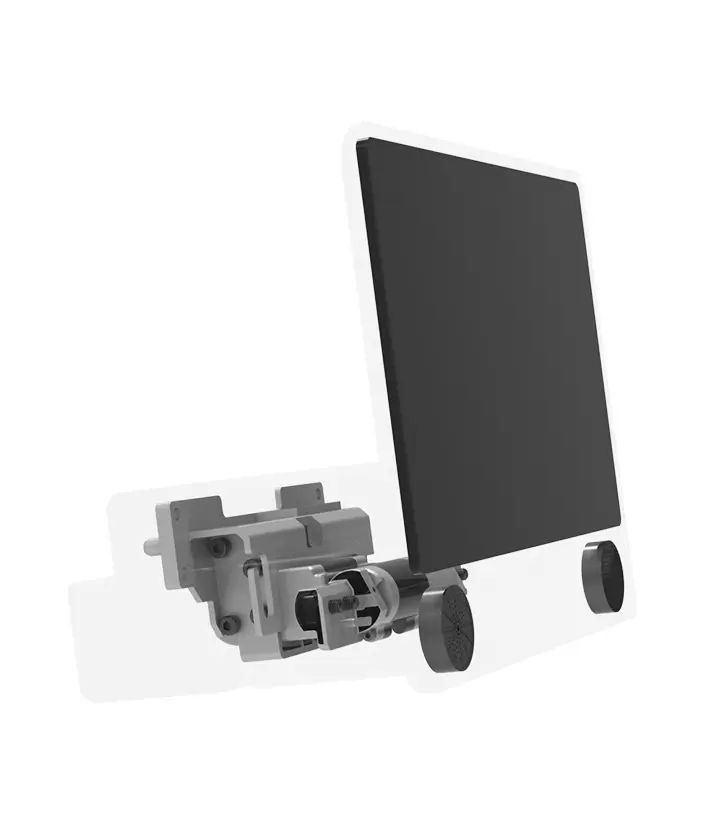
The owner used 2mm hexagonal socket screws to press me tightly on the servo output teeth. However, he did not know that if too much screw glue was applied, the plastic servo teeth would be corroded. If too little was applied, I would loosen and fall off after three minutes of vibration.
Here's how: Use medium-strength, blue screw glue, and apply it only to the two turns at the front end of the thread. And the torque is strictly controlled at 0.15N·m. The specific feel is to use a short-handled wrench with one hand to twist it to the point where it just starts to take effect.
2. “Lever Betrayal” of Long Rocker Arm
15mm is my theoretical lever arm, but you have to add a 40mm extension at the end. Now the 2.5kg torque acting on me has turned into a 6.7kg bending moment, and my metal teeth are screaming!
The calculation formula is that the actual load is equal to the nominal torque divided by the actual moment arm (meters). If the moment arm increases from 15 mm to 25 mm, the load capacity will decrease by 40%.
3. “Silent Sneak Attack” of Temperature Changes
When the temperature is 40°C in summer, the expansion rate of my metal is different from that of the plastic shell of the servo, and there is a gap of 0.05mm. When the temperature is -10°C in winter, the shrinkage gap causes the gear mesh to be too tight and the rotation efficiency drops sharply.
The method to deal with it is: when it is in an environment of minus ten degrees Celsius to fifty degrees Celsius, give priority to choosing a metal gear arm with a temperature compensation gap design. This kind of metal gear arm has a common feature, that is, the groove roots of the teeth have arc-shaped buffer grooves.
The following process is adapted from the actual combat records of a certain robot competition team and is presented to you after comprehensive verification.
Step 1: Verify the real requirements of the existing system
Use a spring scale to pull the arm on the output, and slowly increase the pulling force until the servo is out of step. Record the corresponding force value F (its unit is kg) at this time.
If F is greater than 2.2 kg, then directly use the metal gear arm; if F is less than 1.8 kg, the plastic arm can still be used for a short period of time, but it is recommended to leave room for upgrades.
Step 2: Check the "health" of the servo output teeth
A common tragic situation is that a brand new metal rocker arm is installed on a servo that has slipped teeth, and then, as soon as the machine is turned on, the metal teeth also break off.
Measures: Use a magnifying glass to view the top of the servo output tooth. If there are wear planes or burrs larger than 0.2mm, the servo should be replaced instead of the rocker arm.
Step 3: Pre-assembly running-in and dynamic testing
Run without load for 30 minutes. Then touch the servo housing with the back of your hand. At this time, the temperature should not be higher than 45 degrees Celsius, which is the level where it is slightly hot but can be touched continuously.
Run for fifteen minutes, load 50% of the rated torque, and then remove the rocker arm to observe the contact marks on the tooth surface. The ideal indentation should cover more than 70% of the tooth width and be evenly distributed.
In the initial stage, the metal gear arm will experience slight so-called "adaptive wear" during the first 200 operations, which is normal. When metal debris appears, it needs to be cleaned before continued use - once the debris no longer occurs, the running-in process is complete.
Q: The metal gear arm is heavier than the plastic arm, will it affect the response speed of the servo?
A: It will slightly reduce the acceleration of the corners. However, among 2.5kg servos, its inertia is relatively small in the overall proportion. During the actual testing process, the difference in response delay was less than 8ms, and the human eye cannot detect this difference.
Q: My plastic arm is not broken yet, is it necessary to replace it with a metal one in advance?
A: It is strongly recommended to replace the plastic arm. There is no sign before the plastic arm fails. Once it breaks, it may cause damage to the servo teeth or break the cable. In this way, the repair cost will be higher.
Q: Does the metal gear arm need to be lubricated regularly?
A: No need. It is already filled with high-temperature lithium grease when it leaves the factory. If too much grease is added, it will absorb dust and form abrasive paste, which will ultimately accelerate wear.
Q: Why is there still shaking after tightening the swingarm?
The situation in the question is that the shaking originates from the return spring gap on the steering gear output shaft, not the rocker arm. In this case, you can try to pad the end of the shaft with 0.1mm copper foil, but the copper foil should not exceed two layers.。
Q: Can I use a 2.5kg metal arm instead of a 5kg plastic arm?
A: No. The torque is determined by the servo, and replacing the arm will not change the output force. If it is forcibly replaced, the servo will be overloaded and burned, so please be sure to strictly match the torque level.
Let’s return to the starting point. The reliability limitation of a micro servo system with a torque level of 2.5 kilograms has never been the electric machine or the control loop, but the rocker arm that connects the carrier body and the output end.
Three core values of metal gear micro-servo arm:
The anti-fatigue life is 20 to 50 times that of plastic arms (laboratory cycle test data)
High temperature stability, creep value is less than 0.02mm/thousand hours
The failure mode is progressive wear rather than sudden breakage, giving you enough warning time.
Three things you should do right now:
1. Check all 2.5kg-level servos included in your hand. If the plastic arm has been used for more than 3 months or has undergone 2,000 movements, immediately add it to the list that needs to be replaced.
2. When carrying out stocking operations, priority should be given to selecting metal gear arms with an "R-shaped fillet" design at the root of the tooth groove. This feature has the ability to disperse stress concentration points.
3. Set up a maintenance log. Every 500 hours, use a magnifying glass to observe the tooth surface. Once obvious pitting or curling occurs, replace it in advance.
>Last reminder: The servo arm is not a consumable, but the "bone" of the joint.
> Give it a metal frame and it will reward you with thousands of precise bites.
Sincerely
salute
An engineer who was once "betrayed" by a plastic arm late at night
In front of the laboratory bench
Update Time:2026-05-09

Contact Kpower's product specialist to recommend suitable motor or gearbox for your product.


