
























TECHNICAL SUPPORT


Published 2026-09-13
Anti-UAV Challenge: What Defense Buyers Need to Know
Quick Answer
The anti-UAV challenge centers on detecting, classifying, and neutralizing small low-altitude drones that evade traditional radar systems—especially in crowded urban or near-source environments. Counter-drone solutions combineelectronic warfare , RF jamming , kinetic interceptors, andoptical tracking, each carrying distinct trade-offs in cost, collateral impact, and operational complexity. A technically sound deployment depends on mission profile, threat spectrum, and site geometry. For organizations typically evaluating adrone detection systemorcounter-UAS solution, the decisive factor is not raw capability but integrated reliability under real-world electromagnetic and environmental conditions.
Understanding the Anti-UAV Challenge
Cities, airports, critical infrastructure sites, and military perimeters now face drone incursions on a near-daily basis. Buyers who once treated UAV threats as hypothetical scenarios must now manage real compliance pressure, insurance exposure, and operational risk. The core difficulty is simple but costly: small consumer and commercial drones present extremely low radar cross-sections, fly at altitudes below conventional air-defense coverage, and can swarm or operate autonomously in contested RF environments.
Traditional surveillance architectures were engineered for high-altitude, high-velocity targets. They fail when confronted with low-RCS (radar cross-section) platforms that drift rather than accelerate through airspace. This mismatch explains why many facilities still rely on fragmented detection layers that detect late, classify poorly, and respond inconsistently. The result is either dangerous under-protection or costly over-reaction.
Organizations that invest in isolated detection tools without an integratedC-UAS systemarchitecture often discover the gap during stress testing or real incident response. A layered approach—radio frequency monitoring, acoustic sensing, radar detection, and electro-optical tracking—remains the proven standard. Buyers should expect multi-sensor fusion and validated kill-chain workflows before committing procurement budgets.
Why Detection Is Harder Than Most Buyers Expect
A typical modern UAV may measure only tens of centimeters in wingspan and transmit control links on commercially available ISM bands. These characteristics defeat single-domain sensors. Radar struggles with ground clutter and multipath reflections. Optical cameras lose effectiveness in rain, fog, or darkness. Acoustic arrays misidentify helicopters, birds, and construction equipment. Single-technology deployments consistently produce false positives that exhaust response teams.
The problem compounds when drone operators employ frequency-hopping, burst transmission, or GPS-denied navigation. An adversary who understands countermeasure signatures can deliberately design around passive detection. This is why modern programs increasingly demandacoustic sensor arrayspaired with AI-enabled pattern and persistent RF monitoring across multiple classification channels.
Procurement decisions that ignore the sensor fusion requirement often result in expensive installations that perform well in controlled tests but degrade rapidly under field conditions. Buyers should evaluate how candidates handle clutter suppression, classification latency, and multi-target tracking before accepting vendor demos.
Neutralization Methods and Their Trade-offs
Countering an intrusion requires a means to de-escalate or terminate the threat. The mainstream categories are:
RF jamming and protocol takeover: effective against commercial off-the-shelf drones that rely on GPS and manufacturer control links. Limitations appear when adversaries use pre-programmed waypoints or encrypted command channels. Collateral risk includes interference with nearby cellular and critical communications.
Cyber takeover and GNSS spoofing: offers a surgical option but demands specialized expertise and legal authorization. Many jurisdictions restrict GNSS manipulation for civilian operators.
Directed energy systems: laser and high-power microwave options are emerging as low-collateral solutions for sustained defense perimeters. Current limitations include weather sensitivity and high capital expenditure.
Net and kinetic interceptors: proven for specific airspace geometries but introduce physical risk and limited reusability.
Soft-kill electronic countermeasures: preferred in urban environments because they avoid projectile hazards and generally comply with local RF regulations when properly licensed.
Every method carries a different ratio of effectiveness to risk. Adrone jammeror RF disruption tool may be ideal for a remote industrial site but unacceptable near a hospital. Procurement teams should map neutralization options to site-specific constraints before selecting hardware.
Selection Criteria That Actually Matter
Vendors promote detection ranges, classification accuracy, and response speed. Buyers should evaluate these metrics alongside integration readiness, maintainability, and regulatory compliance. Practical selection criteria include:
When comparing proposals, request test protocols that mirror your site's interference environment, not generic open-field demonstrations.
Common Mistakes in Anti-UAV Procurement
Buyers frequently make three costly errors. First, selecting detection range as the primary specification ignores classification accuracy and response latency. A system that detects at five kilometers but misidentifies birds as threats is operationally useless. Second, ignoring regulatory constraints produces installations that cannot be legally activated during an incident. Third, underestimating integration complexity leaves new equipment isolated from existing CCTV, access control, and incident management workflows.
Additional risks include insufficient training for operators who must make split-second decisions, unclear escalation procedures between detection and neutralization, and vague post-incident reporting requirements that may conflict with local data protection rules.
Key Specifications to Verify Before Ordering
Before finalizing a purchase, technical reviewers should confirm the following parameters with the supplier:
Frequency coverage of RF monitoring and countermeasures
Minimum detectable RCS and associated detection altitude envelope
Classification accuracy rate under representative environmental conditions
Network latency from sensor input to operator display
Compatibility with on-site telecom and emergency response networks
Licensing pathway for any jamming or spoofing capabilities
Mean time between failures and spare-parts availability
Data retention and audit logging compliance with local regulations
Documented verification reduces procurement risk more reliably than marketing brochures.
Questions Buyers Often Ask About Counter-UAS Solutions
Q: How quickly can a counter-UAS system move from detection to neutralization?
Response time varies by architecture, but mature systems typically achieve detection-to-response cycles under five seconds. Kinetic interceptors may require longer lock-on times. RF-based soft-kill methods can activate almost instantly once a threat signature is confirmed.
Q: Can drone detection systems operate reliably at night and in bad weather?
Radar and RF sensors maintain performance across lighting and precipitation conditions. Optical and infrared cameras degrade in heavy rain or fog unless paired with compensating sensors. Multi-sensor fusion reduces weather-related blind spots.
Q: What legal restrictions apply to counter-drone technologies?
Regulations differ by country and site type. RF jamming is heavily restricted in most civilian jurisdictions. Cyber-based counters may require government authorization. Buyers should engage legal counsel before procurement and verify that provide compliance documentation.
Q: Do anti-drone systems interfere with nearby communications?
Jamming and spoofing can produce adjacent-band interference. Proper site engineering, directional antennas, and licensed frequency planning minimize collateral impact. Buyers should request an electromagnetic compatibility assessment before installation.
Q: How many drones can a counter-UAS system track simultaneously?
Capability depends on sensor count and processing capacity. Modern fused systems can monitor dozens of airborne objects concurrently, but classification quality may decline under dense swarm conditions. Verify claimed limits with third-party test reports.
Q: What ongoing costs should be expected beyond hardware procurement?
Lifecycle expenses typically include annual calibration, software updates, spare components, and operator training. Directed energy and kinetic interceptor systems carry higher recurring costs than passive detection-only architectures.
Q: Can existing CCTV and security infrastructure be reused?
Many platforms offer API integration with mainstream VMS and SIEM products. Proprietary ecosystems may require full replacement. Confirm interface availability during the evaluation phase to avoid stranded investments.
Q: How is operator training structured?
Reputable vendors provide classroom instruction, simulated exercises, and on-site qualification. Critical competencies include threat classification, escalation decision-making, and post-incident documentation.
Making a Better Long-Term Decision
The anti-UAV challenge is not solved by purchasing a single sensor or a standalone jammer. It requires an integrated architecture that balances detection fidelity, neutralization legality, environmental robustness, and operational simplicity. Procurement teams that prioritize verifiable fusion performance and regulatory alignment over headline specifications consistently achieve better outcomes.
When evaluating providers, request scenario-based demonstrations rather than brochure specifications. Assess whether the supplier can document classification accuracy, integration pathways, and compliance support for your jurisdiction. A disciplined comparison process reduces procurement risk and ensures that deployed counter-drone capabilities remain effective throughout their service life.
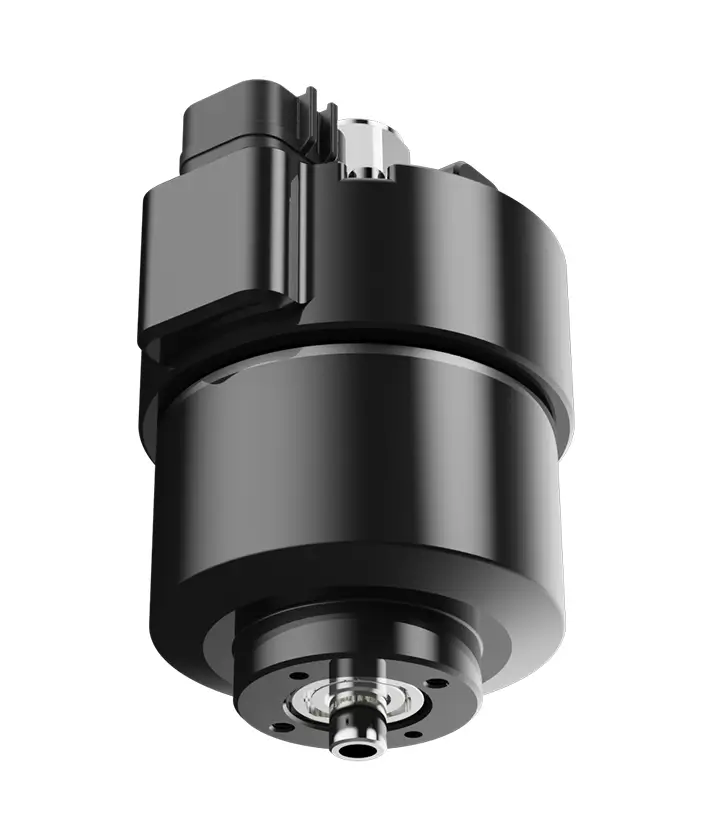
For organizations seeking engineering-grade servo-driven tracking mounts and precision integration support for drone detection systems , sharing your site geometry and threat profile with a technical team can produce a configuration tailored to your actual operational envelope. Contact the engineering group to discuss your current layout and review how component selection influences detection coverage and response latency.
Update Time:2026-09-13

Contact Kpower's product specialist to recommend suitable motor or gearbox for your product.


