
























TECHNICAL SUPPORT


Published 2026-09-21
Quick Answer
A brushless DC motor is built from several distinct components: the stator with its three-phase windings, the rotor with permanent magnets, position feedback (Hall sensors or an encoder), the driver PCB, bearings, and the housing. In most field, bearings and Hall sensors degrade before the windings or magnets. Before sourcing any replacement, verify the motor's voltage rating, torque curve, shaft dimension, and encoder type. Mixing a mismatched part with the existingdriver boardis the most common cause of post-repair failure and can cost more in downtime than the part itself.
A worn bearing or a dead Hall sensor can shut down an entire production line. The cost of that downtime often dwarfs the price of the component. Yet many procurement teams order generic replacements without confirming critical specs, only to find the motor still underperforms or fails within weeks. The root issue is straightforward: a BLDC motor is not a monolithic unit. Each component carries its own tolerance, thermal rating, and compatibility constraint. Knowing which matter parts and what to check before you buy reduces both schedule risk and repeat-failure cost.
Core Components and What Each One Does
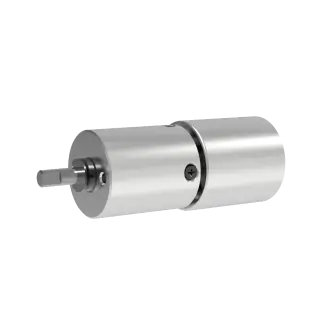
A typicalbrushless dc motorbreaks down into these functional groups:
Stator windings (copper or aluminum coils) generate the rotating magnetic field.
Rotor assembly (permanent magnets, usually NdFeB) converts that field into mechanical torque.
Position feedback (Hall sensors or an incremental/absolute encoder) tells the controller where the rotor is at every instant.
Bearings support the shaft and keep rotational friction within spec.
The driver PCB houses gate drivers, MOSFETs, and control logic.
The housing and end caps protect internals and manage heat flow.
Each group has a distinct failure signature. Winding failure shows up as a shorted phase or open circuit. Bearing wear produces audible noise, vibration, and a measurable rise in no-load current. Encoder degradation leads to position error and loss of closed-loop accuracy. Identifying the correct group first saves you from replacing the wrong part.
Which Parts Reach End-of-Life First
In sustained industrial operation, bearings andHall sensor arraystypically hit their service limit before the windings or the magnet pack. The causes are mechanical and thermal. Bearings endure continuous rotational stress; grease dries out or contaminant ingress accelerates raceway wear. Hall sensors sit in the high-temperature rotor gap, and their IC package bonds are vulnerable to repeated thermal cycling.
If a failing bearing is ignored, shaft runout grows, loading the opposite bearing and stressing the encoder air gap. What began as a low-cost bearing swap can escalate into a full rotor rebuild. Catching the early vibration or noise signature prevents that cascade.
Pre-Order Verification Checklist
01f:f:8:6:e:e:0:3:9:a:2:b:8:6:d:c:2:d:f:5:e:e:e:2:5:5:0:1:b:2:5
Use this table as a quick reference. Before any purchase, fill in the "Spec to Confirm" column for your specific motor and cross-check it against the part you are about to order.
What to Verify Before You Source a Part
Before placing an order with a kpower servo supplier or any OEM, confirm at least three items:
1. Electrical compatibility – voltage range, continuous phase current, and control signal (PWM, six-step, or closed-loop).
2. Mechanical fit – shaft diameter, flange bolt-circle diameter, overall length, and keyway profile.
3. Feedback match – if the motor uses an encoder, the pulse density and interface protocol (RS-422, SSI, EnDat, or BiSS) must align with your drive.
A mismatch on any one of these means the part will not mount, will not spin, or will damage the drive on first startup. A thirty-minute spec check on paper prevents a three-day workshop delay.
Practical Questions Before Choosing Parts
Q: Can I replace just the stator and keep the original rotor?
A: Yes, provided the stator's inductance, DC resistance, and back-EMF constant match the original. Verify these values from the motor nameplate or datasheet. A mismatched stator shifts the torque-speed curve and can overheat the existing magnets.
Q: How do I tell whether Hall sensors or the encoder is the faulty part?
A: Disconnect the feedback cable and run the motor in open-loop mode. If it spins smoothly, the issue is in the sensor or encoder. If it stutters or fails to start, the problem lies in the windings, drive board, or power supply.
Q: What is a typical bearing replacement interval?
A: It varies by load, speed, and operating temperature. In many continuous-duty industrial applications, 20,000 to 40,000 hours of rotation is a common reference point, but this should be confirmed against the bearing manufacturer's L10 life calculation for your specific duty cycle and grease selection.
Q: Do I need to recalibrate the drive after replacing a sensor?
A: In closed-loop systems, yes. Update the encoder resolution, zero offset, and current-loop gain in the drive parameters. Most modern drives include an auto-tune routine, but a manual verification after any sensor swap is still recommended.
Making a Smarter Replacement Decision
The price tag on a single BLDC motor part is rarely the largest line item in your repair budget. The real cost shows up as lost production hours, warranty claims, or a second failure three weeks later. By confirming electrical, mechanical, and feedback specs before you order, you cut the chance of a wrong-fit part reaching the shop floor.
If your team is weighing a part-level replacement against a full motor swap, send your current motor's nameplate data and duty-cycle profile to kpower servo engineering for a quick compatibility review. A short assessment can save days of trial-and-error and keep your line running on schedule.
Update Time:2026-09-21

Contact Kpower's product specialist to recommend suitable motor or gearbox for your product.


