
























テクニカルサポート


発行済み 2026-07-13
SEO タイトル: ランク付け方法サーボモーター: 性能と価値を比較するための購入者向けガイド
メタディスクリプション: どれかを推測するのはやめてくださいサーボモーターが最高のパフォーマンスを発揮します。このガイドでは、トルク、速度、フィードバック、信頼性を比較します。チェックリストを使用して、自動化ラインの調達に関するより賢明な意思決定を行います。
簡単な回答
単一の「最高」はありませんサーボあらゆる用途に適合するモーターランキング。適切な選択は、特定のトルク要件、速度範囲、フィードバックの種類、環境条件によって異なります。速度など、あるカテゴリーで最高ランクにランク付けされたモーターでも、保持トルクや耐久性など、別のカテゴリーではパフォーマンスが劣る場合があります。購入者は、マシンの実際の負荷プロファイル、デューティ サイクル、精度のニーズに基づいてランキングを評価する必要があります。定格トルク対慣性比、フィードバック分解能、IP 定格などの仕様を比較することは、一般的なランキングに依存するよりも役立ちます。常に確認してください。最終的な決定を下す前に、サプライヤーとパフォーマンスデータを確認してください。
導入
新しい自動化ラインの稼働が近づいているのに、オンラインの人気ランキングに基づいて選択したサーボ モーターが予期せぬ振動、過熱、または位置決めエラーを引き起こすという状況は、すべての生産管理者が直面したことがあります。ラインが止まります。整備チームは慌てて動き出す。生産目標がずれる。
これは珍しい話ではありません。多くの場合、問題はモーター自体ではなく、ランキングと実際のアプリケーションとの不一致です。一般的なランキングでは、デューティ サイクル、周囲温度、ケーブルの長さ、コントローラーの互換性などの重要な要素が無視されることがよくあります。購入者が基礎となるパラメータを理解せずにリストのみに依存すると、ダウンタイムが長くなり、拒否される部品が増え、試運転時間が長くなるリスクがあります。
そのため、この記事では固定のランキングを提供しません。代わりに、特定のニーズに基づいて独自のランキングを作成するツールが提供されます。重要なパラメータ、さまざまなブランドのモーターを比較する方法、サプライヤーと契約する前に尋ねるべき質問について学びます。
目次
一般的なサーボモーターのランキングが購入者を誤解させる可能性がある理由
比較すべき主要なパフォーマンスパラメータ
トルク、速度、イナーシャの一致を評価する方法
フィードバックの種類と解決策: 本当に重要なことは何か
確認すべき環境および耐久性の要素
サーボモーターのランキングを比較する際によくある間違い
サーボモーターの性能について購入者からよく寄せられる質問
アプリケーションに適したサーボ モーターの選択にサポートが必要
一般的なサーボモーターのランキングが購入者を誤解させる可能性がある理由
ほとんどのオンライン ランキングは、単一のテスト条件やマーケティング資料など、限られたデータに基づいています。モーターはそのピークトルクにより上位にランクされる可能性がありますが、そのトルクが持続できるのは数秒間だけである可能性があります。連続使用のアプリケーションでは、同じモーターが急速に過熱する可能性があります。
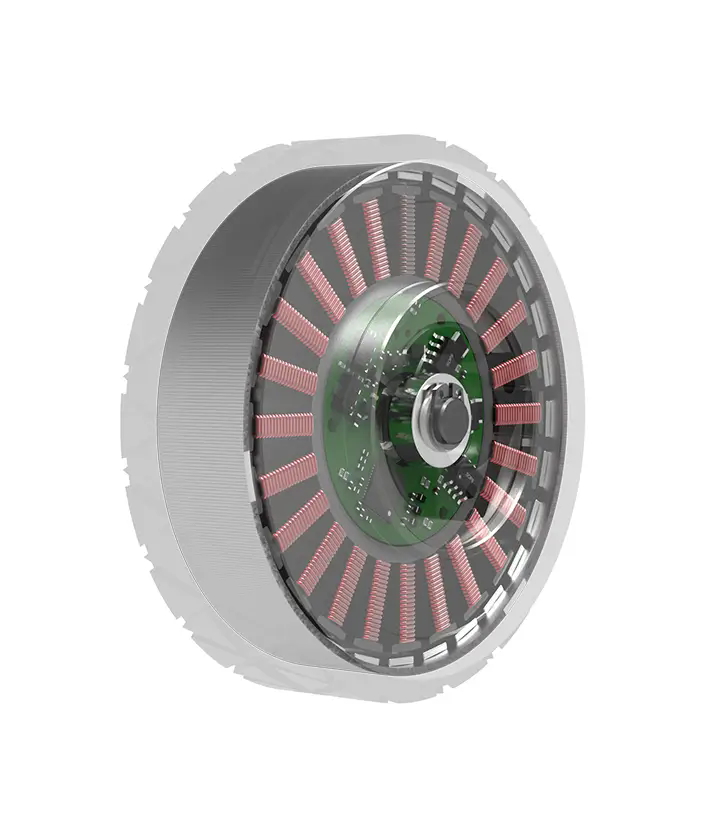
もう 1 つの問題は、ランキングが特定の負荷特性を考慮に入れることがほとんどないことです。ピックアンドプレースロボットなどの低慣性負荷向けに最適化されたモーターは、回転テーブルや重いインデックス作成などの高慣性アプリケーションではパフォーマンスが低下します。
ランキングではフィードバック装置の品質も無視されます。トルクと速度定格が同じ 2 つのモーターは、レゾルバ、インクリメンタル エンコーダ、アブソリュート エンコーダのいずれを使用しているかによって、位置決め精度が大きく異なる場合があります。レゾルバベースのモーターは振動の激しい環境での耐久性が高い場合がありますが、アブソリュートエンコーダベースのモーターは複数回転位置決めの精度が向上します。
一般的なランキングに依存すると、多くの場合、試運転時間が長くなり、調整作業が増え、マシン全体の信頼性が低下します。ランクを追うのではなく、モーターの性能エンベロープをマシンの実際のサイクルプロファイルに一致させることに重点を置きます。
比較すべき主要なパフォーマンスパラメータ
独自の比較を作成する場合は、次の 7 つのパラメーターから始めます。それらはあらゆるものの基礎を形成しますサーボモータの選定決断。
Compare these values across at least three suppliers under the same test conditions. If a supplier publishes rated torque at a different ambient temperature or duty cycle, adjust your comparison accordingly.
トルク、速度、イナーシャの一致を評価する方法
The most common mismatch in servo motor applications is between the motor's torque-speed curve and the load's actual demand. A ranking that lists only peak torque ignores the continuous operating region where most machines spend over 90% of their time.
Start by calculating your load's required torque across the entire cycle—acceleration, constant speed, deceleration, and dwell. Compare this against the motor's continuous torque zone. If your peak demand exceeds the motor's peak torque for more than a few seconds, the motor may trigger an overcurrent fault or thermal shutdown.
Inertia matching is equally important. A motor with a very low rotor inertia may struggle to control a high-inertia load, causing oscillation or long settling times. A good rule of thumb is to keep the load-to-motor inertia ratio below 10:1 for standard applications, and below 5:1 for high-precision positioning. If your ratio is higher, consider a larger motor or a gearbox.
Speed requirements should also be verified. A motor rated at 3000 RPM may only deliver rated torque up to 2000 RPM, with torque dropping off above that speed. Always check the torque-speed curve, not just the rated speed.
フィードバックの種類と解決策: 本当に重要なことは何か
Feedback devices are often the most overlooked factor in servo motor comparisons. Yet they have a direct impact on positioning accuracy, repeatability, and system stability.
There are three common types:
Resolver : Durable, resistant to shock and vibration, but limited resolution. Suitable for rugged environments where absolute precision is not critical.
Incremental Encoder : Offers higher resolution than resolvers. Requires a homing cycle after power loss. Good for most general-purpose automation.
Absolute Encoder : Maintains position data even after power loss. No homing required. Ideal for multi-axis systems and applications requiring high repeatability.
Resolution is measured in pulses per revolution (PPR) or bits. A 17-bit encoder gives 131,072 counts per revolution, while a 23-bit encoder gives over 8 million counts. Higher resolution allows finer positioning but also requires a faster controller and shorter cable runs to avoid signal noise.
For most packaging, assembly, and material handling applications, a 17-bit to 20-bit absolute encoder offers a good balance of cost and performance. For precision machining or semiconductor equipment, consider 22-bit or higher.

確認すべき環境および耐久性の要素
A servo motor that performs well in a clean, temperature-controlled lab may fail within months on a factory floor exposed to coolant, dust, or high ambient heat.
チェックしてくださいIP等級 first. For dry indoor environments, IP54 is usually sufficient. For washdown or food processing, IP65 or higher is recommended. For outdoor or dusty environments, IP67 provides full protection against dust ingress and temporary submersion.
Operating temperature range is another critical factor. Most standard servo motors are rated for 0°C to 40°C ambient. If your application runs near ovens, in cold storage, or in direct sunlight, verify the motor's extended temperature rating. Some motors may need forced cooling or derating above 40°C.
Cable length and connector type also affect performance. Long cables can cause voltage drop and signal degradation, especially for high-resolution encoders. If your cable run exceeds 10 meters, ask the supplier about shielded cables, differential signals, or remote encoder boxes.
サーボモーターのランキングを比較する際によくある間違い
Even experienced engineers fall into these traps. Avoid them to make a more reliable comparison.
Mixing test conditions : One supplier may rate torque at 25°C, another at 40°C. Compare only values tested under the same ambient conditions.
Ignoring duty cycle : A motor rated for S1 continuous duty can run indefinitely. An S2 rated motor can only run for a short period before cooling. Using an S2 motor in continuous operation will cause overheating.
Overlooking controller compatibility : A high-performance motor paired with a mismatched drive will never achieve its rated performance. Ensure the drive supports the motor's feedback type, voltage, and current profile.
Relying on peak torque alone : Peak torque is typically sustainable for less than 3 seconds. For most applications, continuous torque is the real constraint.
Not factoring in gearbox losses : If a gearbox is used, its efficiency and backlash add to the system's effective inertia and positioning error.
Avoiding these mistakes can reduce commissioning time by up to 30% and improve machine uptime significantly.
サーボモーターの性能について購入者からよく寄せられる質問
Q: How do I know if a servo motor ranking is reliable?
A: Look for rankings that specify test conditions—ambient temperature, duty cycle, and load type. Reliable rankings also include torque-speed curves and feedback resolution data.
Q: What is more important, torque or speed?
A: It depends on your application. For high-acceleration cycles, torque-to-inertia ratio matters most. For high-throughput continuous processes, rated speed and continuous torque are more critical.
Q: Can I use a resolver-based motor for high-precision positioning?
A: Resolvers are less accurate than encoders. For applications requiring repeatability better than 0.1 degree, an absolute encoder is recommended.
Q: Why does my servo motor overheat even though it is within the rated torque?
A: Check the duty cycle. The motor may be operating in S2 short-time duty or experiencing high ambient temperatures. Also verify the cable length and drive tuning.
Q: Should I always choose the highest resolution encoder?
A: No. Higher resolution increases cost and signal sensitivity. Choose a resolution that matches your required positioning accuracy. For most automation, 17-bit to 20-bit is sufficient.
Q: How important is the torque-to-inertia ratio?
A: Very important. A low ratio means slower acceleration and longer settling times. This directly affects cycle time and throughput.
Q: What is the difference between holding torque and rated torque?
A: Holding torque is the torque the motor can maintain at standstill with power applied. Rated torque is the continuous torque the motor can deliver while rotating without overheating.
Q: Can I mix servo motors from different brands in one system?
A: It is possible but not recommended. Different brands may have incompatible feedback protocols, tuning algorithms, and current profiles. This increases commissioning complexity and risk.
Q: How do I check if a servo motor is suitable for a washdown environment?
A: Verify the IP rating. IP65 or higher is required for washdown. Also check the connector seal and cable entry point, as these are common failure areas.
Q: What should I ask a supplier before purchasing based on a ranking?
A: Ask for the torque-speed curve, duty cycle rating, feedback resolution, ambient temperature range, IP rating, and controller compatibility list.
アプリケーションに適したサーボ モーターの選択にサポートが必要
Choosing the right servo motor is not about finding the highest rank. It is about matching the motor's performance envelope to your machine's actual load profile, duty cycle, and environmental conditions. A motor that ranks lower in generic lists but matches your specific torque-to-inertia ratio and feedback requirements will deliver better uptime, fewer rejected parts, and lower total cost of ownership.
If you are currently evaluating servo motors for a new line or upgrading an existing system, consider sending your load profile and cycle parameters to キロパワーサーボ for an engineering review. Their team can help you compare specifications across different models and recommend a configuration that fits your application.
Start by sharing your torque requirements, speed range, and environmental conditions. From there, you can request a detailed comparison table and a quote tailored to your project.
Update Time:2026-07-13


