



























TECHNICAL SUPPORT


Published 2026-03-11
What is the most vexing problem when playing with 1/18 scale remote control cars? After summarizing the experience of many players, nine out of ten cases the originalservois not powerful. It suffers from sluggish steering and cannot respond quickly and accurately when steering. It is also not powerful enough to meet players' needs for strong steering power. It also burns easily and breaks down frequently. These problems are really disappointing. If you want to make your car more precise, able to point and hit, and react quickly, then replacing a top-notch microservois often the most immediate way to upgrade.
For our 1/18 cars, top-notch does not mean the most expensive, but just right. First of all, you have to consider the size. For example, standard microservos, which weigh about 17 grams, are often the first choice for direct replacement. Secondly, regarding the number of teeth, they must match the steering gear arm of the original car. Otherwise, you will be in embarrassment if you buy it but cannot install it. Top-end servos generally use metal gears, which are much more durable than plastic gears and can withstand the bumps and bumps during car play.
Furthermore, top-end servos are also better in performance. Its response speed is faster, making the car more sensitive and more precise when maneuvering. Whether it is steering or other actions, it can be performed more quickly and accurately. Moreover, the top-level servo has excellent stability, and rarely malfunctions or deviations occur during long-term use, bringing players a smoother and more reliable control experience, allowing the fun of playing cars to be fully demonstrated.
When many friends look at the parameters, they often think that the faster the speed, the better. In fact, it depends on how you play. Speed is generally expressed in "seconds/60 degrees". Just like the difference between 0.08 seconds and 0.10 seconds, ordinary people's hands cannot feel it at all. If you are playing drifting, you need an extremely fast reaction speed, and the servo will follow your hand more quickly in about 0.06 seconds; if you are playing a climbing car, too fast a speed will easily lead to steering overshoot, so just keep it moderate. The key is to have good linearity.
Different gameplays have different requirements for speed. For drifting, extremely fast reaction speed is crucial, and a servo of about 0.06 seconds can better meet the needs of following the hand. The situation of climbing cars is different. Too fast speed can easily cause steering overshoot, so a moderate speed is most suitable. The focus is on better linear performance. In short, you cannot simply think that faster is better, it must be judged based on the specific gameplay.
Torque is a measure of the strength of the steering gear, and its unit is kg/cm. When you first come into contact with steering gear related knowledge, you may naturally think that the greater the torque, the better. However, for a car with the size of 1/18, 3 kg to 5 kg of torque is actually extremely sufficient.
If a car is forcibly equipped with a steering gear with a torque of 8 kg or more, then when the wheel unfortunately gets stuck, there is a real possibility that the original plastic steering cup or steering gear arm will be broken due to the huge torque of the steering gear. It can be seen that when choosing a steering gear, appropriateness is the most critical principle. It is not simply that bigger is better.
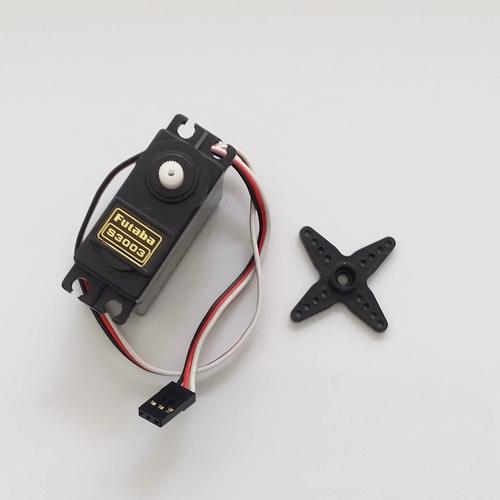
Among the many types of servos, digital servos and analog servos have their own characteristics, so how to make a choice? With its advanced digital control technology, digital servos often have excellent performance in terms of accuracy and response speed. It can execute instructions more accurately and reach the designated location quickly. Analog servos are favored by some users for their relatively simple structure and relatively stable output characteristics. It can play a unique advantage in some scenarios that do not require extremely high accuracy but pursue stable operation. Users need to comprehensively consider their own usage needs, such as accuracy requirements, budget constraints, specific application scenarios and other factors, in order to make the most appropriate choice between digital servos and analog servos.
️ Analog steering gear: Its price is relatively affordable and the technology is mature. If you just run around casually and don't have high requirements for accuracy, then it can fully meet the needs of use. However, it has certain shortcomings, that is, there is a neutral point dead zone, which means that there may be a slight virtual position when returning to normal.
️Digital servo: its response speed is faster and its positioning accuracy is higher. It has the ability to receive higher frequency signals. With this feature, the wheel can stay at the angle you want more accurately. For those players who are eager to improve their skills, spending dozens of dollars more in exchange for such an experience is definitely worth the money.
1. Wiring sequence: When performing wiring operations, the most common situation is that the wrong wires are inserted. There are usually three servo lines, among which the brown or black line represents the negative electrode, the red line is the positive electrode, and the orange or yellow line is the signal line. Before plugging these wires into the receiver, be sure to carefully check the instructions, otherwise once the power is turned on, the servo will most likely be burned.
2. Servo arm installation: Before installing the servo arm, be sure to power on the servo to allow it to automatically return to center. After that, proceed to install the servo arm and carefully fine-tune the length of the tie rod. Only in this way can the left and right steering angles of the steering gear be kept consistent.
Nowadays, several brands with relatively stable and excellent reputations on the market, such as Savox, and Power HD, all have 1/18 scale micro servo products. In particular, some Power HD servos with small-sized Core-less motors have an excellent balance between speed and torque. You can go directly to search the official websites of these brands to check the detailed parameters corresponding to specific models and compatible models, and you can often dig out a lot of valuable information from them.
In order to help you make a better choice, I would like to ask you a very practical question: What type of 1/18 car are you playing now? Is it a flat-running model that focuses on pursuing speed, or a climbing model that values torque more? You may wish to share your model in the comment area, so that I can help you see which servo is more suitable for you. If you think this article is valuable, don’t forget to like it and share it with your friends who are also passionate about playing cars!
Update Time:2026-03-11

Contact Kpower's product specialist to recommend suitable motor or gearbox for your product.


